

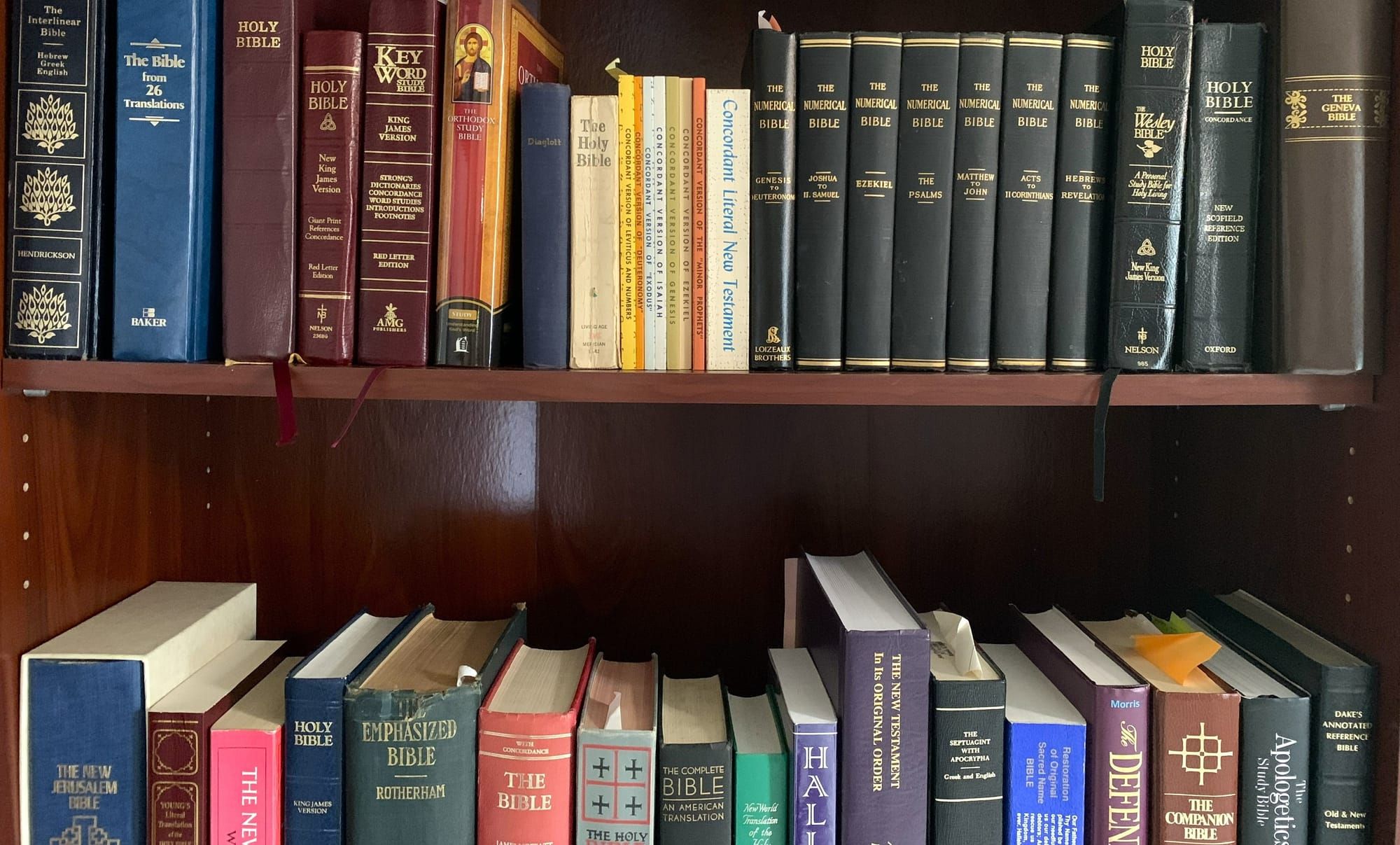
Which Bible, Which Version?
Having now completed a very brief discussion of a few aspects of the New Age movement and occultism, the reader is now equipped to learn more about our antagonists, Westcott and Hort.
As we will have a number of quotations herein, keep in mind that all emphases and comments within [brackets] or {braces} are mine, unless otherwise noted.
Our antiheroes’ immersion in questionable occult practices began back in the days when Westcott and Hort were working on their postgraduate degrees at Cambridge University. I have quoted these few sentences in a previous chapter, but it bears repeating them here to serve as a segue into the occult connections of W & H.
This is from a letter from Hort to Reverend John Ellerton in 1851. In the middle of the letter, Hort offers his feelings about the Received Text, that is, the Greek text that underlies the King James Version.
Hort exclaims, “I had no idea till the last few weeks of the importance of texts, having read so little Greek testament and dragged on with the villainous Textus Receptus.”
So he calls the text underlying the King James Version villainous. And then a sentence or two later, Hort remarks, “Think of that vile Textus Receptus, leaning entirely on late manuscripts. It is a blessing there are such early ones.”
Of course, he is referring there to the misunderstanding or deliberate lie that the Textus Receptus was based on late manuscripts. We have shown in previous chapters how the Textus Receptus has an abundance of early witnesses, much earlier than the so-called “early” manuscripts, the Vaticanus and Sinaiticus, to which Hort is referring.
But then, Hort continues, “It is a blessing there are such early ones.” Now to come to the crux of this chapter, if you remember when I quoted these passages in a previous chapter, Hort immediately in the next paragraph says this:
QUOTE: Westcott, Gorham, C. B. Scott, Benson, Bradshaw, Luard, etc., and I have started a society for the investigation of ghosts and all supernatural appearances and effects, being all disposed to believe that such things really exist, and ought to be discriminated from hoaxes and mere subjective delusions;
We shall be happy to obtain any good accounts well authenticated with names. Westcott is drawing up a schedule of questions. Cope calls us the ‘Cock and Bull Club’. Our own temporary name is the ‘Ghostly Guild’. END QUOTE (Life of Hort, Vol. 1, p. 211)
In an introduction to that section of the book in the Life of Hort, from which I was quoting just above, Hort’s own son writes this about his father.
QUOTE: Yet he found time to attend the meetings of various societies and in June joined the mysterious company of the ‘Apostles.’ …
He remained always a grateful and loyal member of the secret club, which has now become famous for the number of distinguished men who have belonged to it.
In his time, the club was in a manner reinvigorated, and he was mainly responsible for the wording of the oath which binds the members to a conspiracy of silence…
Two other societies of widely different aims were started in this same year, in both of which, Hort seems to have been the moving spirit.
One, a small club formed for the practice of choral music. [A worthwhile past time, to be sure.] The other, called by its members the ‘Ghostly Guild,’ the object of which was to collect and classify authenticated instances of what are now called ‘psychical phenomena,’ for which purpose an elaborate schedule of questions was issued.
The ‘Bogie Club,’ as scoffers called it, aroused a certain amount of derision and even some alarm; it was apparently born too soon. END QUOTE (Life of Hort, Vol. 1, pp. 170-172)
Yes, the Ghostly Guild, or as it was sometimes referred to simply as the ghost club or ghost society, did arouse alarm among some Christians back in the 1850s and thereafter, because they evidently knew or suspected the type of occult activities into which Westcott and Hort had immersed themselves.
This was not a simple little lark in their college days that did not last very long. I am going to show you that this lasted virtually their entire lives.
Hort’s son says “the club was born too soon.” Well, evidently so, because historically speaking, this club, the Ghostly Guild, became the embryonic form of what is now commonly called “channeling,” i.e., what the Bible calls necromancy.
If we were to select a key verse for this chapter, it would be this.
1 Timothy 4: 1 Now the Spirit speaketh expressly, that in the latter times some shall depart from the faith, giving heed to seducing spirits, and doctrines of devils. [demons; Greek daimonion {dahee-mon'-ee-on}]
We do not need to think of the guy with the red suit, the forked tail, and the trident spear when we say demon here. Doctrines of devils can be simply adversaries that are flesh and blood people, the doctrines of antichrists, if you will.
Or this could be also be referring to supernatural evil entities as “seducing spirits.” We need not debate at this time and in this chapter, what anyone’s particular belief is concerning demons or unholy spirits.
That would take us too far off on a tangent. But as we trace the activities and the associations of Westcott and Hort, what is clear from this verse is that it was prophesied that there would be departures from the faith.
A word for that is apostasy, which is due, at least in part, to giving heed to what are called “seducing spirits and the doctrines of devils/demons.” Let us keep that in mind as we proceed.
In her book, New Age Bible Versions, Gail Riplinger traces this connection of the modern channeling movement back to Westcott and Hort’s Ghostly Guild. Ms. Riplinger makes that connection by quoting from a number of sources which chronicle the history of the occult and / or the history of psychic organizations.
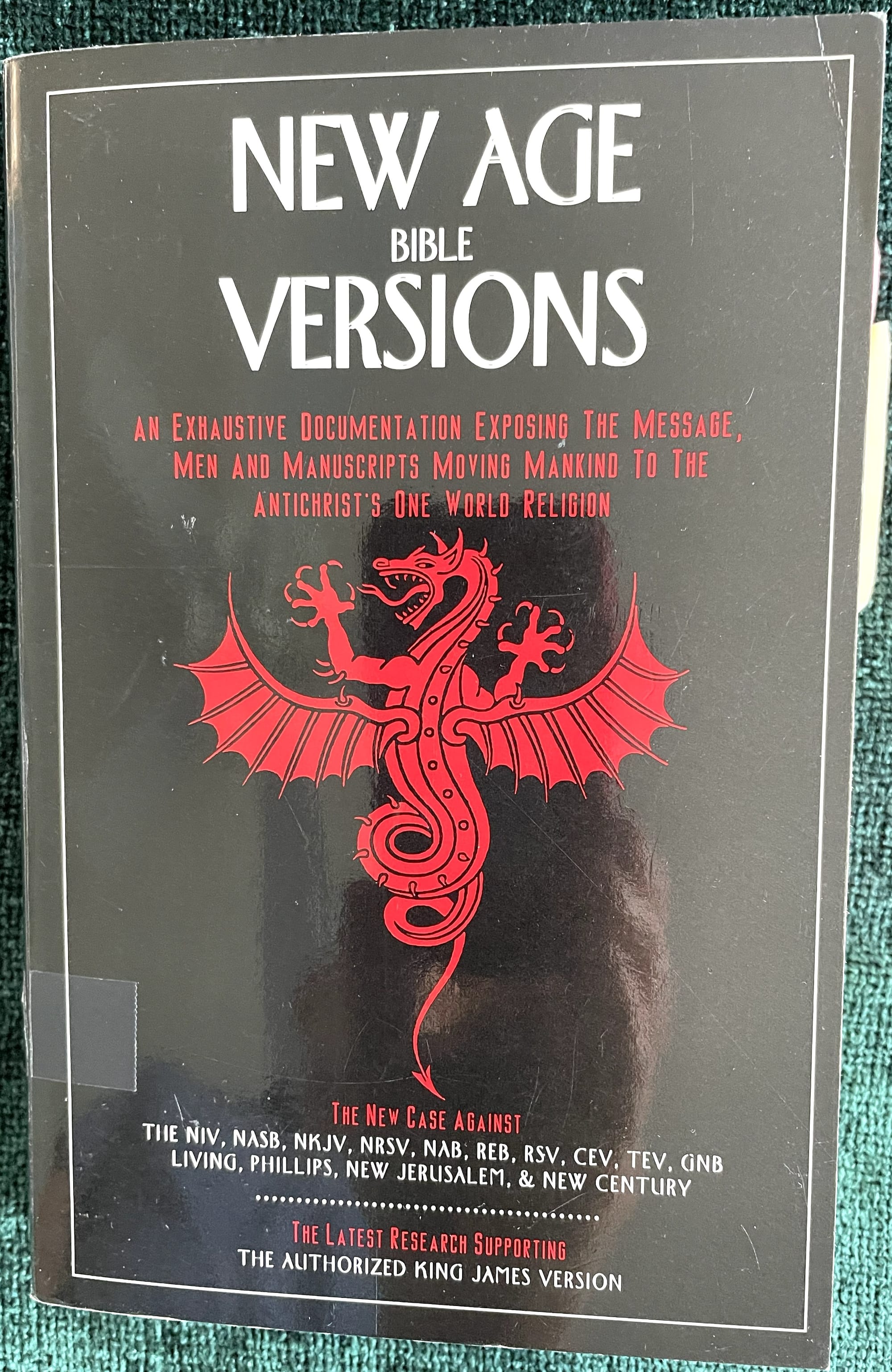
Before we get into that, I want to give you briefly some of my opinions about her book. It is a book of nearly 700 pages, with the last 40 pages filled with her end notes of sources (hundreds of notes in what I would guess to be 4-point type). The volume is also replete with charts as she compares wordings in various versions vis à vis the KJV.
I have read her tome three or four times, parts of it four times, the rest of it three times. I have some serious reservations about it in certain areas.
On the whole, I do think it is worth reading for some valuable insights, but it must be read critically. Frankly, and to put it mildly, I think she is all wet in a several areas, obviously and simply because of her doctrinal predisposition. I would characterize her position as fundamentalist-dispensationalist to the core, with a belief in an eternal hell and all the related doctrines that usually go along with it.
I will not take up any more time here to critique this book. But I did want you to know that it is a very interesting book. However, we cannot accept everything in it at face value.
She has a plethora of end notes, but I did not trust those at face value either. I checked out the references to other works from which I am going to be quoting here so that I can tell you that what I am presenting is factual, to the best of my knowledge.
As those who have read the book, New Age Bible Versions, would notice, I am going to be going off in another direction. Ms. Riplinger traces the origins of the current New Age movement to the occult revival of the mid- to late-1800s.
In particular, we find the channeling or necromancy fad is traced to the Ghostly Guild of Westcott and Hort. One of her sources is a secular book on the history of the occult.
It is called The Occult Underground and written in the mid-1970s by James Webb. Mr. Webb is obviously sympathetic to the New Age movement. One could easily discern that from the little biographical sketch written about him on the jacket of the book. The last statement therein is “He is a member of the American Society for Psychical Research…”
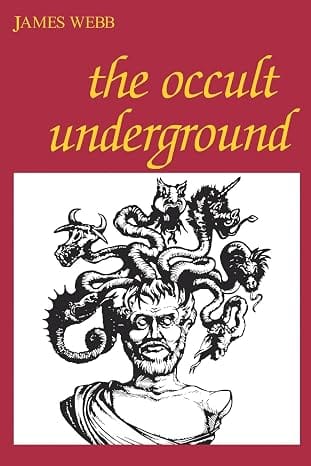
I obtained this book decades ago; Amazon still has it. (Hardback: $253 and softcover: $32). Here are some pertinent passages which Riplinger quotes along with others which she does not quote. Before that, however, we need to provide a quick definition first because we are going to run into this word a number of times.
The word is spiritualist (-ism). This does not mean a pious person that is a Christian. A spiritualist is one who seeks contact with the spirits of the dead. In other words, a spiritualist is a necromancer, a channeler. Or one who is involved in those practices.
Here is an AI/SI-generated response: A spiritualist is an adherent of Spiritualism, a religious movement originating in the 19th century that posits the survival of consciousness after death and the possibility of communicating with spirits of the departed through mediumship.
Unlike general spirituality, which is often non-dogmatic, Spiritualism is a structured faith centered on the belief that spirits continue to evolve in a spirit world and can provide moral guidance, healing, and comfort to the living.
Core Beliefs: Spiritualists believe the afterlife is not static but a realm of continuous growth, where one’s condition is influenced by their earthly morality.
Mediumship: Communication is facilitated by mediums who act as intermediaries, often through séances, trance lectures, or message circles.
Organization: While initially an informal movement, it evolved into organized denominations such as the National Spiritualist Association of Churches in the U.S. and the Spiritualists’ National Union in the U.K.
Synonyms: Common terms include psychic, medium, channeler, and spiritist. END OF AI/SI response.
Obviously, we find almost all of the above aspects of Spiritualism to be false doctrines.
On page 40 of The Occult Underground, James Webb is chronicling the history of an organization known as the Society for Psychical Research (SPR). It is one of the key organizations since the 1800s and so I suggest you remember that name. We will come back to it often. The Society for Psychical Research. SPR.
Webb states, “The SPR was a peculiar hybrid of spiritualist cult and dedicated rationalism.”
Then on page 38, he says, “Certain factors should be borne in mind when assessing the controversy.
The first is the concentration of early SPR research on the problems of Spiritualism and survival after death.” PAUSE QUOTE
Stop there for a moment. So what is he saying? He is saying that the chief area of concern of this organization that got founded back in the 1800s, the SPR, was that they were focused chiefly on the problems of Spiritualism. In other words, of necromancy.
Continuing, QUOTE: The concern of the early researchers with the possibilities of immortality was by no means exclusive, and in view of the current fascination with the claims of Spiritualism was perfectly natural.
However, it is difficult to escape the conclusion that in certain cases, the SPR fulfilled the function of Spiritualist church for intellectuals. END QUOTE.
And we will see the intellectuals among them were Westcott, Hort and friends. Then on page 36, Webb tells us how the SPR got started.
QUOTE: In 1882, the Society for Psychical Research was founded. PAUSE QUOTE
Let us stop there for a moment. What was going on with Westcott and Hort at that time? They had just finished and were publishing the Revised Version of the Bible. Continuing, QUOTE:
In effect, it was a combination of those groups already working independently in the investigation of spiritualist and other psychic phenomena (telepathy, clairvoyance, etc.).
Of these, the most important was that centered around Henry Sidgwick, Frederic Myers and Edmund Gurney, all Fellows of Trinity College, Cambridge, and deriving its inspiration from the Cambridge University Ghost Society, founded by no less a person than Edward White Benson, the future Archbishop of Canterbury.
As A. C. Benson wrote in his biography of his father, the Archbishop was always more interested in psychic phenomena than he cared to admit. Two members of the Ghost Club [i.e., the Ghostly Guild] became bishops... END QUOTE.
The two who became bishops were Benson and Westcott. Remember when I quoted from the Life of Hort earlier, that Hort says the founding members were who? Westcott, Hort, Benson, Luard, a few others.
Now here, in The Occult Underground, Webb does not mention by name that Westcott and Hort were founders, but they were right in the midst of it per Hort’s son. To complete the sentence from Webb above, he says, “Two members of the Ghost Club became bishops and one a Professor of Divinity.”
That would be Dr. Hort. Of the Benson family, more will be heard later, but it is with Sidgwick, who was a close relative of the Bensons, and his Society for Psychical Research that we are now concerned.
Sidgwick is a name we are going to run across frequently in the next chapter. Sidgwick was a student of Westcott at Cambridge, and later, or perhaps during that time and certainly later on, Sidgwick became Westcott’s protégé.
So this Sidgwick fellow, who was right there at the founding of the SPR, was a protégé of Westcott. It is premature at this juncture but soon we shall provide a chart to help the reader keep track of the interconnections among the various “players” and “actors” on the stage of life in Great Britain in the 19th century. Webb continues: QUOTE:
The Society (SPR) was set up with the loosest of terms of reference. It was to examine, “that large group of debatable phenomena designated by such terms as mesmeric, psychical, and spiritualistic.” END QUOTE from The Occult Underground (p. 36).
So that is one source cited by Riplinger that the SPR is traceable directly to the Ghostly Guild and to Westcott, Hort, Benson and others. There is more to come.
(To be continued.)
ADDENDUM
Blurb from Amazon re: The Occult Underground:
Just when it seemed that Science and Reason had scored their greatest triumphs, the mid-nineteenth century witnessed an astonishing rebirth of occultism and anti-rationalism: the beginnings of the movement we now call New Age. A secret tradition of knowledge rejected by the Christian or Scientific establishments suddenly became emboldened to seek publicity and converts.
James Webb's painstaking research carry him into the undergrowth inhabited by such illuminated personages as Madame Blavatsky, the Reverend Leadbeater, the Bortherhood [sic] of Luxor, Annie Besant, Krishnamurti, Swami Vivekananda, Spiritualists, Rosicrucians, Vegetarians, Mithraic cults, and all manner of occult propagandists.
Excerpted from Wikipedia
James Charles Napier Webb (13 January 1946 – 9 May 1980) was a Scottish historian and biographer. He was born in Edinburgh, and was educated at Harrow and Trinity College, Cambridge. …Webb was generally ignored in his lifetime, but with the increasing rise of New Age spirituality in later years, his work now seems increasingly prescient. After increasing mental health difficulties, Webb committed suicide in 1980.
~END~