
Chapter 3, Section 1: Introduction to Bible Manuscripts
Now that we have established the importance of the doctrines of the plenary and verbal inspiration of the Bible and have further established the inseparability of its inspiration from its inerrancy and infallibility, we can now proceed to look at the men and the manuscripts which have given us our modern English Bibles.
We will center our attention first upon gaining some understanding of manuscripts. Manuscripts can become quite technical and laborious study, and I want to keep that to a minimum in this work. Nonetheless, we will become somewhat familiar with manuscripts as we go on because some mention and knowledge of them is essential to our study.
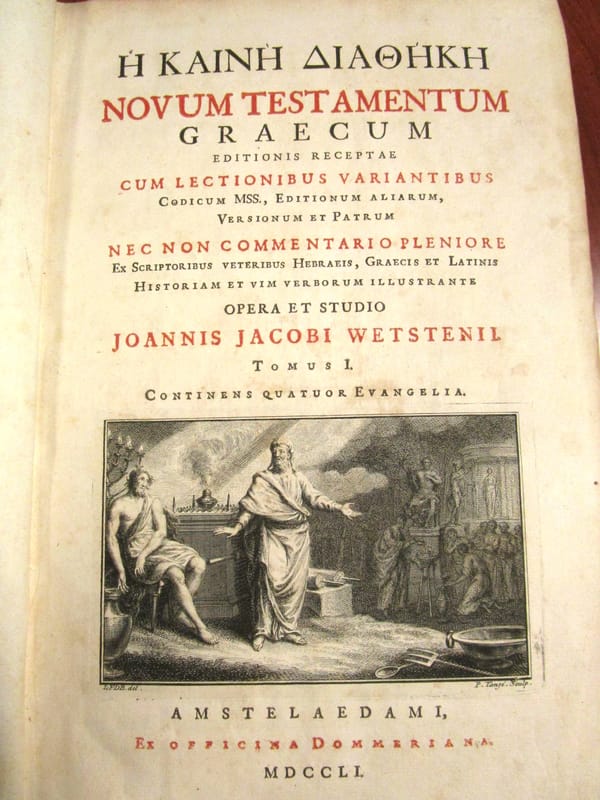
We are not going to be studying manuscripts per se, but we will be studying about various manuscripts. What are they called? What do they look like? When did they originate? And what role did they play in the English versions that we have today?
Someone might be asking himself, “Well yes, but why is it so important that we know all this information about these manuscripts?” We will begin this part of the chapter with a scriptural supposition. In Romans, chapter 10, we have this:
KJV Romans 10:17 So then faith cometh by hearing, and hearing by the word of God.
According to this verse, what does our faith depend upon? The Word of God. Suppose I were to say to you, “Now hear the Word of the Lord. This little piggy went to market, this little piggy stayed home, this little piggy had roast beef, and this little piggy had none.” How strong would your faith in Christ be based upon those words?
You would have no faith at all, would you? Why? Because you were not hearing the Word of the Lord. So our presupposition, based on Romans 10:17, is this: My faith or your faith is only as strong as the word that produces it.
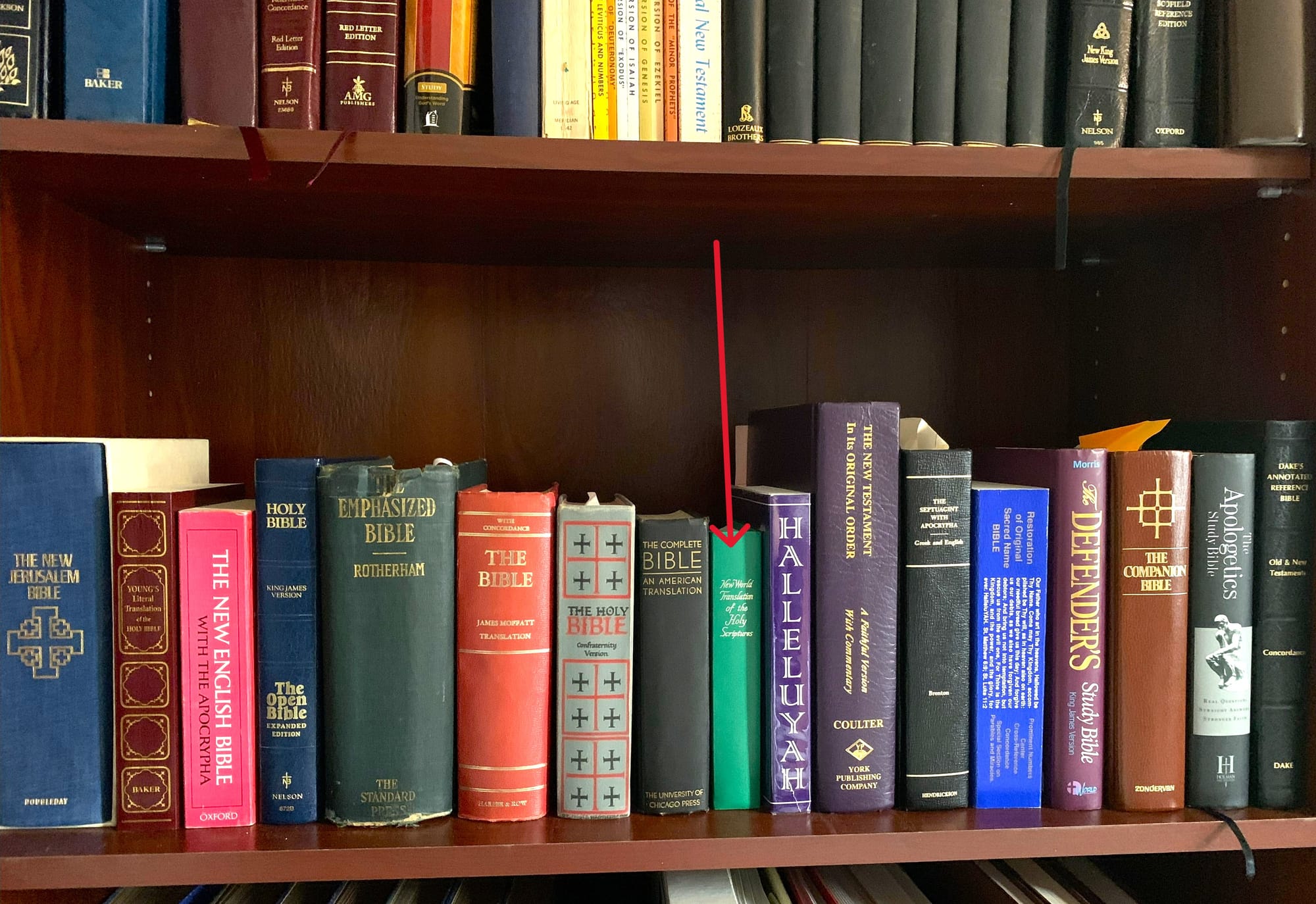
With that in mind, let us now hear the Word of the Lord from several Bible versions. If you are using a Bible as you read this, turn to Mark 10, verse 24. I am going to read the second half of the verse from the New World Translation (the Jehovah’s Witnesses Bible version). Jesus is speaking.
NWT Mark 10:24 … “Children, how difficult a thing it is to enter into the kingdom of God.”
Here is the same (partial) verse from the Revised Standard Version which reads:
RSV Mark 10:24 “…Children, how hard it is to enter the kingdom of God.”
Now, from the New American Standard Bible:
NASB Mark 10:24 “…Children, how hard it is to enter the kingdom of God!”
And finally, from the King James Version:
KJV Mark 10:24 “…Children, how hard is it for them that trust in riches to enter into the kingdom of God!”
You certainly noticed that other versions omitted an important phrase. Do you think that omission might affect your faith in some areas? Absolutely! It is omitted in almost all versions except the King James Version and the New King James version.
Let me now read to you from the Book of Hebrews, Chapter 7, verse 21(b) from the New International Version.
NIV Hebrews 7:21 “The Lord has sworn and will not change his mind: ‘You are a priest forever.’”
And from the New American Standard Bible…
NASB Hebrews 7:21 (“The Lord has sworn And will not change His mind, ‘Thou art a priest forever’”);
Now from the King James Version…
KJV Hebrews 7:21 (The Lord sware and will not repent, Thou art a priest for ever after the order of Melchisedec:)
Here is one more example, first from the King James Version.
Before we proceed, I want to make certain that all readers understand that when quoting the KJV directly, any words in the italic font indicates that such words have been added and inserting for clarity by the translators.
However, those words in italics are not actually in the Greek or Hebrew manuscripts. I do not have a problem with that and I do not consider that “adding to” the Word of God. (Revelation 22:18)
If one has studied any foreign language, then one understands that what is clear in one language is not necessarily clear in another unless one adds the extra words. They are usually necessary for clarity and a proper understanding.
Nonetheless, sometimes omitting the italicized word(s) creates a very different meaning, but those cases are relatively rare. In verse 9 below, we find two words italicized—Jesus and day. Some other English translations, but not all, follow this same practice of indicating translators’ additions by using italics.
KJV Mark 16:9 Now when Jesus was risen early the first day of the week, he appeared first to Mary Magdalene, out of whom he had cast seven devils.
10 And she went and told them that had been with him, as they mourned and wept.
11 And they, when they had heard that he was alive, and had been seen of her, believed not.
12 After that he appeared in another form unto two of them, as they walked, and went into the country.
13 And they went and told it unto the residue: neither believed they them.
14 Afterward he appeared unto the eleven as they sat at meat, and upbraided them with their unbelief and hardness of heart, because they believed not them which had seen him after he was risen.
15 And he said unto them, Go ye into all the world, and preach the gospel to every creature.
16 He that believeth and is baptized shall be saved; but he that believeth not shall be damned.
17 And these signs shall follow them that believe; In my name shall they cast out devils; they shall speak with new tongues;
18 They shall take up serpents; and if they drink any deadly thing, it shall not hurt them; they shall lay hands on the sick, and they shall recover.
19 So then after the Lord had spoken unto them, he was received up into heaven, and sat on the right hand of God.
20 And they went forth, and preached every where, the Lord working with them, and confirming the word with signs following. Amen.
Now, read this same passage (which we quote below) from the New American Standard Bible version (NASB). I do not know which edition of the NASB you may have, but in some versions, you can look for these verses, and you will find a literal blank space where these verses should be. These verses are not there.
In the particular version that I am using, which is a Parallel Bible edition, it has the KJV, the Amplified, the New American Standard Bible, and the New International Version (NIV,) side by side in four parallel columns. This passage is in the NASB in the Parallel Bible, but all of it is in brackets [ ] with a footnote at the bottom that says, “Some of the oldest manuscripts do not contain verses 9 to 20.” Here it is: QUOTE:
Mark 16:9-20 [Now after He had risen early on the first day of the week, He first appeared to Mary Magdalene, from whom He had cast out seven demons.
10 She went and reported to those who had been with Him, while they were mourning and weeping.
11 And when they heard that He was alive, and had been seen by her, they refused to believe it.
12 And after that, He appeared in a different form to two of them, while they were walking along on their way to the country.
13 And they went away and reported it to the others, but they did not believe them either.
14 And afterward He appeared to the eleven themselves as they were reclining at the table; and He reproached them for their unbelief and hardness of heart, because they had not believed those who had seen Him after He had risen.
15 And He said to them, "Go into all the world and preach the gospel to all creation.
16 "He who has believed and has been baptized shall be saved; but he who has disbelieved shall be condemned.
17 "And these signs will accompany those who have believed: in My name they will cast out demons, they will speak with new tongues;
18 they will pick up serpents, and if they drink any deadly poison, it shall not hurt them; they will lay hands on the sick, and they will recover. "
19 So then, when the Lord Jesus had spoken to them, He was received up into heaven, and sat down at the right hand of God.
20 And they went out and preached everywhere, while the Lord worked with them, and confirmed the word by the signs that followed.] [And they promptly reported all these instructions to Peter and his companions. And after that, Jesus Himself sent out through them from east to west the sacred and imperishable proclamation of eternal salvation.]
In most of my Bible study work, I use what was once considered the top-of-the-line program called BibleWorks. It still is, but with scores of competitors now available online (many of them for free or at very minimal cost), the BibleWorks company was forced out of business. Nonetheless, mine still works fine, so I continue using it.
In the New Revised Standard version in BibleWorks, it gives these extra notes. QUOTE:
NRS Mark 16:8 So they went out and fled from the tomb, for terror and amazement had seized them; and they said nothing to anyone, for they were afraid. (1) {(1) Some of the most ancient authorities bring the book to a close at the end of verse 8. One authority concludes the book with the shorter ending; others include the shorter ending and then continue with verses 9-20. In most authorities verses 9-20 follow immediately after verse 8, though in some of these authorities the passage is marked as being doubtful. }
The New International Version (NIV) contains this passage, both in my hard copy editions and in my BibleWorks digital version. Yet, right in the Bible text itself—not as a footnote, not with a marginal note, nor with a side note, they have written this:
NIV Mark 16:9 [The most reliable early manuscripts and other ancient witnesses do not have Mark 16:9-20.] When Jesus [END QUOTE … etc.]
Notice how they worded it: “The most reliable early manuscripts….” They are making a judgment. They are telling us that the manuscripts that omit those verses are the most reliable. Therefore, the neophyte Christian, the novice Christian might think, “Well if the most reliable manuscripts leave out those verses, I will just scratch them out.” (Or the reader will mentally discard or disregard them.)
The Amplified version (which is based upon the NASB) has included this passage, but has a footnote right at the beginning that says, “Verses 9 – 20 not in the two earliest manuscripts.”
The two earliest manuscripts that these “experts” refer to in their footnotes are called the Vaticanus and the Sinaiticus in the scholarly world (or to use the English terms instead of the Latin) the Vatican manuscript and the Sinai manuscript. Much more on those later.
I think you see by this little exercise that there are some significant differences among the various Bible versions. Remember, our faith is only as strong as the Word which produces it.
The reason for all of the differences among translations is primarily due to the different Greek manuscripts, the differing Greek texts which underlie the various English versions.
At this juncture, we are going to set aside a discussion of the Old Testament and the Hebrew manuscripts from which it came and just focus on the New Testament and the Greeks texts. That is where the vast majority of this debate centers.
Fortunately, there is one factor in this whole subject of texts and manuscripts that is not disputed by scholars on any side, and which enables us to avoid getting bogged down into the very technical detail of the manuscripts. What is that one factor?
(To be continued.)
~END~