
Chapter 3, Section 2: Two Streams of Manuscripts
For purposes of context and segue, we repeat the last paragraph from Chapter 3, Section 1.
Fortunately, there is one factor in this whole subject of texts and manuscripts that is not disputed by scholars on any side, and which enables us to avoid getting bogged down into the very technical details of manuscripts. What is that one factor?
It is the historical fact that virtually all modern Bibles, except the King James Version, can be traced back in their textual genealogy to the Greek text which was invented and collated by two Englishmen in the late 1800s: Bishop Brooke Foss Westcott and Dr. Fenton John Anthony Hort. There will be much, much more on these two players in the chapters to come.
There are only a very few other Bible versions in English which are exceptions to that, and we will mention them in due course. If we were to show this historical genealogy of Bible texts and versions diagrammatically, it would look like this chart.
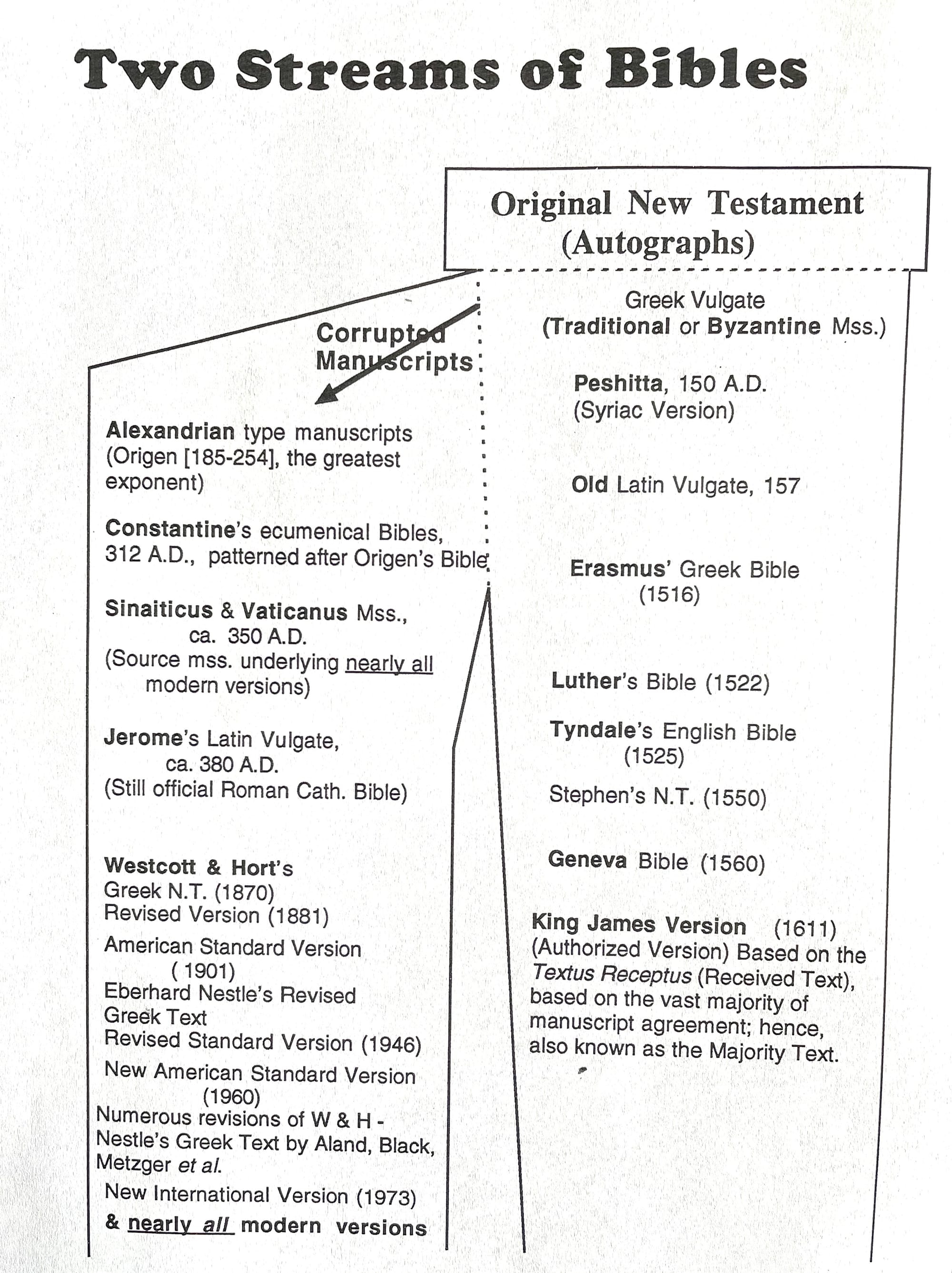
At the top of the chart, we have the original New Testament manuscripts. The technical term for those is the autographs. The originals are no longer extant. Whatever manuscripts do exist are copies of copies of copies to who knows how many generations.
Why are the autographs no longer extant? I think that God in His wisdom saw to it that none were preserved because, if they were preserved, what would we Israelites tend to do? Undoubtedly, some people would worship them, make idols of them, idolizing the ‘things.’ People would tend to worship the scrolls or parchments or whatever physical item the words were written on.
It is also very predictable that the autographs would have been deliberately destroyed because they would have been in constant use by the early Christians in their churches and gatherings and they would simply wear out from use.
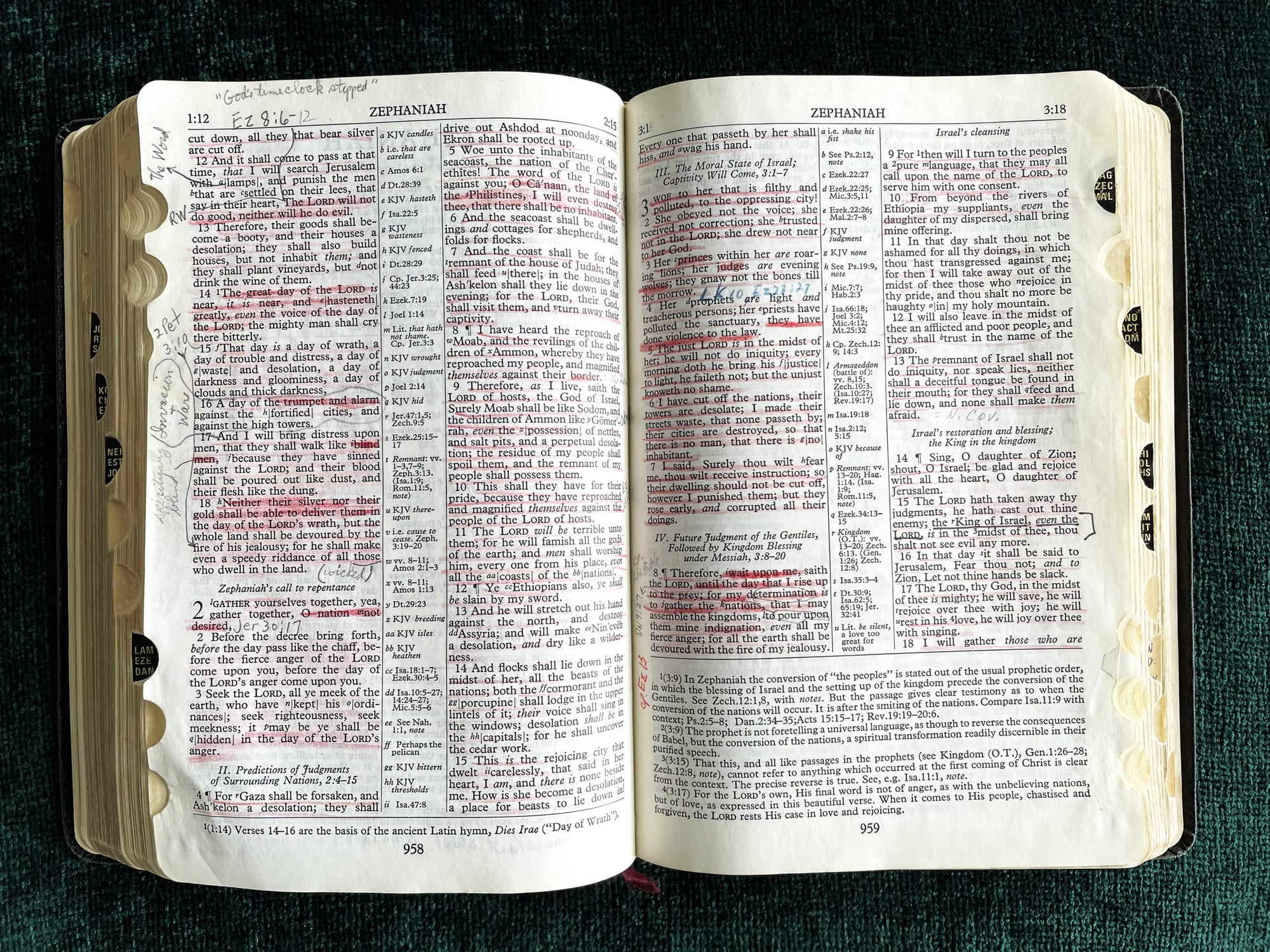
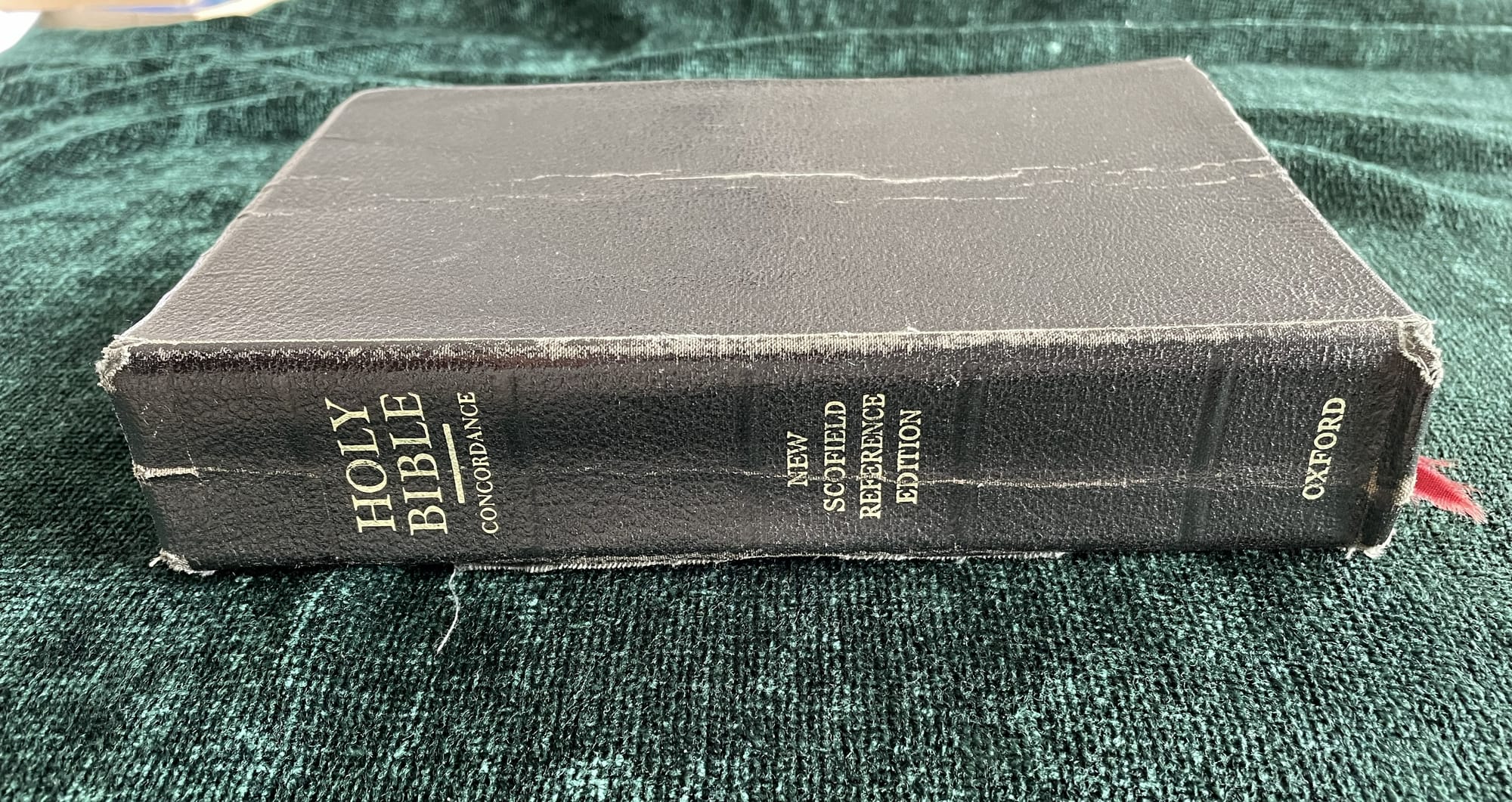
Upon recommendation of the fundamentalist minister where we attended church after I first became a committed Christian, I purchased a Scofield Reference Bible. I wore it out during those ten years when I was using it as my primary study Bible, even though I soon had many disagreements with Scofield’s notes. Much more on that later and in a separate study. The point is that it does not take long for even modern “paper” Bibles to wear out–if it is being used.
Obviously, the manuscripts existing today in the various repositories and museums were generations removed from the autographs. This raises the question about Bible preservation once again. We will discuss that in more detail later.
Notice in the chart that there are basically two lines of manuscripts. We could call them two branches, or two streams, or two families of manuscripts, and consequently, there are two streams of Bible versions, which both claim their origins in the New Testament autographs.
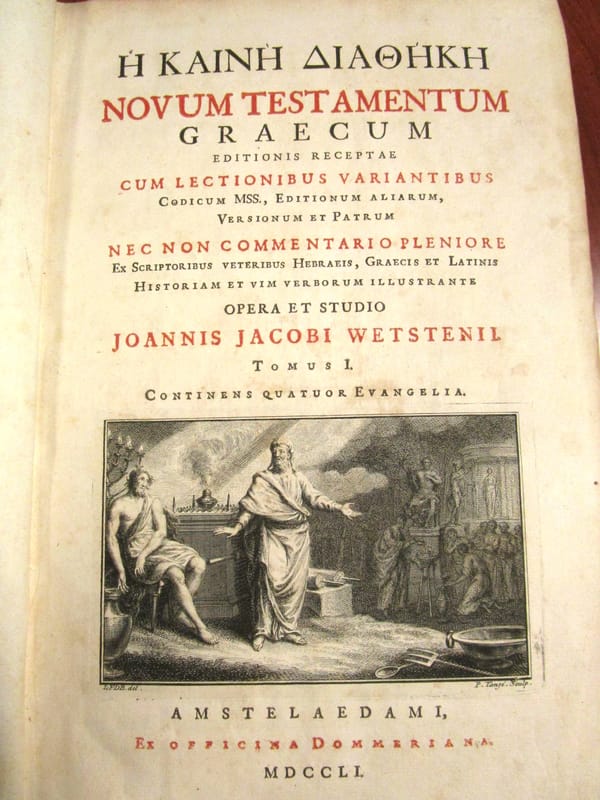
One branch comes down through Erasmus’ Greek Bible of the year 1516, Luther’s Bible in German of 1522, Tyndale’s English Bible of 1525, Stephanus’ [[[use pix from ]] New Testament of 1550, the Geneva Bible of 1560, up to the King James Version, also called the Authorized Version, of 1611. That is not an all-inclusive list.
All of these in the first stream (on the right in the chart), represent those that originate from what is called the “Textus Receptus.” This is a Latin term which means “Received Text.” It is also called the Traditional Text or the Byzantine Text, or the Majority Text. They are all quite close in meaning, but not exactly.
Therefore, when I use the terms Textus Receptus or Byzantine or Traditional or Majority, unless I specify otherwise, I am talking about the same texts, the right side stream of texts or manuscripts on the chart.
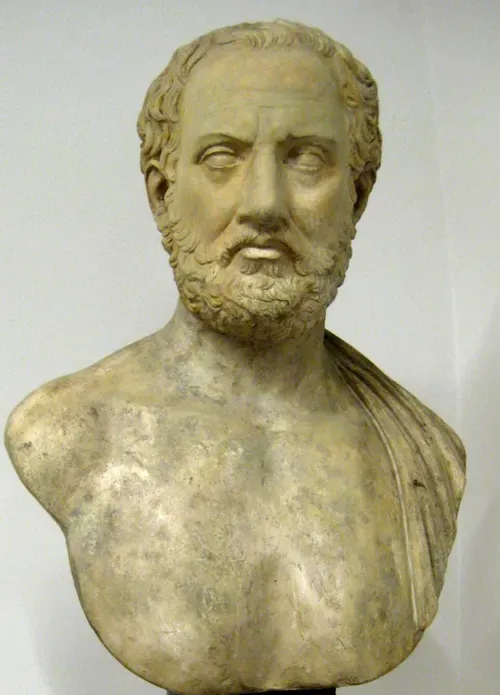
This term Textus Receptus first appeared in the Preface on a Greek New Testament that was printed and published by the Elzevir Brothers in 1633. (See more below.)
It simply meant that this was the Greek Text that was received by the scholars in the sixteenth and seventeenth centuries. In other words, it was coming down through that specific line of history. It was the text that had been received in that historical stream of manuscripts.

The Textus Receptus in time came to be applied to very similar Greek New Testaments going back to the work done by the Dutch humanist, Erasmus, in 1516. Incidentally, do not allow that term “humanist” to be disconcerting to you in this context because it did not have the pejorative meaning which it carries today.
In the 1500s, a humanist referred to a scholar who was erudite and thoroughly familiar with classical languages as well as many other areas of human endeavor. In other words, if a man was called a humanist back at the time of Erasmus, it was a compliment, high praise of a man’s scholarship.
From the time of Erasmus up through the King James Version of 1611, and even up to the New King James Version (NKJ) that we have today, it is the Textus Receptus, the Received Text, which underlies the Bibles in the right-hand stream. (More on the NKJ later in this series.)
As we see on the chart, Erasmus’ printed text of the Greek New Testament was published in 1516. He arrived at his Greek Text by comparing six manuscripts, which in themselves, were very similar to each other, and he further checked it and amended it by referring to the Latin Vulgate. This would have been the old Latin Vulgate of 157 A.D. (right side stream) as opposed to the Jerome’s Latin Vulgate of A.D. 350 (left side branch).
As already mentioned, the Textus Receptus is sometimes confused with or called by other names, but it differs only slightly. For our purposes, we will consider them synonymous with each other.
All four of these names, Textus Receptus, Byzantine, Majority, Traditional, should be understood to represent the basic text which has come down to us through the centuries and culminated in the King James Version of 1611.
These stand in stark and fundamental opposition to the other family of manuscripts, texts, and versions shown above on the chart. For this other branch, we will work backwards in time.
Notice that all these modern English versions—and obviously there is not space to put more than a few on this chart—from the Revised Version 1881, American Standard Version 1901, Revised Standard Version 1946, New American Standard Version 1960, New International Version 1973, and most of the modern versions, all go back in one way or another to the Greek Text given to the English-speaking world by Westcott and Hort in 1870.
Every one of them has its New Testament derived from the Westcott and Hort New Testament text. You can see that these two men, Brooke Foss Westcott and Fenton John Anthony Hort are major players, key individuals in this whole question of Bible versions.
Westcott and Hort came up with their Greek text by taking parts of the non-Byzantine, non-Majority, non-Traditional family of manuscripts, and instead, they chose to create their own Greek Text. Some of it was based on the Alexandrian Manuscript, but chiefly it was derived from the Sinaiticus and the Vaticanus manuscripts. In these last two, we have the primary foundation for nearly all modern English Bible versions, courtesy of Westcott and Hort.
Our job in this series is to try to determine if either of these two streams shown on the chart carries the true and inerrant Word of God. Or, if we find that they are not without some scribal errors, we still want to determine which of these two branches or streams is the most reliable and trustworthy.
This will help us choose the version we ought to be using today. The way this is done by scholars is called “the science of textual criticism.” Next, we must turn our attention to that in the next section of this chapter.
Supplemental Information
QUOTE: The 1624 Elzevir Textus Receptus was edited by the Elzevir brothers Abraham and Bonaventure.
The Elzevirs published three editions of the Greek New Testament. The dates being; 1624, 1633 and 1641. The Elzevir text is practically a reprint of the text of Beza 1565 with about fifty minor differences in all. The Elzevirs were notable printers, and their editions of the Greek New Testament were accurate and elegant.
They were of Flemish ancestry and were famous printers for several generations. Throughout Europe the Elzevir editions came to occupy a place of honor, and their text was employed as the standard for commentary and collation.
The text of this 1633 edition became known as the “Textus Receptus” because of an advertisement in Heinsius’ preface that said in Latin Textum ergo habes, nunc ab omnibus receptum: in quo nihil immutatum aut corruptum damus, ‘Therefore you have the text now received by all in which we give nothing altered or corrupt.’ END QUOTE

The Textus Receptus by Stephanus (Stephen’s in English) 1550
QUOTE: Robert Estienne (known as Stephanus) (1503-1559) edited and printed four editions of the Textus Receptus from 1546 to 1551. His third edition of 1550 was the first to have a critical apparatus, with references to the Complutensian Polyglot and fifteen additional Greek manuscripts.
The fourth edition of 1551 had the same Greek text as the third, but is especially noteworthy for its division of the NT books into chapters and verses, a system still in use today. END QUOTE
(Series to be continued.)
~END~