

Which Bible, Which Version? series
To segue from our previous installment, we left off by stating that we shall now scrutinize the methods of translating used by Westcott & Hort’s Revision Committee as compared with the practices employed by the King James Version Committee.
Here is how the KJV Committee worked. First of all, a quick review of the historical background will be helpful. In the 1500s, England was in turmoil. Constant fighting had been occurring between the Protestants and the Roman Catholics.
For a time England would have a monarch on the throne who was pro-Catholic; then vice versa. Queen Mary I of England, is the outstanding example of a cruelly Roman Catholic partisan. Also known as Mary Tudor, she was the first woman to rule England in her own right, reigning from 1553 to 1558.
During that short five-year reign, she earned the notorious nickname “Bloody Mary” for her persecution of Protestants. She executed approximately 300 religious dissenters by burning them at the stake. Her slaughter of the religious dissenters, however, failed to restore Roman Catholicism to England.
Mary was the daughter of Henry VIII and Catherine of Aragon, (Henry’s first wife). With Catherine failing to provide Henry with a male heir, the king divorced her on the grounds that his marriage to her was illegitimate because she had been the wife of Henry’s deceased brother.
Actually, if Henry had known the Scriptures, the truth is the exact opposite. The Scriptures in fact allow and prescribe that the brother of the deceased should “raise up seed to his brother,” so that his brother’s line will not become extinct in Israel. See Deuteronomy 25:5-10. This was a practice which even preceded the Mosaic law, as shown in Genesis 38:8.
In any event, Mary faced early charges of illegitimacy and virulent political turmoil before successfully claiming the throne after the death of her half-brother, Edward VI.
Unable to conceive an heir through a marriage to King Phillip II of Spain, Mary died in 1558 and was succeeded by her Protestant half-sister, Elizabeth I, who reversed Mary’s religious policies and tried to rid England of the country being infiltrated by the Jesuit spies of the popes.
Spain during the 1500s was the prominent world power. In 1588, with the complete sanction of the papacy, Catholic Spain sent the “Spanish Armada,” —every ship they could garner to invade Protestant England and put it in subjection once again to the church of Rome.
Many Protestants believe it was by divine providence that England was prevented from being destroyed because God sent a huge storm which wrecked the whole armada near the shores of Ireland and they never reached England.
The Protestant Queen Elizabeth I was reigning at this time, and apparently there were already moves afoot calling for a new Bible translation even then.
One source that I read says that an English translation was authorized by “Good Queen Bess,” as they called her, but it was not carried out until King James was on the throne. In my considerable research, I have found nowhere that King James initiated the idea, as some KJV-bashers charge.
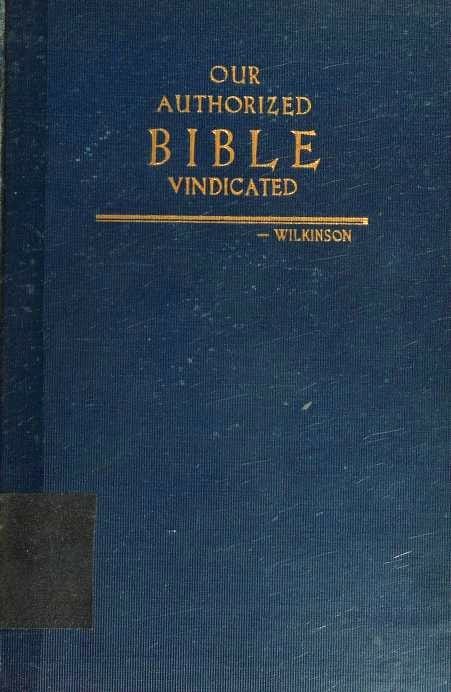
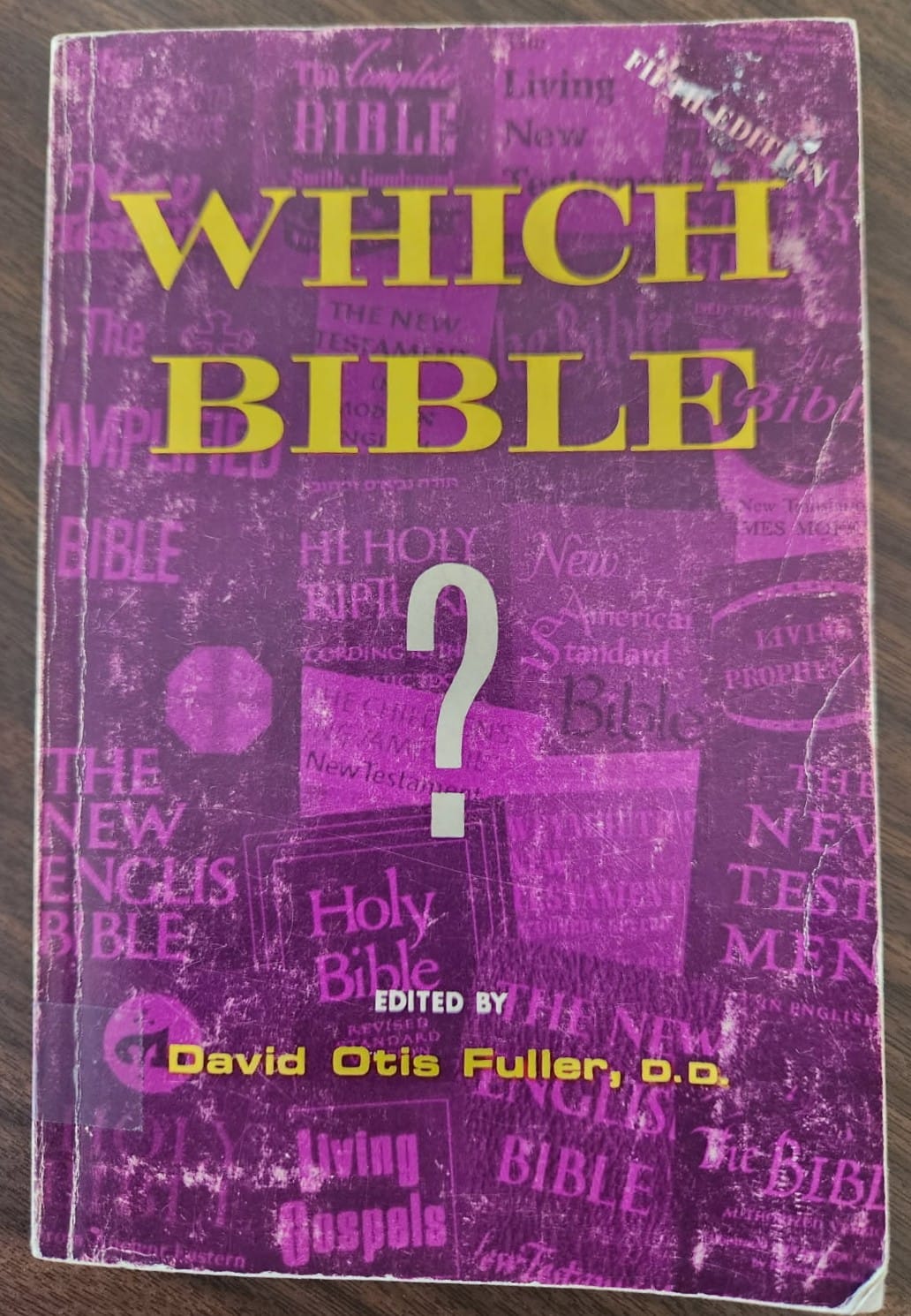
I now share with you from Professor Benjamin Wilkinson’s 1930 book called Our Authorized Bible Vindicated, as reprinted in David Otis Fuller’s book, Which Bible?
We find this on page 248. This is under “Origin of the King James Version.” QUOTE:
After the life and death struggles with Spain and the hard-fought battle to save the English people from the Jesuit Bible of 1582 …[Allow me to remind readers: Remember, who likes the Jesuit Bible? Dr. Moulton, the big name “scholar” who was responsible for selecting all the men for the Revision Committee.],
… victorious Protestantism took stock of its situation and organized for the new era, which had evidently dawned. A thousand ministers, it is said, sent a petition called the Millenary Petition. [Millenary meaning a thousand].
A thousand ministers sent this petition to King James, who had now succeeded Elizabeth as sovereign.
One author described the petition as follows, “The petition craved reformation of sundry abuses in the worship, ministry, revenues, and discipline of the national church.
“Among other of their demands, Dr. Reynolds, who was the chief speaker in their behalf, requested that there might be a new translation of the Bible without note or comment.”
[Still quoting Benjamin Wilkinson] The strictest element of Protestantism, the Puritan, we conclude, was at the bottom of this request for a new and accurate translation, and the Puritan element on the committee appointed was strong…
The language of the Jesuit Bible had stung the sensibilities and scholarship of Protestants. In the preface of that Jesuit Bible, it had criticized and belittled the Bible of the Protestants.
The Puritans felt that the corrupted version of the Rheimists [a reference to the Jesuit Bible, known as the Douay-Rheims version] was spreading poison among the people, even as formerly, by withholding the Bible, Rome had starved the people. END QUOTE
So, a committee was appointed for the King James Version, and the work was begun in 1604. They finished it in 1611.
There were 15 rules under which the Committee worked, and again, for a full discussion of these, see the books I cited in the previous Section. Those by Dr. Waite and McClure and Paine.
I shall, however, mention a few of these rules so that you can see the contrast with the Revised Version translators, and likewise, as compared to modern version translators and the rules under which they work.
The 54 men on the King James Version Committee were divided into six companies. They met in three cities: Cambridge, Oxford, and Westminster.
Each of the six companies were assigned to translate a batch of the books of the Bible, and these from the Textus Receptus, remember. One of these 15 rules was that each man had to...
Before I get into this, something just occurred to me. One of the things that the some of the King James Version-bashers will say was that the KJV Committee just took the Geneva Bible and updated it. Oh, really? … Not at all. Listen to this.
One of the 15 rules was that to begin his work, each man had to translate the batch of books they were assigned completely on his own.
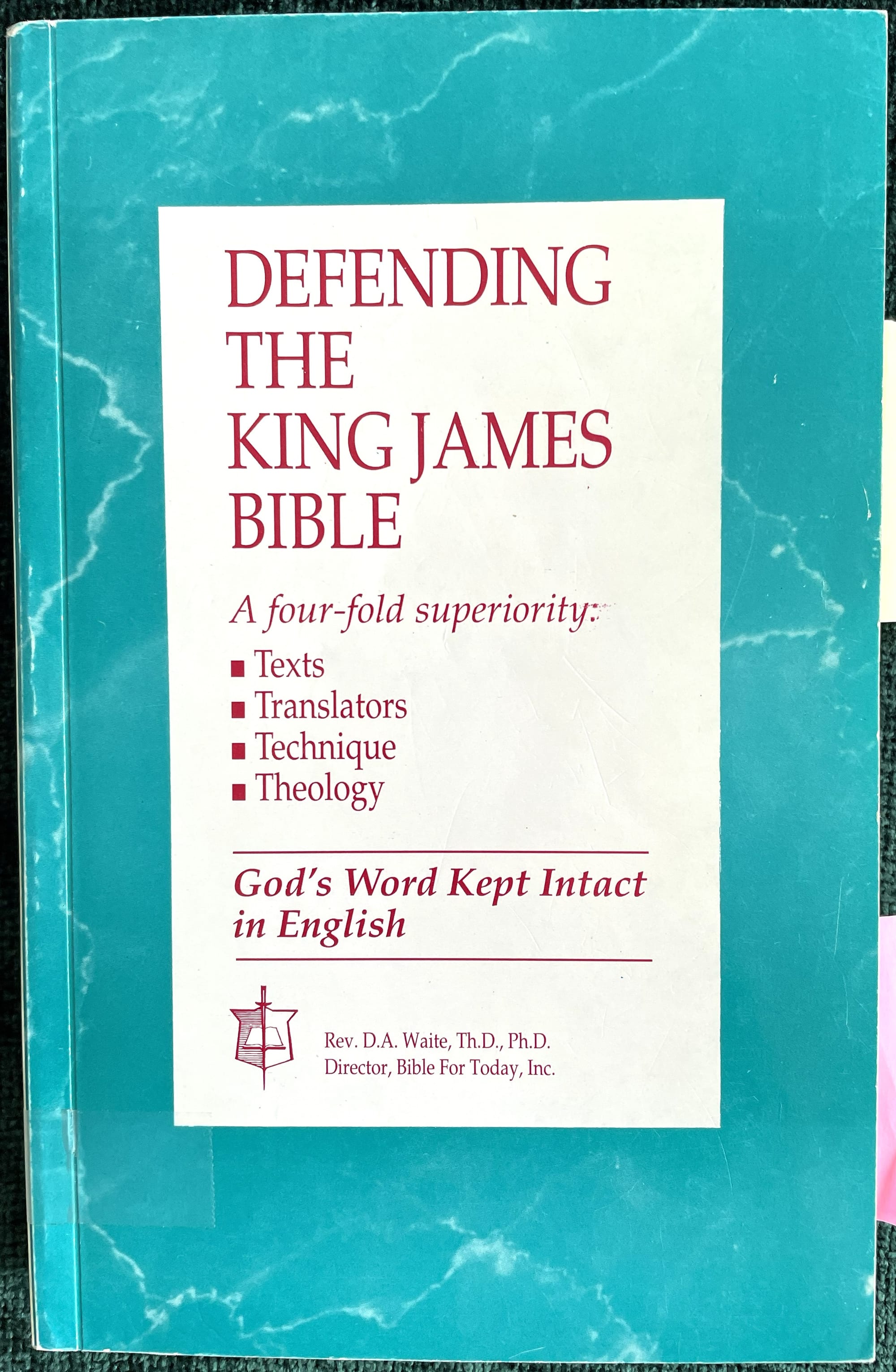
The following is from Defending the King James Bible by Dr. Waite, page 84. QUOTE:
Company One, for instance, the Westminster Group, Old Testament section, had to translate from Genesis through 2 Kings. That is twelve books. If you know anything about translating from Hebrew into English, you know it might take you months before you would get beyond Genesis.
It would take some people years, unless you knew Hebrew the way you know English or Spanish or one of the more familiar languages.
These men had to go through Genesis... These men [the King James Version translators in Company One, Westminster Group, the Old Testament section] had to translate Genesis, Exodus, Leviticus, Numbers, Deuteronomy, Joshua, Judges, Ruth, 1 Samuel, 2 Samuel, 1 Kings, and 2 Kings—every book. [Each man individually.]
This could not have been done in the time they had before them unless they had known the language well. You can’t fake it. They had to write it out, bring it in, and defend it… Every one of those men had to translate on his own. END QUOTE
Then after that, each man sends his translations to the other men in his company for each to go over the work of the others, then after that, we find on page 86, QUOTE:
So, if I take Company One that has to translate from Genesis through 2 Kings, those 12 books, and an average of seven men on that committee, each had to translate every book, every chapter, every verse himself, that was seven different times the portions were looked over.
Then they had to meet together and go over it once more. That’s the eighth time.” END QUOTE
Then after that, another rule said that when each company had finished any one book, they had to send their agreed-upon translation to all the other companies, and they all had to look over each book from all the other companies. From Dr. Waite again.
QUOTE: So when the seven men looked at it, and then all together making eight times, then the first company sends it to companies two, three, four, five, and six. That’s five more times. They interchange their work.
Here you have the material gone over 13 times, and then at the end they have a final joint meeting of two men from each of the six companies, 12 men.
This makes 14 times that the Bible from Genesis to Revelation was translated, analyzed, and corrected. This is a team technique that is unequaled by any modern translators. END QUOTE
Another rule stated that if the King James Translating Committee came across some particularly difficult passage, they could send it out across the country to other men of skill in the language for their assistance in trying to get it right.
Another rule along those same lines specified that the bishops on the Committee should send their tentative results of any given book out to all the respective clergy, who would in turn make those tentative results available to as many as were diligently skillful in the ancient languages, and thus the company could consider their particular observations also.
Thus, it was a very open process. Now when they ran into a passage of the text where there was disagreement, then that final committee, that is the committee composed of two men from each of the six committees, and the one that made the fourteenth time the whole Bible was gone over, this committee had to come to unanimous agreement, not a majority vote.
That is a sampling of the rules to give you a picture of the methods used by the King James Version translators.
Listen now to this quote from Dr. Waite as he contrasts this technique to those used by modern Bible version translators. QUOTE:
The team technique used by the King James translators was far different from that used by the translators of the modern versions. Each man had to translate all the books that were on his schedule to translate, twelve books, for instance, in Company One.
They were Hebrew books, difficult books. The first company took Genesis to Kings. The Oxford group took Isaiah through Malachi. Every one of these men had to translate from the Hebrew to the English himself, unaided by anyone else.
The men who translated the New American Standard Version, the New International Version, and the New King James Version didn’t have that qualification.
In these versions, you had a great deal of window dressing. You had people on the committees with degrees. You had scholars who may know many things.
Many of them were on the Committee in order to induce people to buy their version so that the publisher could make a lot of money on it. Some of these individuals wrote promotions at the beginning of the book and at the end of the book and in advertising. Dr. So-and-so thinks that this is a tremendous version or something like that.
But each and every man on each of the committees for the above versions and other English versions as well did not have to translate from the Hebrew or Greek to English by themselves.
If any of our readers have absolute and positive documentation to the contrary, we’d be happy to know about it. I am quite certain that no one can prove me wrong in this matter.
They had a relatively few scholars who did most of the work for the whole group. But each man who translated the King James Bible was highly skilled. After they had translated their own work, they got together and decided which translated words would stand…
No less than 14 different times the translation for each book was gone over from stem to stern. This is an unusual and so far as we know, a never before and never afterward team technique that was used. It is certainly superior. END QUOTE
Let’s now turn our attention to the work of Westcott and Hort and the Revision Committee of 1871 to 1881.
(To be continued.)
~END~