Which Bible, Which Version? series
Now that we have had some insight into how the translators of the KJV went about their work, let us turn our attention to the work of Westcott and Hort and their Revision Committee of 1871 to 1881. The differences between the Committees and how they went about their work are both stark and revealing.
As is my practice, all emphases and comments [within brackets] are mine, unless otherwise noted.
I have already mentioned how the deck was stacked in terms of the members of the Revision Committee. Just before beginning the work, Bishop Westcott initiated the idea of holding a communion service for the members of the Committee.
Pardon my cynicism, but it seems to me that Westcott was playing the (fake) piety card, as if he were creating what we would today call a “media event.” It was a public relations stunt to deceive the public about the true agenda of Westcott and Hort. I can imagine Westcott addressing the Committee:
“My brothers in Christ, let us come before the Lord in this communion service as we approach our task to revise His Holy Word.” Deception was one of the stratagems of this devilish duo from the outset, as will be further illustrated below.
Meanwhile, G. Vance Smith, the deity of Christ-denying Unitarian had been selected for the Committee. So when the communion was proposed to include the participation of this unbeliever, it brought a howl of protest all across England. But Smith remained on the Committee because Dr. Moulton said he would resign if Smith left. Pure intimidation kept the Unitarian on the Committee.
The whole idea for a revision of the KJ Bible did not have a substantial degree of support even from the Anglican Church itself, let alone the other denominations in the United Kingdom. Administratively, the Anglican Church was divided into a northern and a southern convocation.
We would call them districts. The northern convocation refused to participate. In the end, it was only the southern convocation of the Anglican Church which gave its authority to undertake a Bible revision!
Remember from an earlier chapter that I told you how they tried to get Queen Victoria to give her approval to a Bible revision. She refused three different times.
The Presbyterians and other Protestant groups in England also had no voice. But even given this situation, listen to what the Anglican Church Southern Convocation—which was the only church body saying, go ahead and do it—listen to how they directed the Revision Committee to undertake the revision.
The Committee was instructed to undertake QUOTE: a revision of the authorized version with a view to the removal of plain and clear errors. END QUOTE.
Moreover, the first rule was QUOTE: to introduce as few alterations as possible into the text of the authorized… END QUOTE.
Furthermore, they were not to QUOTE: make any new translation of the Bible nor any alteration of the language except where in the judgment of the most competent scholars such change was necessary. END QUOTE.
Add to that the following rule. QUOTE: In such necessary changes, the style of the language employed in the existing version, King James, was to be closely followed. END QUOTE.
Those were integral portions of the rules for the Revision Committee. That was what they were charged and commissioned to do. Those directions are quite clear, would you not agree?
Make as few alterations as possible? They made over 36,000 alterations! One wonders what we would have seen for a final product if they had not been restricted to make as few changes as possible.
Of course, what really happened was that Westcott and Hort and their allies simply ignored whichever rules stood in their way. The devilish duo had had an agenda ever since their college days and now was the culmination of their plot.
But they knew they had to be very cautious because they had no intention of simply revising the King James Version.
By 1871, they had spent 18 years working on their textual theory and splicing together their new Greek text. They intended to supplant the King James Version with a new Bible, not to produce a revised King James Bible as they were charged to do.
From The Life of Westcott, Volume 1, page 228 and 229, Westcott is writing to Hort, October 12, 1853. This is still in their graduate days of college. QUOTE:
As to our proposed recension of the New Testament text, our object would be, I suppose, to prepare a text for common and general use in schools, for instance. END QUOTE.
Remember, if you can change the rules of Greek grammar, you can do a lot of damage. Likewise, if you can get an entirely new Greek text to be used in the schools, seminaries and Bible colleges, you can change an entire nation by changing the people’s doctrines. You could actually bring England and the United Kingdom back under the control of the papacy.
So here they were, very early in their lives, clearly stating their goals that this is exactly what they intended to do: supplant the KJV with their own Bible, based on a new Greek text which they themselves would assemble.
Continuing to QUOTE: I feel most keenly the disgrace of circulating what I feel to be falsified copies of the Holy Scripture. [He is referring to the KJV, of course.] And I am most anxious to provide something to replace them…
[A couple sentences later.] But pray. Think how utterly ignorant and prejudiced even well-informed men are on the text of the New Testament. I dare not trust myself to use names.” END QUOTE.
Next, here is what Hort wrote to his friend, Dr. Lightfoot, on May Day, 1860. This is found in The Life of Hort, volume 1, page 420. QUOTE:
But I now feel that I must say a word about more general principles. If you, Dr. Lightfoot, make a decided conviction of the absolute infallibility of the New Testament, if you make that practically a sine qua non for cooperation, I fear I could not join you, even if you were willing to forget your fears about the origin of the Gospels. END QUOTE.
What he is saying is, Lightfoot, if you say that I [meaning Hort] must believe in the infallibility of the New Testament in order to join you in this project, then I [Hort] cannot make that profession of belief. I cannot do it.
About a year later, on October 12, 1861, Hort made this very candid confession in a letter to Westcott. This is in The Life of Hort, volume 1, page 445. This is Hort writing to Westcott. Note: When Hort says “our text,” he is referring to the Greek text that he and Westcott had been working on for eight or ten years at that point. QUOTE:
This may be cowardice. I have a sort of craving that our text should be cast upon the world before we deal with matters likely to brand us with suspicion.
I mean, a text issued by men already known for what will undoubtedly be treated as dangerous heresy will have great difficulties in finding its way to regions which it otherwise might hope to reach and whence it would not be easily banished by subsequent alarms. END QUOTE.
Admittedly, it is hard to follow this language from the 1800s but do you comprehend what Hort is saying, what he is admitting? Allow me to paraphrase it in today’s common everyday English. In effect, Hort is saying:
We got our own Greek text about ready now, but we had better be very careful because what we need to do is to cast it or spring it upon the world and we have got to watch what we say.
We can’t go too public with some of these things that we believe because we would be branded as heretics and that would ruin our whole project of getting this new Greek testament out there.
Then he says at the close of his letter to Westcott, QUOTE: Perhaps we had better act quite independently. END QUOTE.
In other words, you do this and I’ll do that, but secretly we’ll be working together. And thus the two of them working independently—as far as the general public perceived—which is probably why Hort became known as the prime impetus behind “the theory of Westcott and Hort.”
Hort was the strongest personality on the Committee but along with Westcott and Lightfoot they easily dominated the Revision Committee.
As to the actual work of the Committee, here are some excerpts from the book by Dr. Benjamin Wilkinson (1872-1968), Our Authorized Bible Vindicated. Note: When I originally spent years researching this subject, I was unable to find/obtain this book and relied on Dr. David Fuller’s book, Which Bible, quoting Wilkinson. But I have recently discovered that Wilkinson’s book is now available for a free download at this link.
QUOTE: When the English New Testament Committee met, it was immediately apparent what was going to happen. Though for ten long years [1871-1881] the iron rule of silence kept the public ignorant of what was going on behind closed doors, the story is now known.
The first meeting of the Committee found itself a divided body, the majority being determined to incorporate into the proposed revision the latest and most extreme higher criticism. This majority was dominated and carried along by a triumvirate consisting of Hort, Westcott, and Lightfoot. The dominating mentality of this triumvirate was Dr. Hort.
Before the Committee met, Westcott had written to Hort, “The rules though liberal are vague, and the interpretation of them will depend upon decided action at first.” END QUOTE.
In other words, what Westcott is saying is, yeah, we got these rules we are supposed to follow, but if we get in there and take charge immediately with our agenda, we can set the course by just deciding which way to interpret the rules, because the rules are liberal and vague. So, we’ve got to act first. We’ll set the course.
Continuing to QUOTE Wilkinson:
They were determined at the outset to be greater than the rules, and to manipulate them.
The new members who had been elected into the body, and who had taken no part in drawing up the rules, threw these rules completely aside by interpreting them with the widest latitude.
Moreover, Westcott and Hort, who had worked together before this for twenty years, in bringing out a Greek New Testament constructed on principles which deviated the farthest ever yet known from the Received Text, came prepared to effect a systematic change in the Protestant Bible. On this point Westcott wrote to Hort concerning Dr. Ellicott, the chairman:
“The Bishop of Gloucester seems to me to be quite capable of accepting heartily and adopting personally a thorough scheme.”
And as we have previously seen, as early as 1851, before Westcott and Hort began their twenty years labor on their Greek text, Hort wrote, “Think of that vile Textus Receptus.”
In 1851, when he knew little of the Greek New Testament, or of texts, he was dominated with the idea that the Received Text was “vile” and “villainous.” The Received Text suffered fatal treatment at the hands of this master in debate. END QUOTE.
There were a small minority of men on the Revision Committee who realized what Westcott and Hort were attempting to do, and they did their best to oppose them. We shall take up that part of the story next.
(To be continued.)
ADDENDUM (for “extra credit”)
The following is an edited (by me) version of an AI-generated response.
Samuel Prideaux Tregelles was another prominent English biblical scholar who was invited to serve on the Revision Committee. However, his ill health limited his active participation in its final stages.
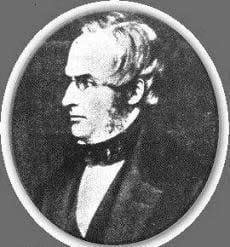
Tregelles was a Christian Hebraist and textual critic known for his work in New Testament textual criticism. Born to Quaker parents in Cornwall, he became a central figure in the Plymouth Brethren movement before dedicating his life to scholarship, often associated with the community in Plymouth. Nonetheless, later in life he broke with the Plymouth Brethren.
Working by himself he published his own text of the Greek New Testament between 1857 with some parts being published posthumously as late as 1879. Tregelles rejected the Textus Receptus in favor of a text based on the allegedly “oldest and best” available manuscripts, “ancient” versions; namely, the Vaticanus and the Sinaiticus, plus citations of the writings of the Church Fathers.
In this, Tregelles adopted a method that paralleled the work of Karl Lachmann, the German Higher Critic. Recall our exposé of this bogus method of textual criticism in our earlier chapters of this series.
~END~