
Which Bible, Which Version?
We are still in the process of helping our readers become familiar with the subject of Bible manuscripts—and we are on the final segment of that. All of this is so the reader will appreciate the next chapters which detail how “certain men crept in unawares” and their fruit has destroyed the faith of many in the past century and a half.
Previously, we were showing how Constantine Tischendorf’s Codex Aleph, the Sinaiticus manuscript, by omission denies the very central doctrine of Christianity: the resurrection of our Lord and Savior Jesus Christ.
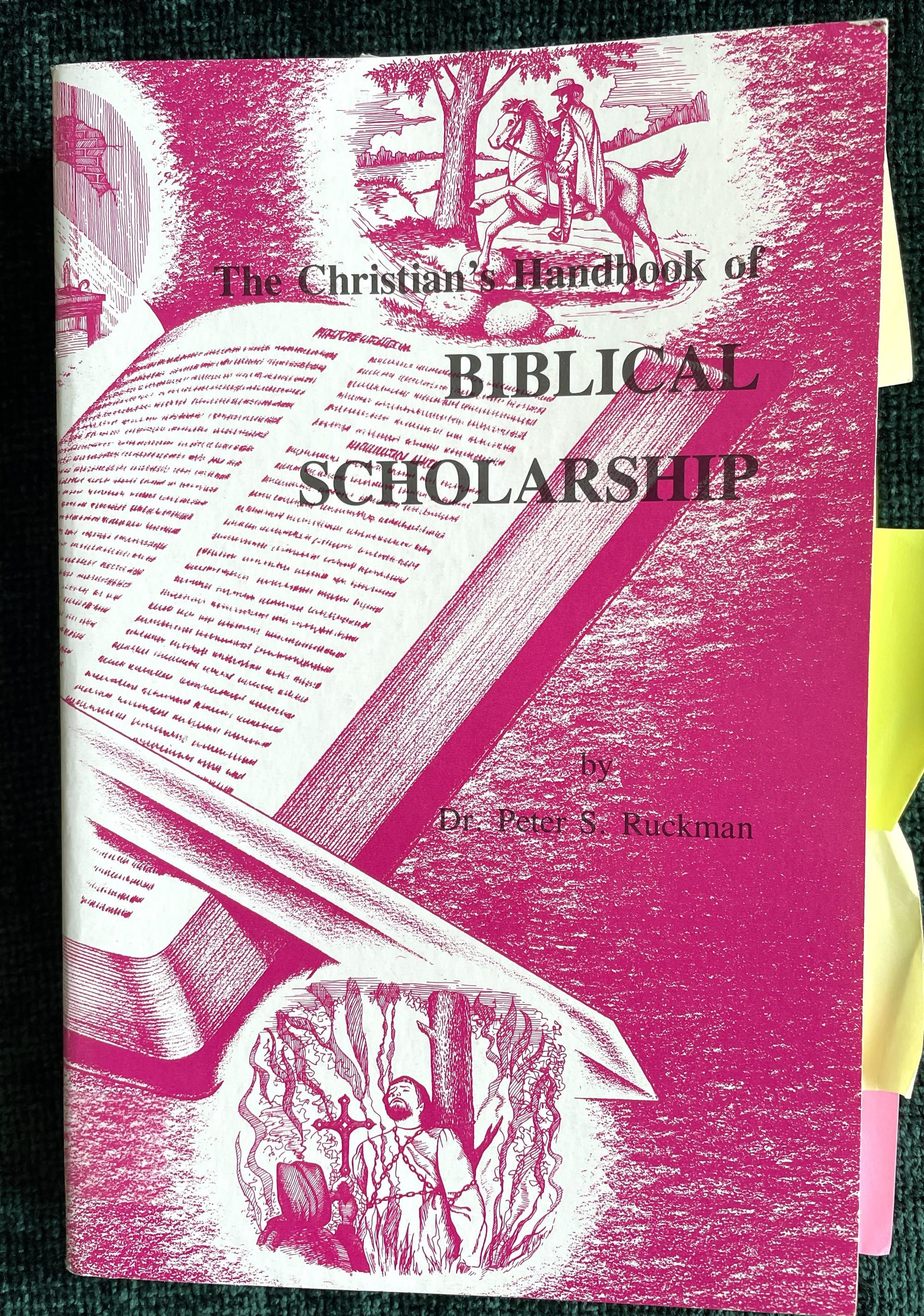
Let me now give you Dr. Peter Ruckman’s rejoinder to the Sinaiticus omission of Mark 16, verse 9 through the end of the chapter (verse 20).
Within his discussion of both Sinaiticus and Vaticanus, Ruckman says this in his book, The Christian’s Handbook of Biblical Scholarship.
As usual, in all my quotations from other sources, unless otherwise noted, all emphases and comments within [brackets] are mine.
Ruckman QUOTE: These are the two uncial manuscripts that omit Mark 16, 9 to 20. Dean Burgon’s classic work on this omission was published in 1871, ten years before the Revised Version committee sat down at the table, and 28 years before Nestle printed his Roman Catholic Greek text, which put the passages in double brackets, indicating that according to the dictates of Westcott and Hort, it was to be rejected as part of the sacred text.
The Scofield note lamely tries to justify its inclusion on the grounds of two church fathers after notifying the reader that the oldest manuscripts, we quote, ‘two most ancient manuscripts’, omit it.
But no one had to justify anything. With the evidence given, only a stupid fool—and we say that fully realizing that the men who doubt the ending on Mark 16, sometimes hold five earned degrees and have taught Greek for 40 years—only a stupid fool—and we say that knowing the names, pedigrees, titles, and character of the members of the revised version committee of 1881 and the American Standard Committee of 1901—only a stupid fool would have doubted the passage.
A sane Christian man would have doubted the two most ancient manuscripts immediately, Vaticanus and Sinaiticus, because the evidence against them was as follows.
Papias, early church father, A.D. 100, who refers to the passage.
Justin Martyr, A.D. 151, who refers to the passage.
Irenaeus, A.D. 180, who cites the passage.
Hippolytus, A.D. 220, who quotes the passage.
The Council of Carthage, A.D. 256 to 258, which quotes from the passage.
Augustine, Eusebius, Jerome, Jacobus, Nisabinus, Ambrose, Chrysostom, and Victor of Antioch, A.D. 370 to 425.
The old Latin Vulgate, before Jerome, back in the second century, which has the passage.
Jerome’s Latin Vulgate even has it, A.D. 405.
The old Syriac and the Peshitta, second to fifth centuries, which contain the verses.
[Bishop] Ulfilas’ Gothic version, A.D. 350, which has the passage.
The passage is found in all four ‘families’ of manuscripts, which [were] the families invented by Griesbach and Semler.
The Alexandrian has it.
The Western has it.
The Caesarean has it.
The Majority, Textus Receptus, is replete with it. PAUSE QUOTE
And I am not giving you all the details that Dr. Ruckman gives here of all the numbers of all the manuscripts. So, continuing, QUOTE:
Now, how is one to explain Nestle, Aland, that’s Eberhard Nestle, Kurt Aland, and Bruce Metzger of the United Bible Society, putting double brackets around Mark 16, verses 9 to 20, in 1987?
Well, no one with an IQ above 70 has to guess. Westcott and Hort convinced the enemies of the one book [the Bible] that on the age of Vaticanus and Sinaiticus alone, the entire evidence of the Christian church, the evidence of the Church Fathers, Greek manuscript evidence, church history, and the Holy Spirit was to be overthrown. PAUSE QUOTE
Why? Because Westcott and Hort said it was not in their two favorite manuscripts. The resurrection passage was not in the two “most ancient authorities,” Vaticanus and Sinaiticus.
Continuing from Dr. Ruckman. QUOTE:
They overthrew the evidence, but any honest man with a grain of sense would have looked at the evidence and then thrown Sinaiticus and Vaticanus out the window as immoral, God-forsaken, non-biblical travesties of the truth, not worth the time it would take to read them.
These incredible goofballs, with 40 years of formal education and a lifetime spent studying Greek, not only gave the manuscripts a hearing, they accepted them as genuine.
After all, was not one of them named after the Vatican? END QUOTE from Dr. Peter Ruckman.
Before we close this section, I will provide you with a few salient facts about the Vaticanus.
Obviously, it shares much in common with Sinaiticus, and the two together were substantially the basis for Westcott and Hort’s invented Greek text, which they slipped into the Revised Version committee members’ hands.
Here, then, are a few other facts about Codex B, the Vaticanus.
First of all, Protestants have always been quite suspicious of it, since it was suddenly discovered in the Vatican in about 1475 A.D.
And golly, gee darn, if it didn’t come in real handy for the Roman Catholic Church just in time to try to counter the Reformation.
In other words, those Catholics essentially said, “Golly, gee, looky here what we found back here in the basement of the Vatican. We found the real Word of God. And you Protestants had better take a look at this.”
Of course, they didn’t show them. They just baldly and boldly asserted, “We have the real one.”
But they did hand the manuscript over to the Jesuits, who had been booted out of England at that time.
And those black-robed devils then used it to come up with the Douay-Rheims Roman Catholic version of the Bible in English, the one that I started out on when I was a kid, on the one or two occasions we opened the Bible in the Catholic Church in those days.
And so back to England went the Jesuits with the Douay-Rheims English Bible to try to infiltrate the Church of England.
By the mid-1500s, reformers like John Calvin and John Knox had identified the Roman Catholic Church as fitting the prophecies of Mystery Babylon the Great, Mother of Harlots, in the Book of Revelation.
The Reformers further identified the papacy itself as the embodiment of antichrist. Now, these particular identifications were found to be not at all flattering by the hierarchy of the Roman Church.
Therefore, it is not surprising that in the Vaticanus manuscript, there is no Book of Revelation! It’s not there. It’s not part of the real original text, they say.
And furthermore, the section in the Book of Hebrews which tells about Christ offering himself as the sacrifice once and for all is conveniently missing.
Because that Scripture simply would not fit the daily sacrifice of the Mass that the Catholic Church has as a central ritual, so that Scripture also is not in the Vaticanus manuscript.
The Vaticanus agrees with the Textus Receptus only about 50% of the time. In nearly 8,000 places, it differs from the Majority Greek text, which averages out to about one change per verse.
Do not let anyone tell you that these are all minor and inconsequential changes or omissions or additions. We will give you Westcott and Hort’s own words on that later in this series.
Codex B (Vaticanus) omits several thousand key words from the Gospels, nearly 1,000 complete sentences, 500 clauses. It adds approximately 500 words, substitutes or modifies nearly 2,000, and transposes word order in about 2,000 places.
It has nearly 600 readings that do not occur in any other manuscript.
Linguistic scholars have noted that Codex B, the Vaticanus, is very similar to the classical Greek language of Plato, and not like the Koine Greek (aka Biblical Greek) of the New Testament.
In fact, Eberhard Nestle admitted that he had to change his Greek text when using Aleph and B in order to make it appear like Koine Greek! Ah, deception and lies, and more deception.
To slightly alter the old saying, what a tangled web they weave when at first they chose not to believe.
We have now taken a fairly close view of the major manuscripts, the Alexandrinus, the Sinaiticus, and the Vaticanus.
We have shown you the character of Constantine Tischendorf and how he lied and stole to obtain Codex Aleph and obtain fame for himself.
You now have some knowledge of what higher criticism is all about.
And we have given a couple of important examples of how both codices, Aleph and B, are used to strike at the very foundation of biblical Christianity; namely, by attempting to debunk the Trinity, and therefore the deity of Christ, and by attempting to debunk the resurrection and the ascension.
Actually, we have not said much about the ascension thus far, but they tried to knock that doctrine out as well.
As we continue next time, we will be examining in great detail the lives of two key men, Westcott and Hort …what they did, what they believed, and what their legacy is. In other words, their fruit.
This will lead us into an examination of Gnosticism and the occult, and some other very fascinating areas which affect each and every person, Christian or not, who is living in the United States today.
Before I close this section, however, there is just one other fascinating tidbit or two which the reader may find fascinating.
You will recall that I made reference to the fact that any Bible student knows that Egypt, in Bible symbolism, stands for the world in its corruption. It stands for sin and imperfection.
Well, in looking at the name of Codex B, Vaticanus, Vatican, that in itself warns Bible-believing Christians that the paganized Roman Catholic Church is involved. Better beware of that one. You can tell just by the name.
But what about the Sinaiticus? Well, it was found in the Sinai Peninsula, which has historically been considered part of Egypt. Therefore, what is Codex Sinaiticus, Codex Aleph, associated with? With Egypt, with sin. With corruption and imperfection.
But you say, “Wait a minute, James, wait a minute. Wasn’t it found in a monastery which is lying at the base of Mount Sinai? The holy mountain of God? The place where Moses went up and received the Ten Commandments?”
And I say, yes, the manuscript was found there–in a wastebasket ready for burning as trash. But here is the key question. By way of introducing it, how many of you have heard of either of these two books?
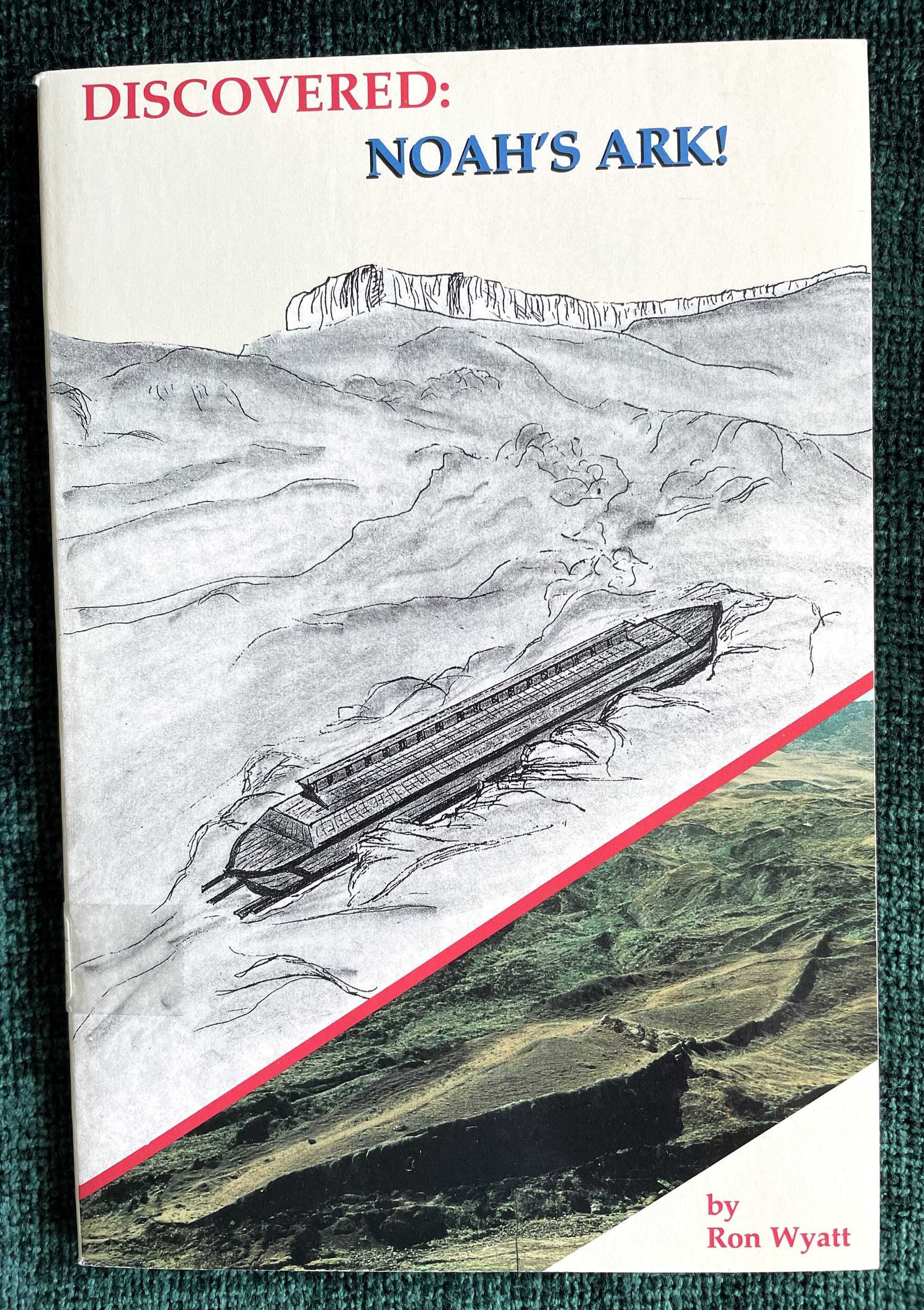
Discovered: Noah’s Ark? Or The Ark of Noah by David Fasold. Discovered: Noah’s Ark is by Ron Wyatt. Very interesting; a very fascinating story.
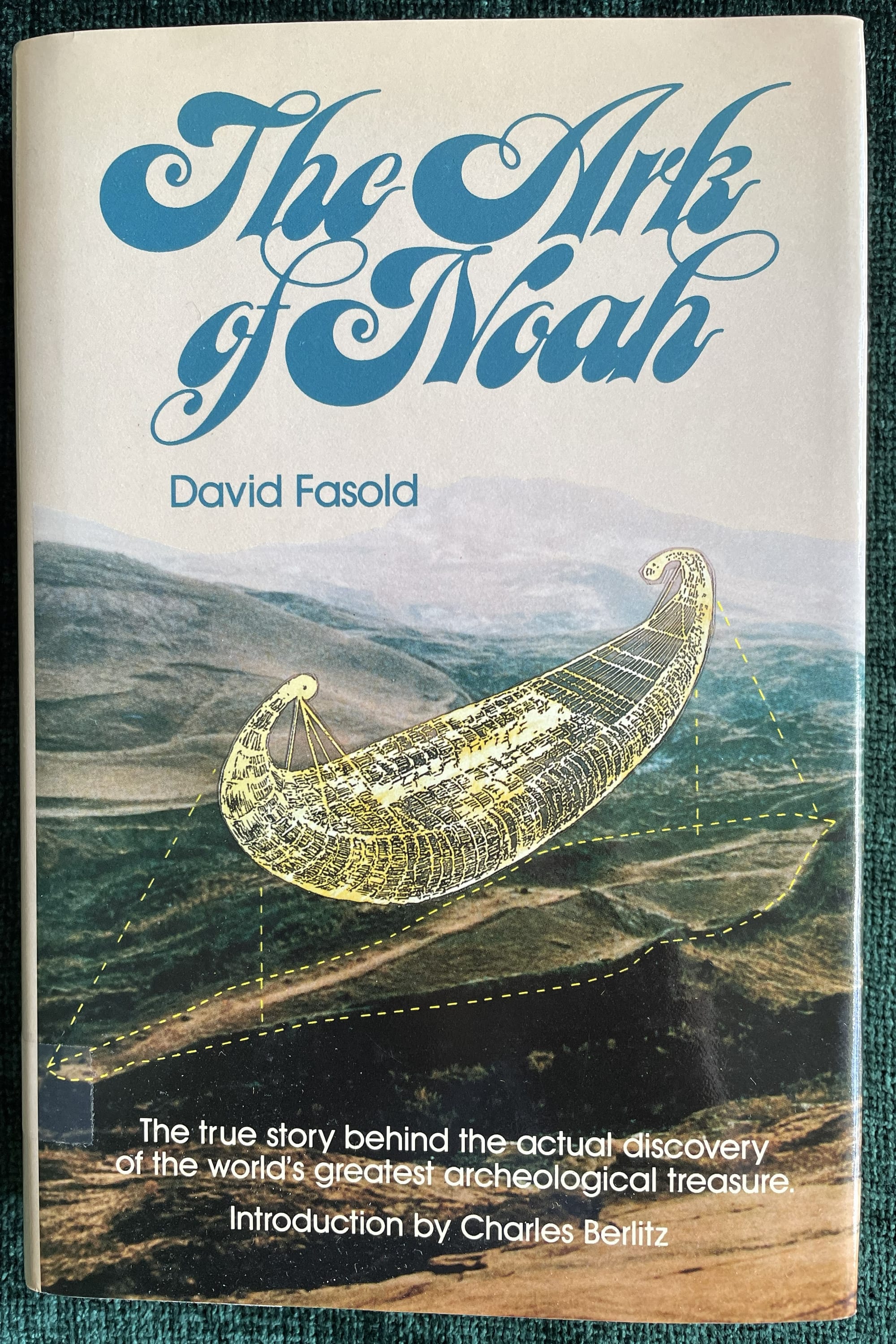
I became personally acquainted with David Fasold back in the mid-1980s when I lived in Florida. I lived not too far away from him, and I heard about him and his trips over to the area of Turkey to find Noah’s Ark.
I visited with him on a number of occasions and discussed his research. In fact, for many years I had a very nice roll-top desk which I purchased from him back then.
But anyhow, the connection to, and the question about Mount Sinai is this.
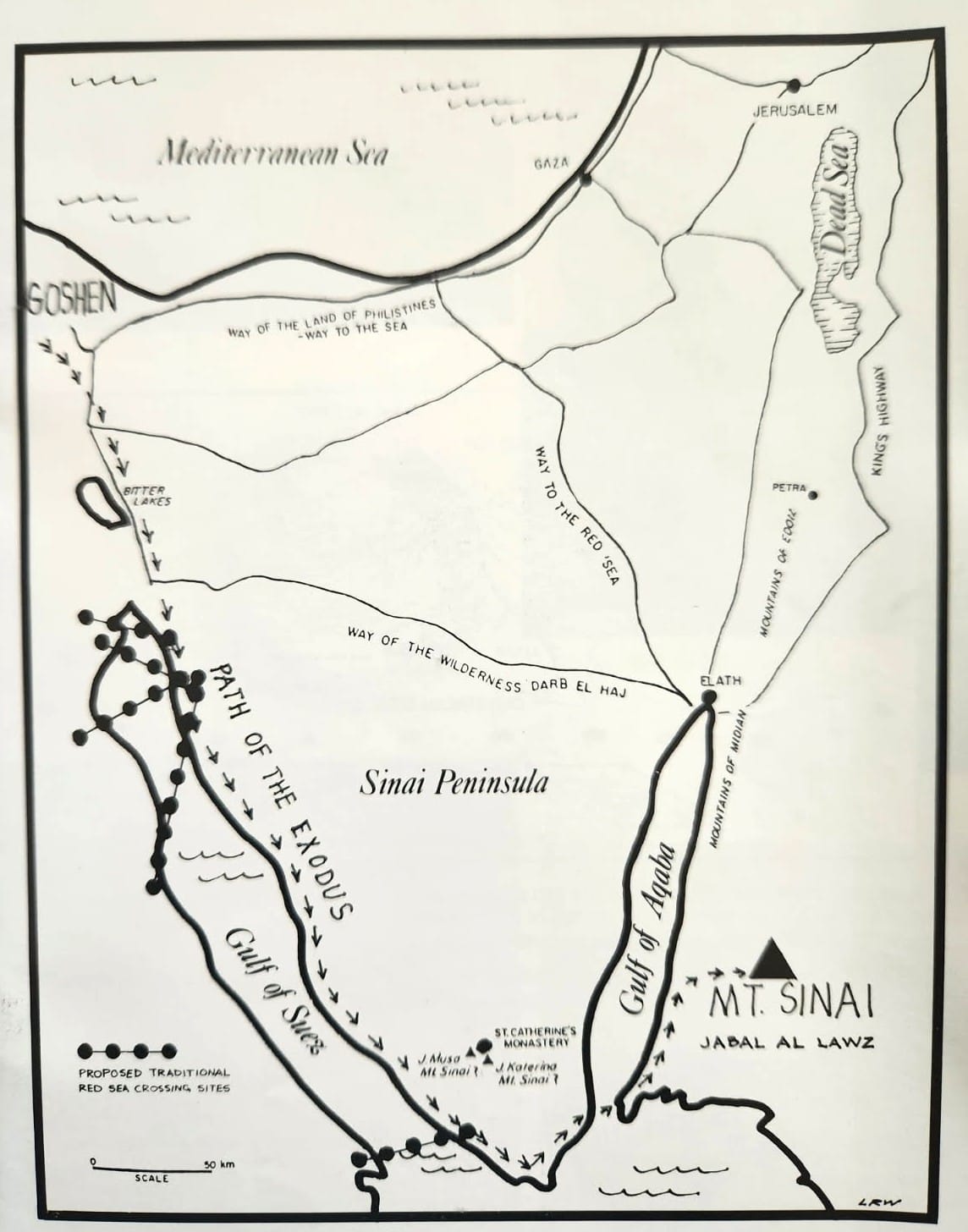
On a subsequent trip to the Middle East, David Fasold and Ron Wyatt discovered what they believed was the real Mount Sinai, not in the Sinai Peninsula, but in Saudi Arabia, down by the southern tip of the Gulf of Aqaba. The Saudis did not appreciate their find, probably for political reasons, and so they threw them in jail for about eight days.
The Saudi authorities did let them go home but only when they agreed and promised not to write about this, which promise they did keep. However, Ron Wyatt did tell Larry Williams about it.
So Larry Williams and Bob Cornuke then succeeded in getting in and out of that location in Arabia with some photographs. And then Larry Williams wrote a book about it.
It is called The Mount Sinai Myth. To make a long story short, this book has convinced me that the alleged Mount Sinai on your Bible map in the back of your Bible, down there in the Mount Sinai Peninsula, is not the real McCoy.
It doesn’t fit the Bible evidence. For example, Paul states in
Galatians 4:25 For this Agar [Hagar] is mount Sinai in Arabia. And for many other reasons, it cannot be the real Mount Sinai.
And so James Bentley, in his book, The Secrets of Mount Sinai, was himself ignorant of the greatest secret of all. That his and Tischendorf’s Mount Sinai was not Mount Sinai at all.
Well, the Saudis have now put up a 14-foot-high, chain-link fence with five strands of barbed wire around the real Mount Sinai.
So no, Codex Sinaiticus is in truth not associated with Mount Sinai, but rather with an imposter location in Egypt.
And not only that, but we might recall that in the Bible—more Bible symbolism—there are sheep nations and there are goat nations. I think it might just be a little more than coincidence.
This might just be one of God’s tiny little jokes hidden there in the fact that the Codex Sinaiticus manuscript is written partly on sheepskin and partly on goatskin.
So as we grin at the end of this section, I will leave you to think about that.
(To be continued.)
~END~