

Mystery Babylon and the Stone Kingdom, part 79—It’s all about “Dominion”
Welcome back! We left off in yesterday’s blog by noting that Jesus did not reveal to His disciples that it would be at least 2,000 years between His first coming and His second coming! (Can you imagine their disappointment if He had?)
Instead, He assured them He would send His Spirit to indwell them so that they could accomplish the work for which He had prepared them and commissioned them.
That work was to carry the good news (the gospel) to their brethren, their fellow Israelites. In so doing, they would be making disciples (Christians) of anyone of any ethnic background (family descent) who was called to hear and believe the Word of God. This, the apostles did.
After His ascension and after Pentecost, the apostles then began going across Europe and elsewhere, carrying the good news (the gospel of the Kingdom) to their brethren of the House of Israel, the news that the long-promised King and Savior-Messiah had come. That He had redeemed them!
Incidentally, there is a book which we stocked for many years called The Drama of the Lost Disciples.

Among the several titles on this subject, this one is the best, in my opinion. It is a thrilling account of what happened to Mary, the mother of Jesus, to Mary Magdalene, to Mary, Martha and Lazarus, to Joseph of Arimathea and to other disciples.
The author, the late George Jowett, brings together from many ancient sources where the disciples went in Europe shortly in the decades following the ascension of Jesus. We no longer stock it, but you can locate it online.
So the disciples brought the good news that the Messiah had come, that He had died and had arisen from the grave, that He had ascended into heaven and that He promised He would return as their King.
The missionary activity of the early disciples did not return void because over the centuries virtually all of Europe became Christian, even to such an extent that Europe has universally been called Christendom, even in the secular history books.
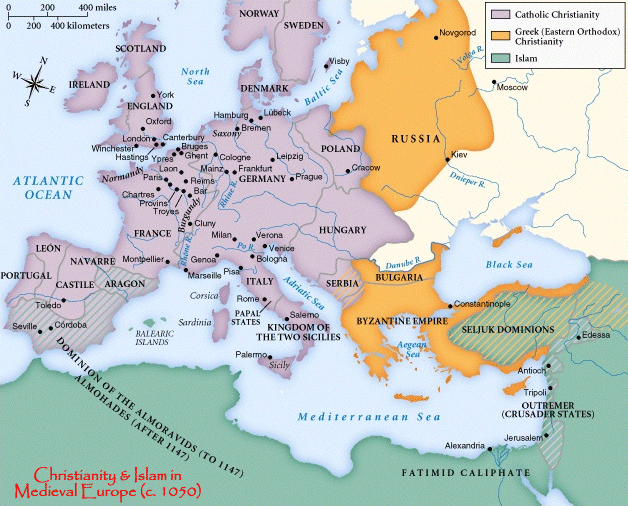
We have already traced this history earlier in this series, concerning the pagan Roman Empire and then the papal Roman Empire, including how the little horn of the papacy persecuted the saints and how this led to the early beginnings of the Stone Kingdom, the kingdom of heaven, in America.
We discussed how it grew to be a great kingdom—having “the first dominion” (Micah 4:8), becoming the chief among the nations, and simultaneously how the people themselves—now a largely (nominally) Christianized Israel people—came once again under bondage to Babylon, this time in a mysterious form.
One of the mysteries about it is the fact that we are captive in our own land and do not even realize it. Well, I can update that because many are finally beginning to awaken to it, but for the past century very few have realized that we were in bondage—in bondage by means of the money and banking system called the Federal Reserve System.
And that brings us back to the second aspect of a kingdom; namely, that a kingdom necessarily has a land or territory. I just mentioned how nearly all of the landmass of Europe became predominantly Christian, so much so, that it is referred to in the history books as Christendom.
Let’s look at that word, Christendom, for a moment. The primary definition from the reliable Webster’s 1828 dictionary is: “The territories, countries or regions inhabited by Christians, or those who profess to believe in the Christian religion.”
Notice two things: 1. It refers to real estate—to land, to territories, countries or regions. 2. Christendom does not mean that every Christian residing therein is a perfect follower of Jesus Christ. Since the time of Jesus, Europe has seen countless wars and bloodshed by and between all sorts of Christians. Of course, we are reminded that Jesus Himself prophesied this:
Matthew 10:34 Think not that I am come to send peace on earth: I came not to send peace, but a sword.
Thus it has been. For 2,000 years we have seen the words of Jesus come true “in spades,” as they say.
In both parts of the word—king-dom, and in the word Christendom, the “dom” portion means, according to Webster, “power, judgment, rule or jurisdiction.” Think of the word “dominion.” So we see that Christendom, in its root, means Christ’s dominion or Christ’s kingdom.
Since the national election a few weeks ago (November 3, 2020), those paying attention have noticed how a company called Dominion Voting Systems (founded by a Canadian, but now owned by China (technically, by a “Swiss” bank [UBS] which is controlled by the CCP [Chinese Communist Party]) played a pivotal role in supposedly creating a victory for Joe Biden over President Donald Trump. We shall see if this stands.

The Dominion Voting Machines and software were used in many states and localities to maintain by probable trickery, fraud and theft the dominion of Esau’s descendants over the descendants of Jacob-Israel! I will have more on Esau’s dominion in coming chapters in these blogs.
There will be many of them coming soon, to prove how the dominion of Christ was counterfeited by “Esau” and stolen from “Jacob.” We will show the details from our own history!
Returning to the previous thought…Therefore, by definition, and acknowledged by all historians, centuries ago, Europe was Christ’s dominion, or we could say, Europe was Christ’s kingdom. We are for the moment, in this statement, purposely omitting discussion of America. So, Europe was the territory of Christ’s kingdom. We will leave that on the table for now.
The third aspect of a kingdom is that it must have a people inhabiting the land over which the king rules. Obviously, the Christian people in Europe were, by definition, the subjects of King Jesus, the citizens in His Kingdom known as Christendom.
We are breaking this down to its simplest elements for purposes of this study today, so ignore the fact that for centuries the papacy usurped the place of Christ and set itself over most of Europe. We have discussed that in great detail previously in this series.
To keep it simple, we are also ignoring the fact that there were, and always have been, “strangers” in and among the Israel people. (“Strangers,” as used in the King James Version of the Bible, often, but not always, refers to non-Israelites) So, yes, many of these strangers in Europe converted to Christianity over the centuries, as well as those who were literally descended from Jacob-Israel himself. But again, we are keeping it simple here.
So we have a king, King Jesus, from the tribe of Judah, who is the rightful King over all Israel. We have a land—the continent of Europe—to which the ten tribes of Israel had migrated. They were joined by their now also-Christian brethren of the House of Judah who had left Judea before 70 A.D.
And thus was fulfilled, by the way, the prophecy in Ezekiel 37. I say it was fulfilled, but remember the hermeneutic that a prophecy can have more than one fulfillment. We will not take the time to expound it now, but only to summarize that God told Ezekiel to take two sticks, and to write on one stick “For Judah” and on another stick “For Joseph.”
Between the two of them, Judah and Joseph, they represented all the tribes of Israel. Remember how they were separated after the death of King Solomon, and even had many wars between the two kingdoms later on?
[Update: Since the MBSK lecture series ended a few years ago, I have provided greatly detailed studies on all of that history concerning the kingdom of Israel vs. the kingdom of Judah in my current series entitled The Kingdom of God. See the lecture titles and synopses here. On this web page, scroll down to find The Kingdom of God order form/synopses.]
Well, God tells Ezekiel that at some point, the two sticks (Judah and Joseph) would become one stick, which symbolized that all the tribes would become one people again and this would be under King Jesus.
And I am asserting to you that is exactly what happened beginning shortly after the ascension of our Lord Jesus Christ. It took centuries to be fully realized. Even so, I also believe there is another and greater fulfillment yet to come, but we will save that for another time.
The final aspect of a kingdom is a set of laws. But what laws? Now once again, this is so utterly simple that elementary school kids in Sunday School would be able to answer it—but on second thought, with the children having heard the typical Christian preacher asserting the “God’s law has been nailed to the cross,” I am not so sure it’s so utterly simple.
But let’s address it anyway to complete our brief look at the components of a kingdom. Since we are talking about God’s Kingdom, what laws would we expect to find in operation in that Kingdom?
Would they be the laws of Nebuchadnezzar? of ancient Babylon? ...No....
Would they be the laws of Augustus Caesar and the laws of Rome? ...No....
Would they be the laws set forth by the various popes through the centuries?
Ooops, looks like we lost some Roman Catholics on that one [grinning] ! Stay with us, dear brethren in Christ.
No, God gave His commandments, statutes and judgments to Israel and they have never been abolished. What was nailed to the cross and abolished were the blood sacrifices and ceremonial ordinances, but concerning God’s law, Jesus Himself said:
Matthew 5:17 Think not that I am come to destroy the law, or the prophets: I am not come to destroy, but to fulfil.
But then some pseudo-Bible teacher might say that, “Well, you see, Jesus fulfilled the law and so that means that after Christ, the law is fulfilled and done away with.” But had our pseudo-teacher read one verse further, he would have seen the folly of his statement, because Jesus added:
Matthew 5:18 For verily I say unto you, Till heaven and earth pass, one jot or one tittle shall in no wise pass from the law, till all be fulfilled.
Question: Have heaven and earth passed away? Then does it not follow that God’s law is still in effect? Would that include Deuteronomy 28, which concerns the blessings and curses? Yes. In fact, we (Christianized Israel) would not be under Mystery Babylonian captivity, but for the fact that it is the curse of God’s law being in effect!
We are not talking here about the overall curse of sin in general, that “the wages of sin is death.” That is another matter. No, we are talking about the national curse of captivity for national disobedience to God’s laws.
But our pseudo-teacher might suggest that in verse 18 Jesus said “...till all be fulfilled” and Jesus certainly fulfilled all the law.” And I would respond, “Did He?” Jesus indeed typologically fulfilled all the law which He was supposed to fulfill in His first coming. But for example, did He fulfill the law of the two birds (the two doves)? ... or the law of the two goats?
The average Christian now has a totally blank look because he has no idea what we are talking about. What do you mean: the law of the two birds? Well, we have explained it in other studies (exactly where, I cannot now recall, but most likely it is in our series on The Tabernacle in the Wilderness).
But for those who understand that law, we recognize that our Lord only fulfilled the first part in His first coming. The law of the second dove will be fulfilled in His second coming. Bottom line: God’s law remains in effect.
And speaking of His second coming, we noted earlier that Jesus came the first time in His Judah role in order to establish His claim as the rightful heir to the throne of David as King over all Israel.
Once again, a parenthetical note in that, we recognize there is more to it than that because Jesus will be King over all people eventually, but we are keeping it simple and basic for our purpose in this study.
At His second coming, Jesus will come in His capacity as Joseph. He is already wearing the crown in his Judah role as the King. Wearing that crown, He will return as Joseph to receive or take the kingdom and rule in a more complete way than He has done for the past 2,000 years.
And that will then fulfill, in another way, the two sticks prophecy (the Judah and Joseph sticks) of Ezekiel 37. Turn now to Luke 19. Beginning in verse 12 is the parable of the ten pounds, which is similar to the parable of the talents in Matthew 25. We discussed these parables in some detail earlier in the series, I believe it was during my so-called Occupy lectures.
[Update December 2020: I have recently given a very detailed lecture explaining both parables, the one in Luke 19 in conjunction with the similar parable in Matthew 25. It is part of my presently ongoing series on The Kingdom of God. At this time that lecture is only available on CD #708. Mp3 format soon to come.]
My only point with this parable at this juncture is the first verse, verse 12, but to get the context, let’s pick it up in ...
Luke 19:11 And as they heard these things, he added and spake a parable, because he was nigh to Jerusalem, and because they thought that the kingdom of God should immediately appear.
12 He said therefore,...
In other words, there is a time factor here as Jesus begins the parable. He tells them a parable which will give a time clue. It’s curious, though, because obviously this clue was not meant to be understood by the apostles, otherwise Jesus, knowing all things, could certainly have explained it more clearly to them.
And we have discussed that numerous times in earlier lectures in this series. Remember when the apostles asked this? “Lord, wilt thou at this time restore again the kingdom to Israel? But here in this parable, verse 12, “Jesus said therefore...
12...A certain nobleman went into a far country to receive for himself a kingdom, and to return.
There is no question about the identity of the nobleman. Everyone agrees that Jesus was referring to Himself as the nobleman. Understandably, every English-speaking person will read that verse and apply a geographical interpretation to the phrase “a far country.”
Indeed, it does mean that the country to which He was going was a remote, distant and far off place. The Greek word for “far” is makros {mak-ros'} and that reference to geography—the space dimension is a primary meaning. But it might surprise you to learn that makros can also have reference to the time dimension, meaning a long time.
Given the fact of the time dimension word “immediately” used in verse 11, we can see how the use of the Greek word makros allows for a double meaning. This far country was both “far off” and distant in space as well as in time.
Not outer space, of course; but rather, think of how, in those days, how far it would be to journey across the Mediterranean Sea and across the Atlantic Ocean to a far country on the North American continent.
Plus, this “far country” where Jesus would receive for Himself a kingdom was also far off in time—about 2,000 years so far, and counting.
Now, still looking at verse 12, there is that little phrase “and to return.” As we read through the parable, we again automatically interpret it to mean that the nobleman came back to the same geographical location from where he had left, namely, to Judea.
And in the story itself, that makes perfect sense. But remember, Jesus is telling a coded story here; one which will not even be understood clearly by His inner circle of the twelve apostles.
But given what we know, that Jesus was referring to a time span of at least 2,000 years, is there another way to understand the phrase “to return?” Yes, there is. Stay tuned as we pick it up here next time.