

Which Bible, Which Version? series
Note to readers: We are necessarily picking up the thread in the middle of a study and so we recommend readers to read the previous section(s) for context. As always, all emphases and comments within [brackets] are mine unless otherwise noted.
The second basic tenet of Hort’s theory was to supposedly prove that the Majority Text, the Byzantine Text, was inferior because it was based on late manuscripts.
The details of this premise are these: Since Westcott and Hort realized that the Vaticanus and Sinaiticus readings were nearly always shorter than the readings in the Received Text, this was generally acknowledged to be a strike against the Vaticanus and Sinaiticus.
So what did Hort do? He tried to turn the tables once again.
He tried to prove that because the Received Text had longer readings, and it was therefore a fuller text, that this was actually, Hort said, a strike against the Textus Receptus. Chutzpah again.
Here is what Hort actually wrote: QUOTE: The Received Text is fuller due to conflation. It combined the variant readings of other competing text types. [There are those genealogical families again!]
It combined the readings of other competing text types, usually the Western and Alexandrian. Rather than choose between one or the other, both were used.
Much of this took the form of an official revision sanctioned by the Byzantine Church, probably under the leadership of Lucan, died 311 A.D., Bishop of Antioch. END QUOTE
Now there are two points at issue here. One concerns this idea of conflated texts, and the second concerns Hort’s theory that there was an official Greek revision headed by Bishop Lucan, or sometimes called Lucian of Antioch, sometime in the era of 300 A.D.
There are two semi-technical terms we need to get familiar with as we go on to discuss this. The first term is recension. This supposed Greek Bible revision under Bishop Lucan is referred to as the “Lucianic recension.”
A recension simply means an editing and revision of the text.
The other term is conflation. I think the best way to understand that is by giving you an example. I don’t know how many of you remember back in first grade of elementary school. Perhaps some of you had these readers called the Dick and Jane readers in the first grade?
For an example of conflation, let me invent some imaginary manuscripts of the Dick and Jane first grade reading books. Say that we had two manuscripts of Dick and Jane. Both of them date from 1904.
One copy was from Ohio. We will call it the Western or the Alexandrian. You see the analogy here?
And the other copy of the manuscript of the Dick and Jane first grade reader was from, say, Wisconsin. That is another “textual family,” according to Hort.
Okay, now we read this manuscript and in the one from Ohio, we turn to a certain place, and we read in that manuscript: “Dick walked home.”
Now, we take the Wisconsin copy, and we look in the very same chapter, the very same sentence or verse, and we see it doesn’t say, “Dick walked home.” It says, “Dick ran home.”
Now, what Hort was saying was that the Received Text, the official recension, took both of these readings, the Ohio and the Wisconsin, and conflated them.
So that the Received Text of the much later 1922 version of the Dick and Jane first grade readers reads as follows. It doesn’t say, “Dick walked home.” It doesn’t say, “Dick ran home.” It says, “Dick walked and ran home.” That’s conflation.
Hort theorized that conflation explains why the Received Text is longer. He theorized that is why when you read this King James Bible, there are some longer verses than in the NIV or the New American Standard or other Westcott Hort-based New Testaments.
That is why there are longer readings, he says, because it got conflated. That was his theory. He further theorized that this editing of the conflated text was done under Bishop Lucan (Lucian of Antioch). So, that was Hort’s theory.
So, exactly how then did the brilliant Dr. Hort go on to prove this part of the theory? First, let me tell you the extent of the proof that would be required.
The Received Text is 1,952 words longer than the Westcott Hort Text. About 2,000 words.
So, to make up nearly 2,000 words through conflation would require quite a large number of places where the conflation would have or could have occurred in the Received Text.
In our elementary example, “Dick walked and ran home,” we could count the two words, “walked and,” as counting towards—actually, counting two instances towards our goal of finding 2,000 additions in the Received Text. So, that is the level of proof that would be needed.
Hort’s proof consists of eight cases. Eight! Not eight hundred. But eight cases of possible conflation. And six of them are extremely weak. If you care to look them up sometime, and compare them in various Bibles, they are as follows.
Mark 6:33, 8:26, 9:38, 9:49, Luke 9:10, Luke 11:54, Luke 12:18, and Luke 24:53.
Interesting that they are all from Mark and Luke, aren’t they?
Now, in his book, The King James Version Defended, by Edward Hills. About 1957 is when this book came out. (See Addendum “for extra credit.”)

Edward Hills writes QUOTE:
Dean Burgon immediately registered one telling criticism of this hypothesis of conflation in the Traditional Text. [Recall that Dean John William Burgon was a contemporary of Westcott and Hort and their greatest opponent. He immediately registered one telling criticism.]
“Why,” he asked, “if conflation was one of the regular practices of the maker of the Traditional Text, why could Westcott and Hort find only eight instances of this phenomenon?”
“Their theory,” Burgon exclaimed, “has at last forced them to make an appeal to Scripture and to produce some actual specimens of their meaning. After ransacking the Gospels for thirty years, they have at last fastened on eight.”
Westcott and Hort disdained to return any answer to Burgon’s objection, but it remains a valid one.
If the traditional Text was created by fourth-century Antiochian editors, and if one of their habitual practices had been to conflate Western and Alexandrian readings, then surely more examples of such conflation ought to be discoverable in the Gospels than just Hort’s eight.
But only a few more have since been found to add to Hort’s small deposit. Kenyon [that’s Sir Frederick Kenyon] in 1912, candidly admitted that he didn’t think that there were very many more.
And this is all the more remarkable because not only the Greek manuscripts, but also the versions have been carefully canvassed by experts, such as Burkitt and Souter and Lake, for readings which would reveal conflation in the Traditional Text.
Moreover, even the eight alleged examples of conflation which Westcott and Hort did bring forward are not at all convincing. At least they did not approve themselves as such in the eyes of Bousset, 1894. [See Addendum.]
This radical German scholar [Meaning higher critic. So we could assume that he was a Westcott-Hort ally.] united with the conservatives in rejecting the conclusions of these two critics, Westcott and Hort.
In only one of their eight instances did he agree with them. In four of the other instances he regarded the Traditional reading as the original reading. And in three others he regarded the decision as doubtful.
“Westcott and Hort’s chief proof,” he observed, “has almost been turned into its opposite. In these eight passages, therefore, it is just as easy to believe that the Traditional reading is the original and that the other texts have omitted part of it. END QUOTE (of Hills.)
So, Dr. Hort is long on theory and short on proof. He would need anywhere from hundreds to a thousand examples of alleged conflation to be convincing. And yet he and other scholars can hardly find two or three possibles.
Now what about the other half of this basic premise of Hort, the matter of the Lucianic recension? Did this Bishop Lucan of Antioch actually make an official edition of the Greek Bible?
And remember, this would be an official version from which 90 to 95 percent of the extant manuscripts today would have been copied. Let us let Dr. Hort’s own words open this portion of the discussion.
He stated, “All trustworthy restoration of corrupted texts is founded on a study of their history.”
That is from page 40 of Westcott and Hort’s The New Testament in the Original Greek, which, of course, it wasn’t at all. Any thinking individual would know by now that Westcott and Hort were moving farther away from the original words of the Greek, rather than getting closer to it.
But, Hort’s statement is absolutely correct. I will paraphrase it. The tracing of the history of a given text is absolutely essential in trying to reconstruct what the original must have said.
So then Hort tells us his theory is that this conflated text must have been made an official version under Lucan, or somebody, around the early 4th century.
If Hort could have proved the feasibility of conflation accounting for the much longer Received Text, then the last link would have been to prove the historical existence of the alleged Lucianic recension.
But just like Darwin and the evolutionists, Westcott and Hort never found the missing link. There is not the slightest suggestion in the annals of history of any such recension.
Dean John Burgon, in his book, The Revision Revised, page 293, commented on it as follows:
“Apart, however, from the gross intrinsic improbability of the supposed recension, the utter absence of one particle of evidence, traditional or otherwise, that it ever did take place, must be held to be fatal to the hypothesis that it did.
“It is simply incredible that an incident of such magnitude and interest would leave no trace of itself in history.” End of quote from Burgon.
Wilbur Pickering goes on to comment. QUOTE:
It will not do for someone to say that the argument from silence proves nothing. In a matter of this magnitude and interest, it is conclusive. Kenyon also found this part of Hort’s theory to be gratuitous. [Remember, Kenyon is an ally of Hort.]
Pickering quoting Kenyon: “The absence of evidence points the other way, for it would be very strange if Lucian had really edited both Testaments that only his work on the Old Testament should be mentioned in after times.
The same argument tells against any theory of a deliberate revision at any definite moment.
We know the names of several revisers of the Septuagint and the Vulgate, and it would be strange if historians and church writers had all omitted to record or mention such an event as the deliberate revision of the New Testament in its original Greek.” END QUOTES of Kenyon and Pickering.
So, keep in mind that Sir Frederick Kenyon is pro-Hort, just like Metzger, Aland, and Colwell. They can all point out the fallacies of Westcott and Hort, and yet they continue to follow and promote their cancerous textual offspring, the Westcott and Hort New Testament text.
Well, we’ll close at this point and pick up in the next chapter the rest of Hort’s theory and then with their text.
(To be continued.)
ADDENDUM “for extra credit”
Edward F. Hills’ book The King James Version Defended can be found and downloaded for free here at archive.org.
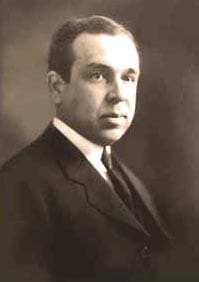
Hills (1912–1981) was an American Presbyterian scholar and New Testament textual critic best known for his defense of the Textus Receptus and the King James Version.
Educated at Yale University (B.A., summa cum laude), Westminster Theological Seminary (Th.B.), and Harvard University (Th.D.), he studied under prominent Reformed figures like Cornelius Van Til and J. Gresham Machen.
(In my own three years of being privately tutored in NT Greek, I used the Greek Grammar penned by Dr. J. Gresham Machen. I have also read some of the excellent works of Van Til. Of course, I could only agree with their Presbyterian doctrines to a point; namely, their failure to understand the complete sovereignty of God in the ultimate salvation of all mankind.)
Some of the key aspects of Hills’ life and work include:
His theology: Hills applied Van Til’s presuppositional apologetics to textual criticism, arguing that scripture’s preservation is a result of divine providence rather than “neutral” textual analysis.
Hills’ seminal work is The King James Version Defended: A Christian View of the New Testament Manuscripts (1956). It remains a primary text for KJV advocates. He also authored Believing Bible Study.
Hills was ordained in the Orthodox Presbyterian Church (OPC). He faced professional isolation from mainstream critics (i.e., liberal and radical Higher Criticism “scholars”) for his defense of the Byzantine text-type.
He is credited with reviving the work of John William Burgon and influencing conservative evangelical circles to uphold traditional texts.
I found this praise of Hills’ work by an online reviewer:
Comment by David Bane on Good Reads: “This is the best book I’ve seen yet on the subject. Using rock-solid Scriptural and historical arguments, Hills expounds the underlying premise of both views: the Divine providential preservation view, and the modern naturalistic view.
“He shows how the ideology of one view is rooted in the Christian faith and can be defended historically, whereas the other view is rooted in modern naturalistic unbelief, championed by heretical modernists, and is a relatively new phenomena.
“It is of note that Hills was highly educated, and he was a bona fide textual critic. He studied under J. Gresham Machen, John Murray, R. B. Kuiper and Cornelius Van Til.”
Murray and Kuiper were key figures in the Orthodox Presbyterian Church and classical Calvinism, with Murray often highlighting Kuiper’s clarity and simplicity in preaching and writing.
Wilhelm Bousset was a prominent German theologian and New Testament scholar born in 1865 who became a central figure in the Religionsgeschichtliche Schule (history of religions school). He served as a professor at the universities of Göttingen and Giessen, where he co-founded the influential journal Theologische Rundschau in 1897.
~END~