
God’s Laws on Theft
We left off in part 1, as we were illustrating the division of labor concept. This arose as we were defining terms which we shall be using for a number of lectures to come. Specifically, we had stated that money can be defined in its simplest terms as that which is used as a medium of exchange, which allows for the division of labor in a society.
But there is more to it than that, so here follows an AI-assisted answer from the internet, which I find it to be generally accurate. I have made some modifications to it, so this is not a direct quotation.
Later in the series, as we explore the specifics of what the Bible calls money, we will see the obvious shortcomings herein, but this is a good place to start.
Money vs. Currency
Money and currency are often used interchangeably, but they have distinct definitions and characteristics. Money refers to a medium of exchange that is widely accepted in transactions for goods, services, and debts. It serves as a unit of account, a store of value, and a medium of exchange.
Money encompasses a broader concept that includes various forms of value exchange, including physical currency, digital currency, checks, and other financial instruments.
Money can be issued by various entities, including governments, central banks, commercial banks, and non-governmental organizations (NGOs). It includes both official forms of currency and other types of financial instruments.
Money is a store of value over time. Money can take various forms, including physical currency (coins and banknotes, such as the paper in our wallets which are Federal Reserve Notes).
Money these days also takes the forms of digital currency including cryptocurrencies, as well as checks, credit cards, debit cards, and other financial instruments.
Money serves as a medium of exchange, a unit of account, a store of value, and a standard of deferred payment, facilitating economic transactions and trade.
Examples of money include fiat currency issued by governments (such as the US dollar, the euro, or the Japanese yen), commodity money (such as gold or silver coins), and digital currencies (such as Bitcoin or Ethereum).
We will distinguish between fiat currency and non-fiat currency later. Let me continue from the AI-assisted answer, with my modifications. Partly quoting:
Currency, on the other hand, refers to the physical or tangible form of money issued by a government or central authority and used as legal tender within a particular jurisdiction.
Currency is a subset of money, representing the physical or tangible form of money used in day-to-day transactions within a specific geographical area. It typically consists of coins and banknotes, banknotes meaning Federal Reserve Notes, which are issued by a government or central authority.
In this case, the “central authority” would be a central bank, such as the Federal Reserve in the United States or the Bank of England, the Bank of France, the Deutsche Bundesbank, etc. all of which are central banks.
Currency is specifically issued by the government or central authority and regulated by the country’s (that is, the Federal Reserve’s) monetary policy. It is legal tender, meaning it must by law be accepted for transactions within the issuing country.
Currency loses value over time. PAUSE THERE. We certainly have seen and experienced that all our lives, haven’t we? Did you know that within a percent or two, that a one hundred dollar bill today is about the equivalent of a one dollar bill back in 1913 just before the Federal Reserve System was introduced? Did you know that?
Another way to say that is that the currency called the one dollar bill back in 1913 has now lost about 98 or 99% of its value. Instead of 100 cents in value, a one dollar bill today is worth about one or two cents. So we can agree with the statement that currency loses value over time.
But the question we need to ask is Why? And does it always have to lose its value? Why can it not remain stable in value? We will come to that later. Let me continue quoting and paraphrasing this from the web answer:
In summary, money is a broader concept that includes various forms of value exchange, while currency is a specific form of money that is physical and issued by a government or by a central authority (i.e., a central bank).
Money serves as a medium of exchange, a unit of account, a store of value, and a standard of deferred payment, while currency primarily serves as a medium of exchange in day-to-day transactions. And that is the end of the internet summary.
At this point, let us back up in history to the era of the founding fathers and just prior to our War for Independence. As children we were all taught from our standard history classes that the reason the colonies rebelled from English control had to do with … what?... A tax on tea?
And the slogan was, “No taxation without representation!” But in reality, it was all about money. You see, in the early 1700s, the colonists printed their own paper money which was called colonial scrip, and although it was fiat money, the vast majority of the colonists were largely Christian and honest men, and thus they realized that not abusing the fiat money would allow all men to prosper.
And it worked for a while. However, this upset King George III and especially his handlers in the Bank of England, which was a private institution. The bankers knew that if they did not force the colonies to use their currency, then the bankers would be unable to control them and make the huge but immoral profits that were possible.
And thus, in 1766, King George and his Parliament, at the behest of the Bank of England, passed a certain law. Let me quote from an internet source.
So, QUOTE: Breaking all the modern conventions of economics, the Colonies continued to prosper producing their own unbacked interest-free money, until the production of Colonial Script [sic; the word is scrip.] was made illegal by the Currency Act of 1764.
This was an act pressed into law by the Bank of England fearing the production of Colonial Script would put them out of business.
This act forced the Colonies to pay taxes in the form of gold and silver to the British Central Bank and, as a result, the Colonies effectively handed back control of their economy to old world interests who, for the most part, would never see the new world as anything more than an entry on a balance sheet.
The effect on the Colonies of losing the Colonial Script was disastrous, bringing a rapid end to their prosperity as economic depression set in.” END QUOTE Source
Things continued to go downhill economically for the Colonies as one act of tyranny was piled upon another until the tax on tea became the proverbial “straw that broke the camel’s back.” And so we all know what happened in the Battles of Lexington and Concord on April 19, 1775, which were the first major battles in the War for Independence.
The Colonists declared their separation from the Kingdom of Great Britain on July 4, 1776, but it would be quite a few years before the infant nation would win its independence on the battlefield (or did they?) and establish a new type of government, a republic.
Having the wounds of the oppressive economic system fresh in their minds, the founders wisely chose to invest the people’s representatives, the Congress, with the power... QUOTE:
To coin Money, regulate the Value thereof, and of foreign Coin, and fix the Standard of Weights and Measures; END QUOTE
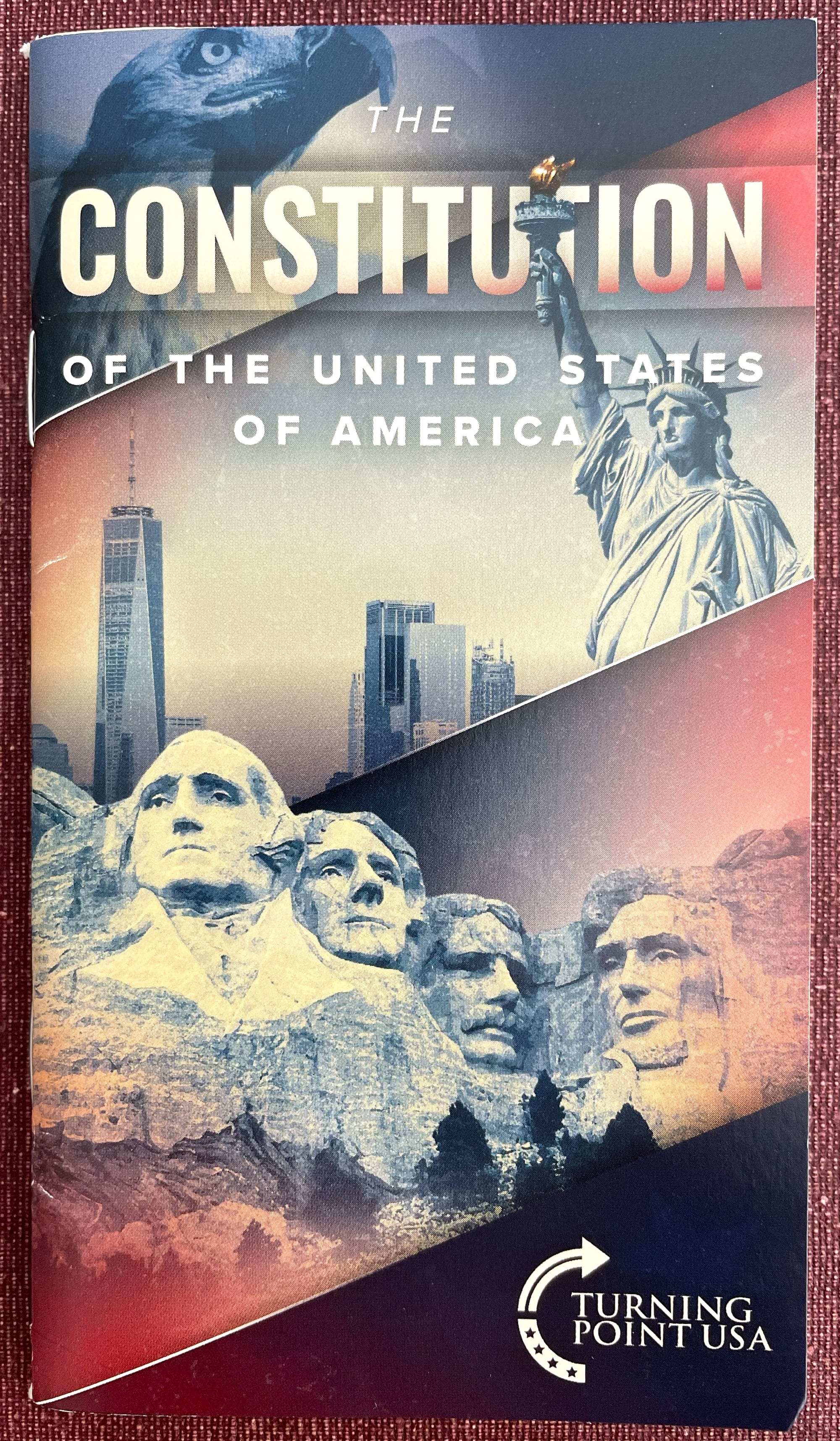
That quotation is from the United States Constitution, Article 1, Section 8, Clause 5. Nowhere does it allow for the power to issue money to be delegated to any private or quasi-private organization such as a central bank.
This is critically important because whichever person or whichever group of persons has the right and the authority to issue the money of a nation will control the economy and the relative wealth of that nation and the wealth of their citizens.
This brings to mind what Mayer Amschel Bauer is quoted as saying, “Let me issue and control a nation’s money and I care not who writes the laws.”
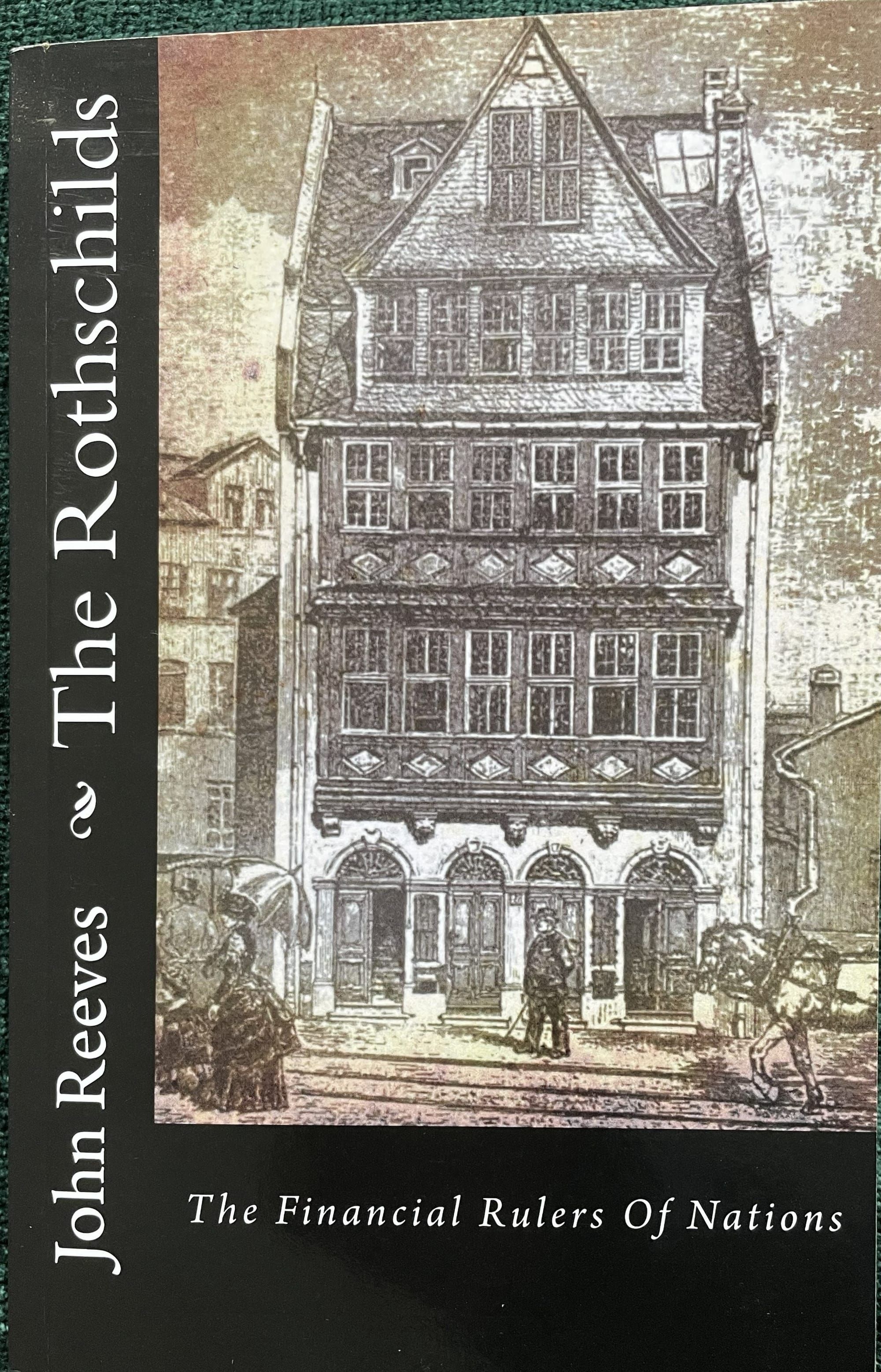
This man later changed his name to Mayer Amschel Rothschild and he was the founder of the Rothschild banking dynasty back in the mid-1700s, a dynasty which today seems as strong as ever, and is certainly at or near the top of the cabal which the Bible calls Mystery Babylon.
(To be continued.)
~END~