

Mystery Babylon and the Stone Kingdom, part 91—The Shelton Laurel atrocity
Welcome back! Current events have impelled me to be posting more on that than on serializing my long series of lectures concerning Mystery Babylon and the Stone Kingdom. Yet, current events are all about Mystery Babylon!
I pray that my readers can see that this series—which was originally a series of lectures presented in the years spanning 2010-2015—is amazingly appropriate for these days as we are experiencing the collapse of the Mystery Babylonian system, aka, the cabal.
It is affecting all of us in numerous ways—you do have your mask on, don’t you? Do you still have a job? Have you been tested recently for the Coronavirus (CV)? If you have been following my blogs for the past year, then you know I am being sarcastic with those questions.
In recent months, we have witnessed the Babylonian Media (the BM, as I call them, the formerly MSM, mainstream media) pushing the idea the Trump is trying to foment a new civil war. The truth is almost always the opposite of what the BM is pushing.
Liberty-loving Americans are finally waking up and realizing, for starters, that we cannot believe or trust anything from the BM. So why pay any attention to what they say?
Indeed, the cabal and the BM want a civil war as an excuse to impose even more tyranny upon us. The vast majority of Americans have no desire for civil war or anarchy. In this installment of our series, we return to the U.S. Civil War.
As we shall see today, there was nothing civil about it. It was horrendous and the story I have to share today is just one example. This installment is setting the stage for how, I believe, the Bible prophesied our Civil War, or as I have learned in my nearly four decades of living among our wonderful brethren in the South, it is more accurately titled The War between the States. Now I resume where I left off in the previous installment.
Centuries ago—indeed, millennia ago, the descendants of the man, Jacob-Israel, lost their name and identity as Israel. They are now known as the Anglo-Saxon, Keltic, Scandinavian, Germanic and many other related peoples of Europe, or the descendants of those who were formerly of Europe, and who are predominantly Christian. Hence, we often use the term “Christian Israel” so as not to confuse these people with the modern Jewish people.
The supremacy and dominion of Red Esau Edom began to be fulfilled in the 1700s and now we are seeing how they played both sides of the Civil War. Not only that, they had their agents in place to foment, to instigate, to actually bring about the conflict. Does that not sound familiar here now in 2020-21?! Research BLM and you will find the founders are self-admitted Marxists.
What is less generally known about Judah P. Benjamin is that he also was the spymaster for the Confederacy. The Red game in the Civil War becomes quite transparent when we know that Judah P. Benjamin and August Belmont were well acquainted and close friends. That is not surprising, though, when we are also aware that they were both agents for the Rothschilds!
And thus the American Civil War, which split the nation in half, became a reality. What a tragedy it was! There are still wounds from that conflict which need to be healed. Let me give you an example, and there are undoubtedly hundreds of stories like this.
I found this story in a magazine in my barbershop a few weeks ago (in 2012). It concerns Madison County, North Carolina, which is the county just north of Asheville. My barber’s family is from there, and I have a number of friends who are from Madison County.
The two major towns there are Marshall, which is the county seat, and Mars Hill, where there is a Christian college by that name. But both towns are small and probably always will be.
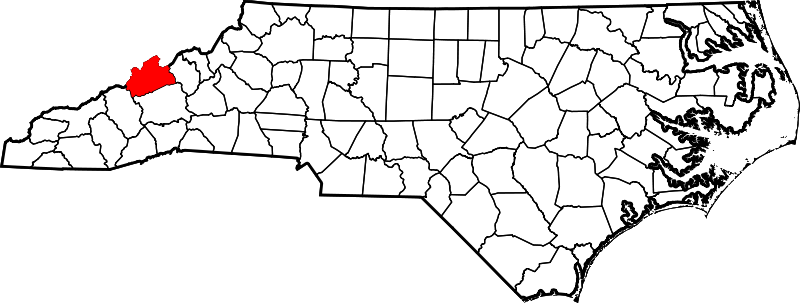
As some of my listeners know—and others could deduce by my accent, or lack of accent—that I am not a native North Carolinian. I was born and raised in Ohio. But I have lived in the Asheville area for over two decades (now over three). One thing you learn here is that Madison County has a nickname. It is called “Bloody Madison.”
Knowing that lots of the local folks in Madison Country were heavily involved in the production and running of moonshine and other illegal liquors during the Prohibition Era, I always assumed that the bloodshed during that era was the reason for the moniker, “Bloody Madison.”
“Not so,” said my barber. “Read this article here, James. This is the reason.” Well, I did and I was shocked. Here are some excerpts from this article. It is quite long (about 11 pages in the magazine), so I shall only excerpt enough so we can begin to understand the depth of the wounds which occurred in the Civil War, and are still felt by many families to this day!
And then we are going to turn to the Scriptures because I know that some of you—especially new listeners/readers—might be wondering what all this has to do with the Bible. Well, your patience will be rewarded. The article is entitled Atrocity at Shelton Laurel. The author is Philip Gerard. All emphases are mine unless otherwise noted.
QUOTE: Revenge on the enemy is one thing. Murder of the innocent is another.
[Pause here. I find it ironic that here is an author who is telling us a powerful story of murder of the innocent, and yet by his opening statement, he appears to be condoning revenge on the enemy. This question arises: Even in wartime, do not revenge raids simply cause counter-revenge raids and on and on, generation after generation?
But what does God say about revenge? Most Christians know the verse by heart: Vengeance is mine, saith the LORD. Now, for emphasis, the author’s opening line again:
[QUOTE] Revenge on the enemy is one thing. Murder of the innocent is another. Two colonels in the Confederate Army showed no mercy in Madison County, conducting acts that outraged even their side’s most devoted leaders. It all begins with salt.
In Madison County, remote in the western mountains of North Carolina, salt is as rare as gold. Salt is crucial to curing game, baking biscuits, and preserving food through the long winter....
Salt is a staple of the Confederate war effort, hoarded by shopkeepers, guarded by troops. Gov. Zebulon Vance decrees that no salt be exported from the state. Vance and the Confederate authorities in Richmond, Virginia, have sent troops to the region with orders to not allow any salt to get into the hands of “disloyal” mountaineers...
Madison County is a Unionist stronghold. ...People here defeated a ballot calling for a secession convention, 532 to 345. In Marshall, the county seat, a “secesh” sheriff started waving his pistol around and wounded a local boy. The boy’s father hunted down the sheriff and killed him in front of his neighbors.
In the middle of a raw, snowy January in 1863, a gang of Madison County Unionists, including many local deserters from the 64th North Carolina Regiment and an unknown number from Shelton Laurel, descend on Marshall, where Confederate commissioners store stockpiles of salt.
The Unionists take all they can carry and then loot the town. A special target is the residence of Col. Lawrence Allen, commander of the 64th, who is off with his regiment in Bristol, Tennessee — guarding another stockpile of salt.
The army relieved Colonel Allen of command for six months for falsifying the duty roster — part of a scheme that earns him kickbacks from well-heeled conscripts who want to buy their way out of service. The looters hack open his trunks and cabinets, steal anything of value, and terrorize Mrs. Allen and her three small children, two of whom are bedridden with scarlet fever.
Brig. Gen. W.G.M. Davis reports on February 2, “I think the attack on Marshall was gotten up to obtain salt, for want of which there is great suffering in the mountains. Plunder of other property followed as a matter of course.
Col. Allen’s Sixty-fourth North Carolina Regiment and the men of his command are said to have been hostile to the Laurel men and they to the former for a long time — a kind of feud existing between them.”
Rumors fly that a force of 500 men is forming in Shelton Laurel to fight the weakening Confederacy — by burning bridges, raiding depots and towns, attacking loyal Confederates in their homes. Colonel Allen learns of the depredations at Marshall and is outraged.
He obtains the permission of his superior to accompany the 64th back to the Laurel Valley to put down the insurrection. The 64th North Carolina Regiment is an ill-starred unit suffering an epidemic of desertion. Once numbering 300 men, it scarcely fields a third of that number now.
Colonel Allen assumes the role of supernumerary, and Lt. Col. James Keith takes command. Keith, the son of a Baptist minister, is a firebrand who holds the mountaineers in contempt. At 35, he is one of the wealthiest 20 men in Madison County. ... Marshall is his hometown, so for him, the mission is also personal.
Shelton Laurel lies in the valley of Shelton Laurel Creek between mountain peaks, not far from Marshall. ...By the time the war comes to the valley, 137 Sheltons live there, along with a community of neighbors descended from a handful of other families. They feel nothing but contempt for the wealthy men from larger towns, and they detest the slave owners most of all. ...
Of those Sheltons recorded in the 1860 census, only four have lived beyond 40 years. Theirs is a hard life with slim margins.
[I will interject here that when I first moved to Asheville, I was still in the construction business, first on behalf of our company in Palm Beach County, and then as a Project Manager for a large general contracting firm in Asheville. One of the Project Superintendents working for me was a man whose name was Dave Shelton, whose roots were in Bloody Madison. Back to the article...]
The Sheltons ... remain passionately indifferent to a sectional war, and most of them stubbornly resist any effort to draw them into it. They are not pacifists. They fight for their families and their land, and as in other mountain communities, they live in a tangle of long-standing feuds made more violent by the war.
For them and their mountaineer neighbors, the war is a matter of personal vendetta, the settling of old scores, and family survival. Thus, Shelton Laurel is considered a hotbed of Unionists, and the 64th Regiment, led by Colonel Allen and Colonel Keith, heads straight for it.
Keith’s command moves on Shelton Laurel from two directions. He leads a column down from the high crest at the head of the valley, while Colonel Allen — acting in some ambiguous capacity as Keith’s subordinate — brings his men up the mouth of the valley. Mountaineers in hiding pepper Allen’s column with occasional gunshots. His soldiers return fire, killing eight men. At Bill Shelton’s home, they meet a stubborn force of more than 50 riflemen, and a hot fight leaves six of the defenders dead.
As the troopers make camp to wait for Colonel Keith’s column, Allen receives the news that his 6-year-old son Romulus died of scarlet fever. He gallops home to Marshall to find that his daughter Margaret, four years old, is dying.

He blames the intruders who ransacked his house weeks before. How could a sick child survive that kind of terror? He buries his children the next day and returns immediately to Shelton Laurel, fueled by grief and the desire for vengeance.
Under Colonel Keith, with Colonel Allen complicit, the 64th goes on a tear. They torture women to make them give up the whereabouts of their husbands — in vain. They hang and whip Mrs. Unus Riddle, 85 years old. They hang two of the Shelton wives, Mary and Sarah, by their necks until nearly dead.
The Memphis Bulletin reports: “Old Mrs. Sallie Moore, seventy years of age, was whipped with hickory rods till the blood ran in streams down her back to the ground. … Martha White, an idiotic girl, was beaten and tied by the neck all day to a tree.”
Keith and Allen’s men knock down houses and burn them. They slaughter livestock wantonly. Through no cooperation by Shelton Laurel women, the marauding force rounds up 15 men. Colonel Allen persuades them not to resist, promising a fair trial.
He knows from the start that these men are unlikely to have had anything to do with the raid on Marshall — witnesses identified the raiders as mostly deserters from their own regiment.
But Colonel Keith detains them anyway and jails them for two days in Marshall. Two of the prisoners manage to slip their bonds and escape into the night. The remaining 13 are ordered to march up the valley.
As the Memphis Bulletin relates the story, “They bid farewell to their wives, daughters and sisters, directing them to procure the witnesses and bring them to the court in Tennessee, where they supposed their trial would take place. …The poor fellows had proceeded but a few miles when they were turned from the road into a gorge in the mountain and halted.”
Colonel Keith orders five of the men to their knees. A squad of soldiers with rifles files into line 10 paces in front of them and aims. Joe Woods, who at 60 is the eldest, cries out, “For God’s sake, men, you are not going to shoot us? If you are going to murder us, give us at least time to pray.” Keith responds that there’s no time for praying. The kneeling prisoners raise their hands to their faces, futilely trying to fend off bullets with flesh. For a long moment, the soldiers hesitate, moved by the pleas of mercy from the helpless men.
Colonel Keith can hardly contain his fury. “Fire or you will take their place!” The soldiers fire. Four of the men fall lifeless. A fifth is gutshot and must be finished off with a bullet to the head.
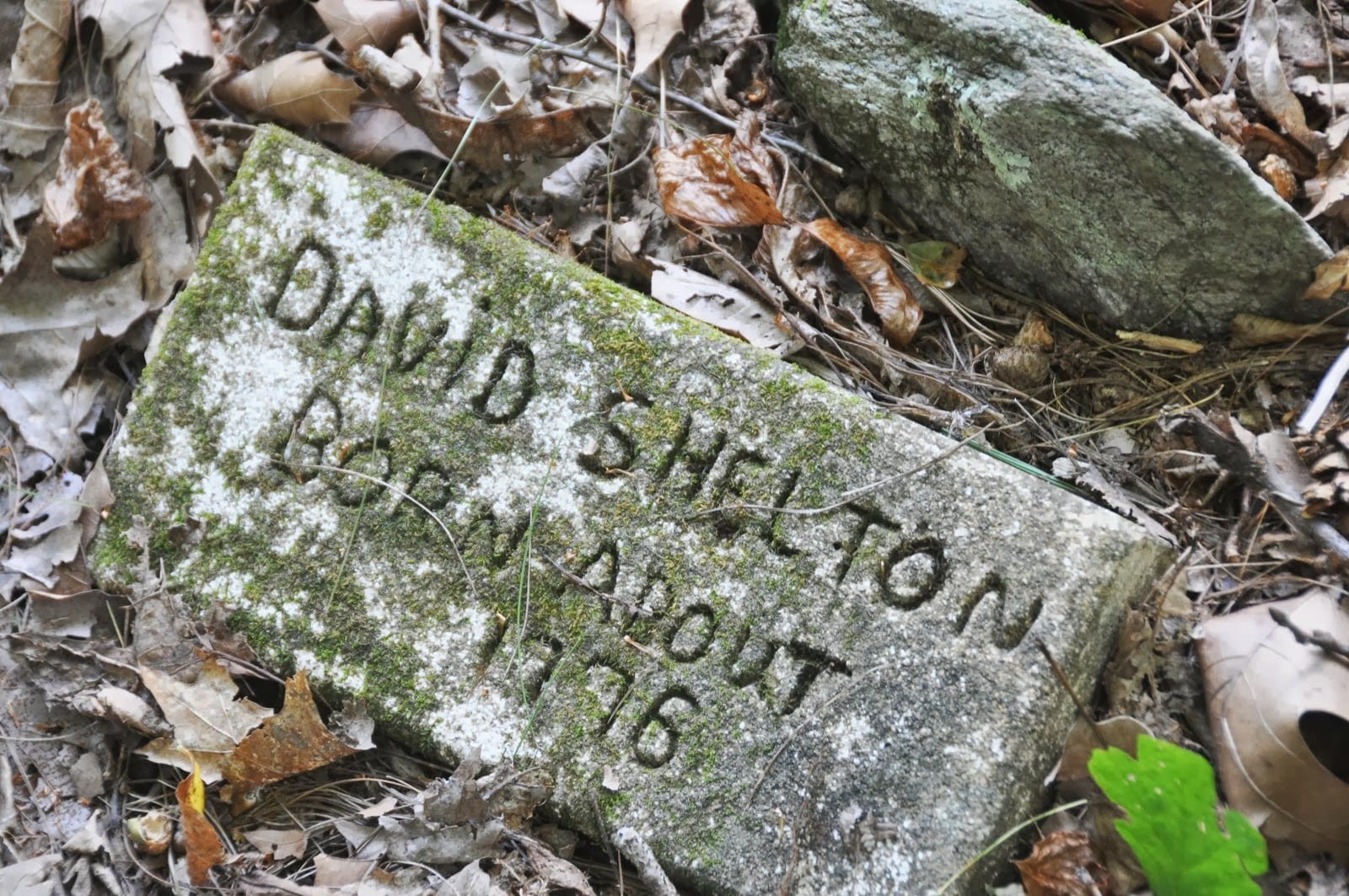
Five more are made to kneel, including 13-year-old David Shelton. “You have killed my father and brothers,” he pleads. “You have shot my father in the face. Do not shoot me in the face.”
The soldiers fire, and again four men die instantly. But young Shelton is only wounded in both arms. He hugs the legs of one of the officers. “You have killed my old father and three brothers, you have shot me in both arms. … I forgive you all this — I can get well. … Let me go home to my mother and sisters.”
But they haul him back to the place of execution and shoot him again — eight times. Then they execute the remaining three men. The soldiers dump all the bodies into a shallow trench scored out of the snow... The next day, when the women climb up into the gorge to claim the bodies, they discover that wild hogs have been at the men.
On February 16, Attorney General Augustus S. Merrimon writes to Governor Vance, [and I will omit most of Merrimon’s account of the massacre, then he writes:] ... “I learned that all this was done by order of Lieut. Col. James A. Keith. I know not what you intend doing with the guilty parties, but I suggest they are all guilty of murder. …Such savage and barbarous cruelty is without parallel in the State, and I hope in every other.”
Governor Vance is determined to get to the bottom of the atrocity. He orders an investigation that lasts four months. There is the question of Colonel Allen’s involvement. He was not officially in command, yet all witnesses place him squarely at the center of events. It is Allen who promised the men a fair trial in Tennessee and thus persuaded them not to resist arrest.
The Confederate Army suspends Colonel Allen for six months without pay, which scarcely troubles him because he has other ways to make money. His substitute enlistment scheme alone nets him $20,000. ... For two years, Keith remains a hunted fugitive.
When he is finally caught, it is not by the families of the Shelton Laurel victims or even by Vance’s North Carolina troops, but by Yankee troops. He is indicted on 13 counts of murder and imprisoned for more than two years, while the war goes out like a flame and the State Legislature haggles over an amnesty for all who served the Southern cause. In the end, even the State Supreme Court cannot levy justice on Keith — he is set free and disappears into the wilds of Arkansas.
Shelton Laurel mourns its dead. With the help of Merrimon, now a U.S. Senator, and with the support of the new governor, William Holden, five widows of the murdered men petition Congress for pensions. Their petition dies in committee. In the world beyond Shelton Laurel, the massacre is largely forgotten. In Shelton Laurel, the bitter memory will burn for generations. END QUOTE
If you want to read the entire article, just do a web search for the phrase Atrocity at Shelton Laurel and you will find it. Alright, with that in mind, and just before we go to the Scriptures, I must lay some doctrinal groundwork.
For most of my long-time listeners, this will be review, but for the sake of new listeners, I want to review some basic doctrines regarding the body of Christ. The apostle Paul, under the guidance and inspiration of God, described the assembly of the called out ones, i.e., the church, as the body of Christ.
(To be continued.)