

Chapter 3, Section 5: Scrutinizing the Text Families
We have revised the original chart which we had drawn when first presenting these lectures ca. 1995. You will notice several new items shown in red. Readers have commented and wondered about these Bible versions. We had room to add them, and so we did.
However, with literally hundreds of Bible versions in English, we will obviously not have space to place many of them, but as we proceed readers will know in which column any particular version belongs. (Hint: Almost all belong in the left column.)
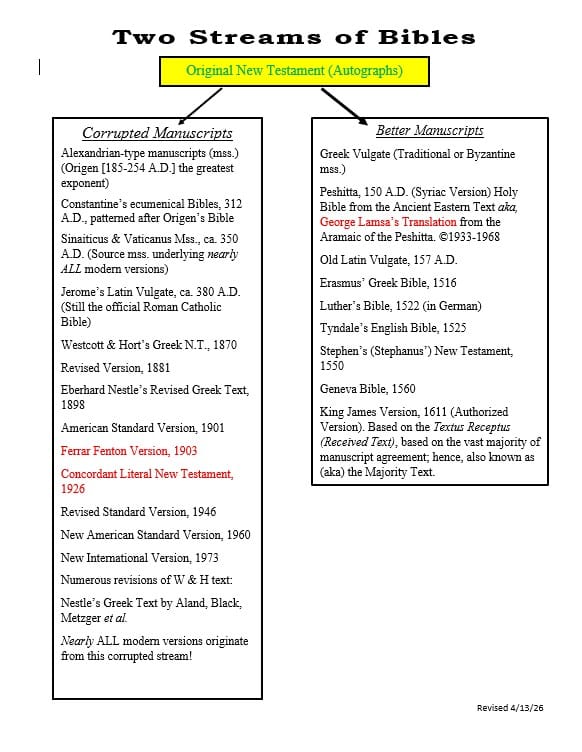
Referring to this revised chart showing the two streams of Bibles, we find the Greek Vulgate in the Textus Receptus branch. These are the manuscripts that were later called the Byzantine, the Traditional, and more recently the Majority Text. To repeat my indirect quotation from Dr. Carson in the previous section, he said that there are far more manuscripts extant in this [the Textus Receptus Stream] tradition than in all of these [the left-hand stream] combined.
In fact, and it depends upon who is doing the counting or which scholar’s book you choose to believe, but the ratio of the Majority manuscripts to the other text types, is at least nine to one.
Possibly as high as 95% of the manuscripts are in substantial agreement with this right-side stream on the chart. The right-hand stream today places the King James Version almost alone against most of the other English language versions. If the surviving manuscripts of the Textus Receptus has a ratio of nine to one, it is historically logical that we should find them surviving from the Antioch, Syria, and Asia Minor areas.
After all, it was at Antioch where the followers of Christ were first called Christians. John wrote his gospel here at Ephesus in Asia Minor along with his three epistles and he wrote the book of Revelation on the isle of Patmos not far off the coast of Asia Minor (modern Turkey).
Paul wrote to the churches that he nurtured in this area: the Galatians, the Ephesians, and the Colossians. Moreover, Peter, James, and Jude also addressed their epistles to this area. Therefore, we recognize from the New Testament itself, that this area was the recipient of a great deal of apostolic activity.
Back to the chart. Next we have the Peshitta, 150 A.D. This was a translation of the Greek into the Syriac language, and it was based on these same early Greek manuscripts of the right side of the chart. A few years later, there was a translation made from the Greek into Latin, which is called the Old Latin Vulgate, 157 A.D.
It is called the Old Latin Vulgate to distinguish it from Jerome’s Latin Vulgate of about two-and-a-half centuries later. The word “Vulgate” means “vulgar,” which simply meant “concerning the common people.” It did not always have the connotation of something vile or “dirty” as in a “dirty joke,” a vulgar joke.
Thus, concerning the two Latin Vulgates, it referred to the language of the common people. Therefore, we have the Greek Vulgate in the right-hand stream because all of the people in the eastern Roman Empire spoke Greek, and we have the Latin Vulgates in the west because in the A.D. Roman Empire, as the centuries wore on, the people in that area primarily spoke Latin.
It is important to recognize the difference between the Old Latin Vulgate and Jerome’s Latin Vulgate. They are drastically different. The remaining names on the chart, from Erasmus to the King James Version, we will delve into later. Let us consider more details about those in the stream on the left.
However, we first need to call your attention once again to the year 1881. This was the year that the so-called Revised Version appeared. It was the result of a committee of churchmen and scholars, some of whom will later be identified as just “out and out bad guys.”
However, God always His “Daniel,” and certainly there were some good men on the committee. There was at least one man who was unquestionably the most learned of all those on the committee, more learned that Westcott and Hort. His name was Frederick Henry Ambrose Scrivener (1813–1891).
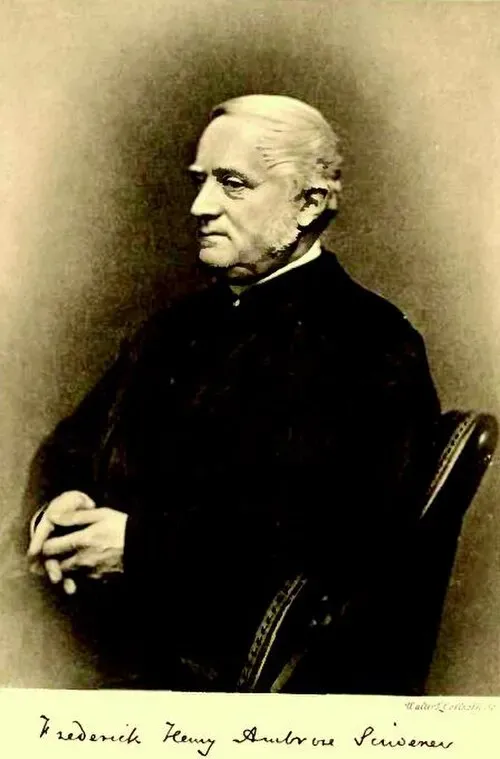
Quoting from Dean John William Burgon (1813–1888), quoting Scrivener, QUOTE:
It is no less true to fact than paradoxical and sound that the worst corruptions to which the New Testament has ever been subjected originated within one hundred years after it was composed. Irenaeus, A.D. 150, and the African fathers and the whole western, with a portion of the Syrian church, used far inferior manuscripts to those employed by Erasmus or Stephanus thirteen centuries later when molding the Textus Receptus. END QUOTE
(Much more on Scrivener and Burgon later.)
Scrivener points directly to the African fathers as having used inferior manuscripts. Two of the African fathers that he was referring to were Origen and his mentor, Clement of Alexandria. I will discuss both of these men in detail later.
For now, however, while we are making a brief historical overview, we note a couple of things about Origen. He had succeeded Clement as head of the school at Alexandria, and later he opened a school at Caesarea in Palestine. That is why some scholars suggest that perhaps this “Caesarea” family of texts should not be considered separate because it probably came from Origen in Alexandria.
Origen dipped into pagan philosophy, notably Gnosticism, and seemed to use Gnosticism as an overlay for understanding the Scriptures. He denied the deity of Christ, and he taught the false doctrine of purgatory. Under Origen’s teachings, and later, in Roman Catholic doctrine, purgatory is where you go after you die to have your sins “purged”, if you were not perfect enough to go immediately into heaven.
According to Catholic teaching, those in purgatory, had not committed heinous sins which would have sent you directly to hell—where you would be tortured in fire forever. But purgatory was equally torturous except it was limited in time. So that, eventually, you make it into heaven after you are totally cleaned up.
Note: we have presented thorough studies on the false doctrine of the burning hell in our series God’s Plan for Man .
Origen was very much involved in textual criticism, and his methods were very similar to those used by Westcott and Hort in the 1800s. Moreover, those numerous scholars who follow in the footsteps of Westcott and Hort are still using these methods today.
The famous church historian, Eusebius, was a court bishop and speechwriter for the Emperor Constantine.
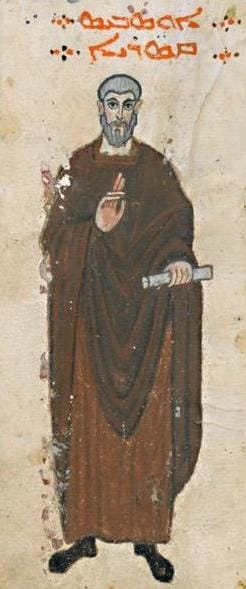
He favored the teachings of Origen sufficiently that he promoted Origen’s teachings in the decaying Roman Empire, and thus set the course for “higher learning” in Europe from which the Dark Ages followed.
Turning our geographical focus directly on Rome now, we recall that Constantine became emperor in 312 A.D. Shortly after that, he professed to become a Christian. The great persecutions of the Christians by his predecessor Diocletian ceased.
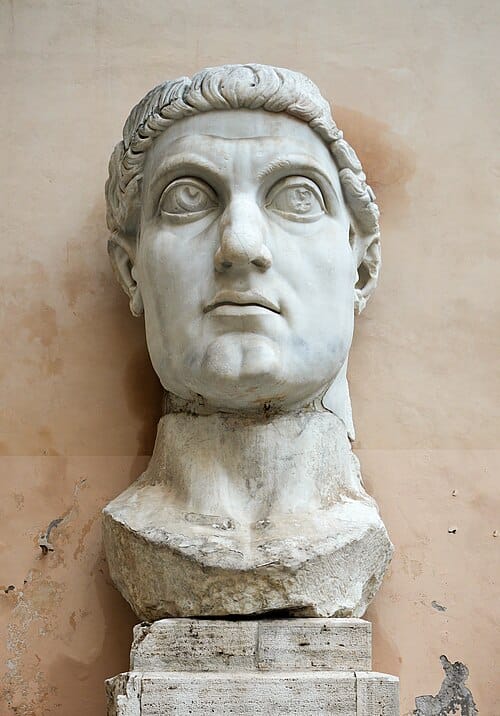
Constantine was a very clever politician. He noticed that the more the Christians were persecuted, the stronger the church grew. Therefore, he employed the old strategy that, “If you can’t beat them, join them.”
Under his reign, vast multitudes of pagans became nominally Christian. However, this also resulted in the mixture of pagan religious practices into Christianity, eventually culminating in what we now know as the Roman Catholic Church.
Constantine, however, was a great one for unity and ecumenicalism. Asserting himself as the great protector of the church in 312 A.D., he decided that one version of the Bible should be used by all. He had three text types from which to choose, and each had been contending for supremacy.
These were the texts that are now called the Textus Receptus (however, it was not called that in 312 A.D.), the other was the Origen/Eusebius Text, originating in Alexandria, Egypt.
The third was another one from Egypt, simply called The Egyptian or the Hesychian Text. It was named after an Egyptian bishop and martyr called Hesychius (3rd–4th century), who was martyred under Diocletian around 311 AD.
The term Hesychian Text primarily refers to the Hesychian Recension, a version of the Septuagint and the New Testament (specifically the Gospels) which were revised by Hesychius of Alexandria.
Because Constantine was friendly with Eusebius, it is not surprising that Constantine gave the government contract to Eusebius to produce fifty copies of the Bible. These Bibles were then distributed to churches throughout the Roman Empire.
Because Johannes Guttenberg and his printing press were still a thousand years in the future and the fiery persecutions of Diocletian probably destroyed all copies of the Scriptures they could find, one would think that Constantine’s ecumenical Bible would proliferate and become the dominant Bible of the Roman and later the Holy Roman Empire for centuries to come.
However, such was not the case. As Dr. Benjamin Wilkinson wrote in 1930 in his Our Authorized Bible Vindicated, QUOTE:
The truth is the opposite was the outcome. Constantine’s Bible flourished for a short space. The span of one generation sufficed to see it disappear from popular use as if it had been struck by some invisible and withering blast. END QUOTE
That is very important to remember, because we will notice later that this same phenomenon happens with virtually all new English Bible translations which derive from the Westcott and Hort left-hand stream.
Constantine tried to unify the Roman Empire with one perverted Bible for all his recently-converted pagan, Christian subjects. The vast majority of these new “converts” though were merely continuing their heathen worship rituals under new names. We can safely say that true repentance and obedience to Yahweh’s Laws did not break out everywhere and on every side as a “revival” in the Roman Empire.
The true believers, on the other hand, continued to use the Received Text in the Greek Empire, in Syria, in Northern Italy, in Southern France, in Britain, Scotland, Ireland, and a few other places. In the Greek-speaking areas of Asia Minor, they retained the Bible in Greek.
In Syria, as was noted earlier, it was translated into Syrian Peshitta, and in the areas of the Roman Empire, like Northern Italy, Southern France, and parts of the British Isles, the spoken language of the day was Latin. Therefore, that is why they had the Received Text (as we call it today), put into the Latin Vulgate.
However, keep in mind that this Old Latin Vulgate, which was used in part in the British Isles, Southern France, and Northern Italy, was based on the original Greek on the right-hand stream. Jerome’s Latin Vulgate was based on the left-hand stream. The Old Latin is what these people were using.
Have you have read The Drama of the Lost Disciples by George Jowett? It is an inspiring book about where some of the other apostles and disciples went after the ascension of Christ. We know that some of them, Lazarus, Mary, and Martha (among others) went to Southern France.
Mark, the gospel writer, ended up in Northern Italy. There is still a church called St. Mark’s Cathedral in Venice. All of this area contained true pockets of Christianity. Later the Waldenses and others settled in these areas. Although they spoke Latin, they had a Latin-based Bible that was based upon Greek from the right-hand stream. They kept the right text.
Later on, when the Roman Catholic Church sent missionaries to Britain to convert the so-called heathen, they had a difficult time getting these Christians to drop the Old Latin Vulgate for Jerome’s Latin Vulgate. Jerome’s Latin Vulgate came from the text of Origen in the left side stream.
One can clearly see that even in the early centuries of Christianity, the very same battle for the Bible was going on even as we see taking place today. It is a battle for supremacy of competing versions which are based upon different traditions of manuscripts. We are looking at absolutely opposing manuscripts: The Received Text on the right versus the Gnostic Text on the left.
As we continue our study of the history of manuscripts, we shall give very special attention to the Codex Sinaiticus and the Codex Vaticanus. After that, we will begin to scrutinize the theories and the lives of Brooke Foss Westcott and Fenton John Anthony Hort.
After that, there is much more in this study concerning Which Bible, Which Version. I think you will find it very fascinating as well as critically important in your life as a Christian.
(To be continued.) | Updated April 21, 2026
~END~