
Chapter 4, Section 1: Perusing Codices A, B, and Aleph—The “Oldest and Best”?
We are continuing our study of Bible manuscripts since this is fundamental to understanding Bible translations and Bible versions. Today we begin by studying codices A, B, and Aleph.
Those are technical terms, and in our previous chapter, I stated that next we would explore and analyze two of the major Greek manuscripts.
Before I commence with that, however, I wish to review several of the salient points that we learned in the previous chapter, just to refresh our memories.
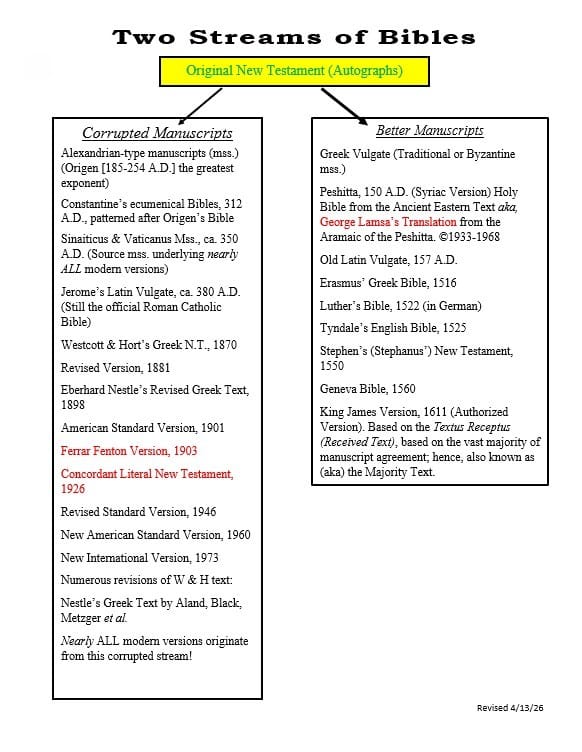
We had shown with the use of this chart (above) how our current English language Bible versions can be divided into just two basic streams of Bibles, those in the right-hand stream and those in the left-hand stream.
Those on the right are based on what is called the Textus Receptus, which is a Latin term which simply means the Received Text.
It is also known as the Majority Text, the Byzantine Text, the Traditional Text, and there’s one other label for these manuscripts of the stream on the right, which I neglected to mention last time, and that is the Common Text.
Technically, there are some slight variations between all those terms, but because we’re trying to make this series concerning a very complex topic somewhat more understandable for the average Christian, we’re going to use all those terms synonymously.
Today, the only versions of the Bible which have any widespread usage at all, and which are based upon the Received Text, are the King James Version, and to an extent, the New King James Version. There is now one called the Modern English Version (2014-2024), but I have not taken the time to examine its “roots,” manuscript-wise.
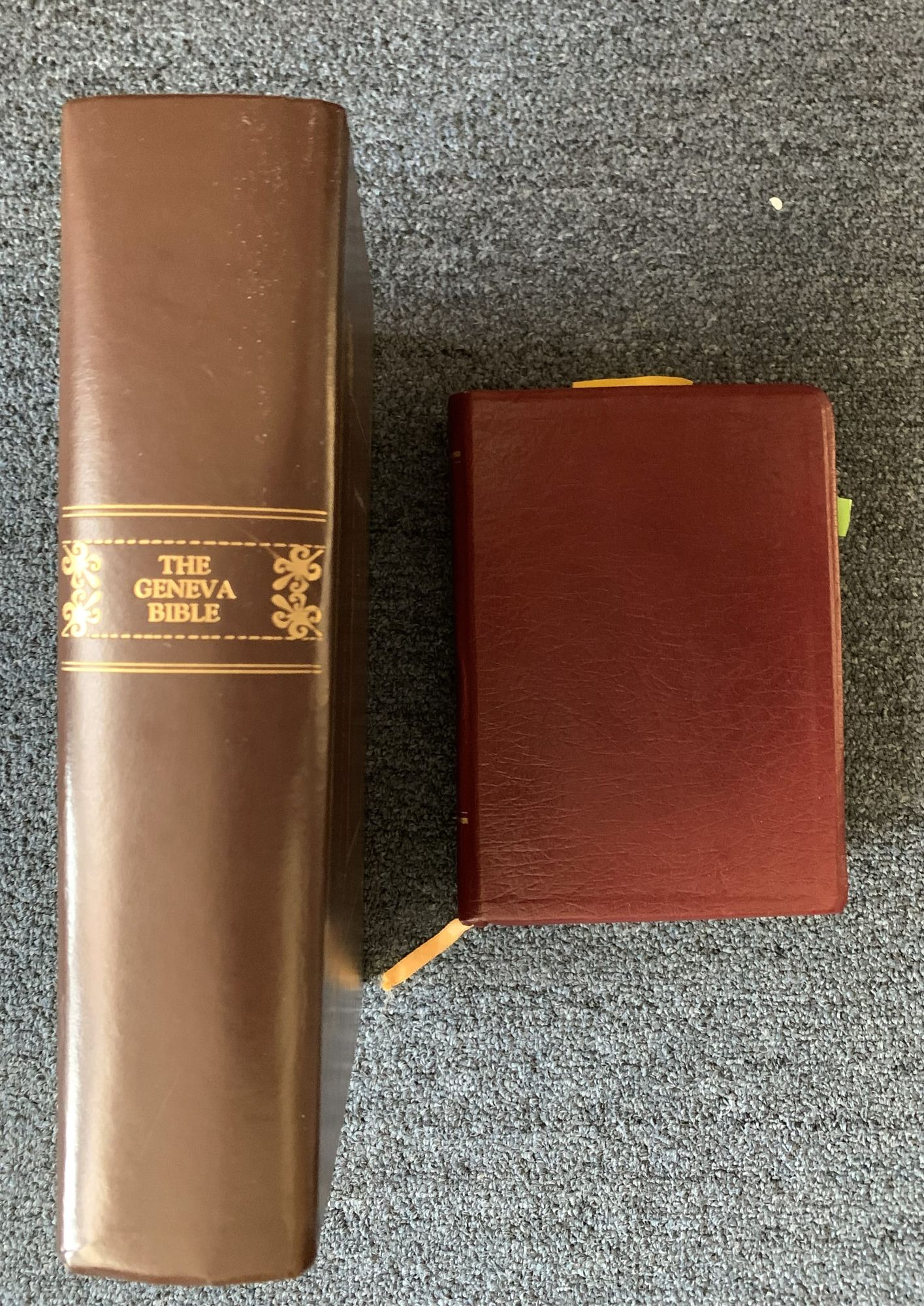
The Geneva Bible, of course, is based on the Textus Receptus, and is now available again at $120 a copy, and so its circulation is extremely limited. Or, at least it was of very limited circulation when I first obtained my copy decades ago. Apparently more people are buying it and one of the big Christian publishing firms, Hendrickson, has now brought out the same facsimile printing and at a much reduced price (around $52).
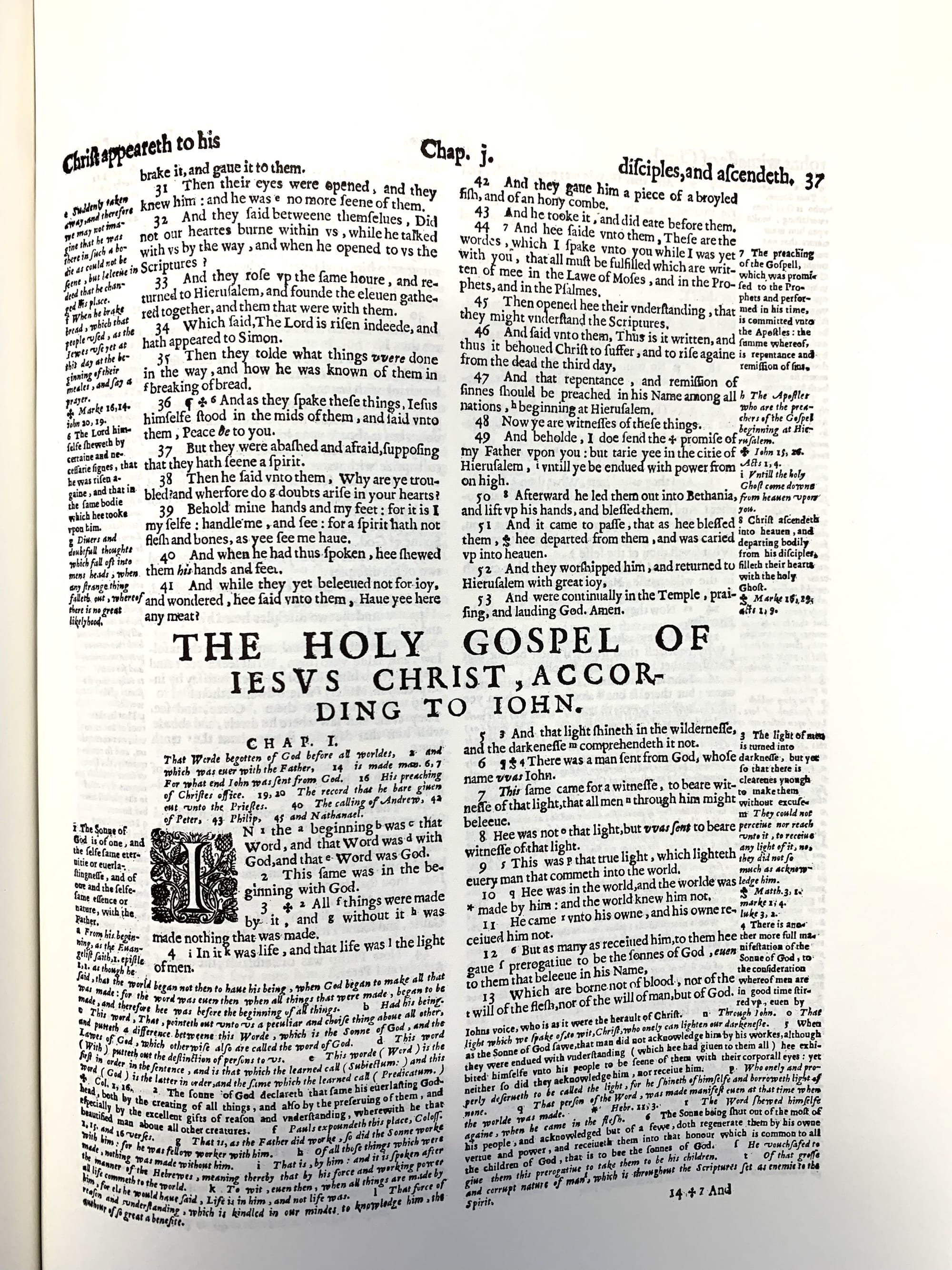
We’ shall have more to say about the Geneva Bible later on in the series, God willing. But for now, you might be cautious about thinking it is quite readable because the ad copy on Amazon says “Text printed in readable roman type.” That can be misleading and reading it does require becoming acclimated to the way the alphabet looked in 1560. For example, the letter “s” looks like an “f.” Here is a photo of a page from my copy.
On the left-hand side of our chart, we found that almost all other English language versions have sprung from a Greek text which was put together by Westcott and Hort back in about 1870-1880.
We pointed out that at least 90% of the extant Greek manuscripts are in very substantial agreement with the Received Text. That is why it is called the Majority text. And thus, we have an interesting phenomenon.
Here we are in this latter part of the 20th century—and now a quarter century into the 21st century, and whereas we have a vast number of English Bible versions in use, almost all of them are based on this Greek text of Westcott and Hort, which in turn is based primarily upon only two or three manuscripts.
The primary two are the Sinaiticus and the Vaticanus. These two not only differ drastically from the majority manuscripts, but these two, Sinaiticus and Vaticanus, differ frequently from each other.
We might wonder, then, that if 90% or more of the extant manuscripts agree with the Traditional Text, then do the rest agree with the Vatican and the Sinai so that we have a 90% versus a 10% in terms of manuscript ratio? Well, not at all.
It’s more like we have 90% agreeing with the Textus Receptus versus, say, a half a percent for the Vaticanus versus a half a percent for the Sinaiticus versus a half a percent for the Alexandrinus versus a half percent for this and that, and they’re all kind of all over the playing field, all over the board.
And yet, despite that, what do we find when we open our study Bibles of the non-King James variety, such as one I have here?
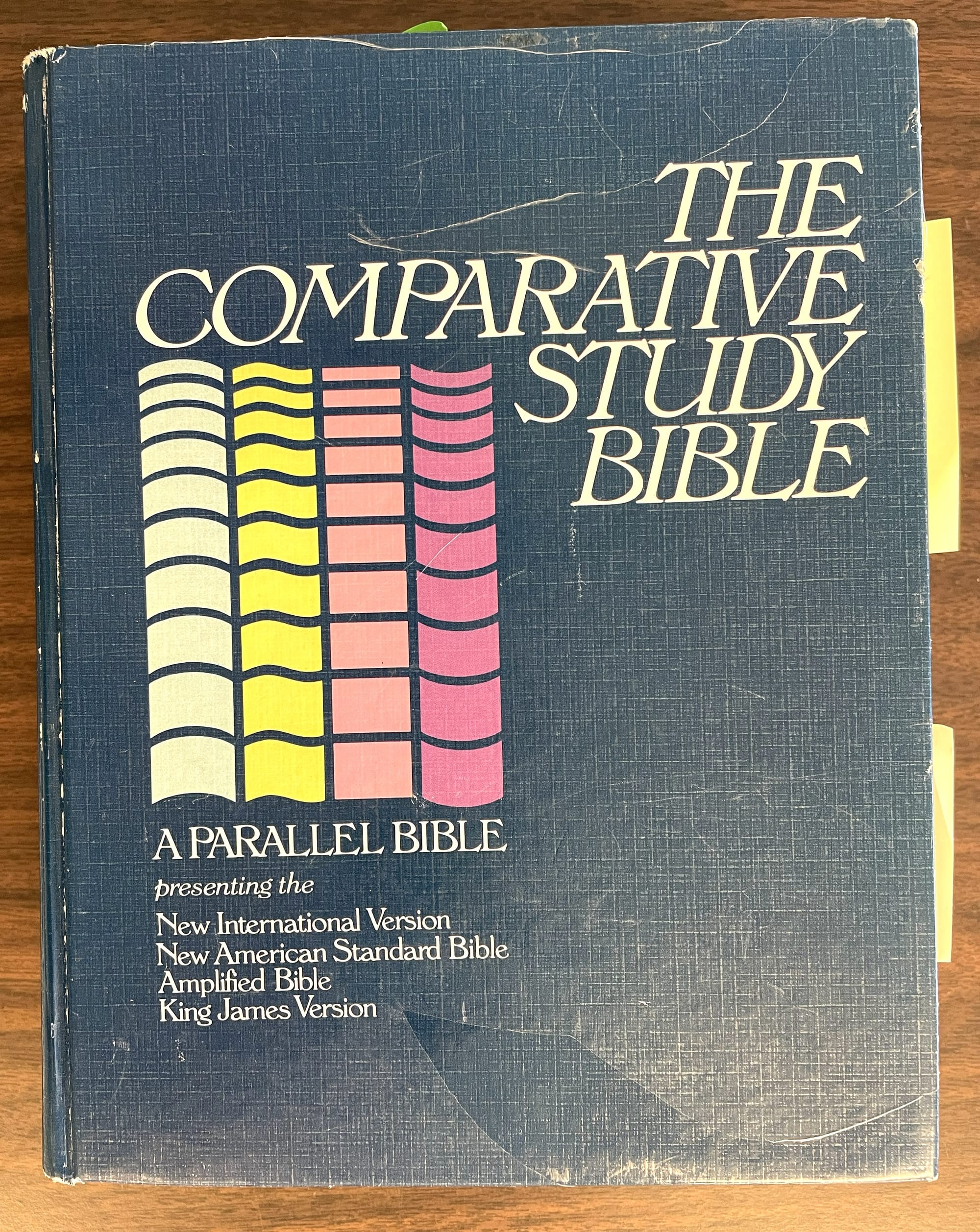
It includes the King James Version, but it also has the New American Standard, the NIV, and the Amplified. What do we find in the notes there?
How do the Bible publishers and scholars get around the fact that the Westcott and Hort Bibles are founded on only a tiny portion of manuscript evidence? Well, here’s what they do.
Here’s how they reassure the reader that the non-KJV Bible in his hands is something he can rely on. Here’s what they do. They will frequently have a footnote or a marginal note which will say something to this effect. “The oldest and best manuscripts” say thus and such.
This is code language. By “oldest and best manuscripts”…, they are referring to the two chief sources: Westcott and Hort and their splicing together of the Sinaiticus and the Vaticanus.
That type of footnote is, of course, a value judgment. Who says they’re the oldest and best? Well, certain scholars and Bible editors and publishers, that’s who says.
Therefore, as critical thinkers, it always behooves us to check the credentials and check the viewpoint of the scholar who is rendering such a verdict. Of course, we all understand what is meant when the statement is made that such and such manuscript is the oldest. There is not any dispute about what the oldest means.
But when they say the best manuscripts, what is meant by that? Does best mean the most accurate and reliable? That is probably the way most of us would interpret that word, wouldn’t we?
But perhaps what they really mean—I don’t think they do—but they could say what they really mean is that the best manuscripts means they are the ones that are in the best condition. In other words, the best preserved manuscript. It’s in good physical condition. It’s a relatively complete copy.
And there is no doubt that the Vaticanus and the Sinaiticus are both among the best manuscripts in that regard. But if it is meant that they are the most accurate and reliable manuscripts, well, then I beg to differ vigorously.
As we proceed, I’ll begin to show you why.
We are still reviewing, though… You will recall that in our last chapter, we used some maps of the Mediterranean world to show you where each of the so-called families of text types originated and where they were in use. We recall that the followers of the way were first called Christians at Antioch.
It is in this general area, which includes Asia Minor and Syria, where the Byzantine or the Received Text was prominent.
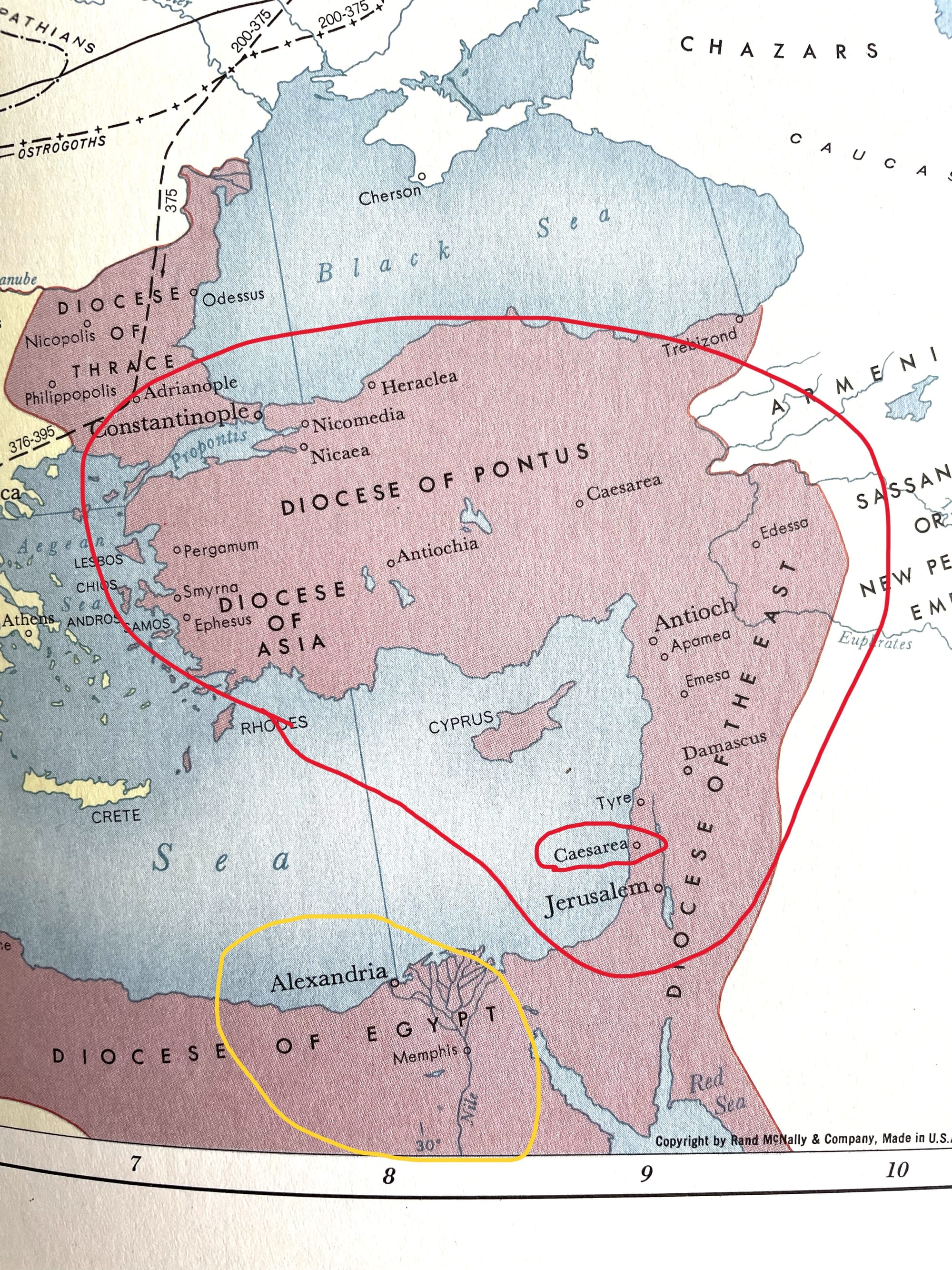
Now, because Greek remained the common language in this area all the way up through the Byzantine Empire from 312 A.D. to 1453 A.D., these Christians maintained the Bible in Greek for the most part.
There were a couple of early translations, namely the Peshitta in Syriac and the Old Latin Vulgate there in 157 A.D. And remember, the Old Latin Vulgate must be distinguished from Jerome’s Latin Vulgate. They are very different because they are based on different texts.
The reason they had the Old Latin Vulgate was because of groups of Christians who were in the Western Roman Empire, especially those in northern Italy, in southern France and in the British Isles. Of course, Latin was the spoken language there, so that’s why they had the Old Latin Vulgate.
Meanwhile, there was the Alexandrian school down in Egypt, and they developed their own version of the Bible. Therefore, the manuscripts from that area differed significantly from the Common Text.
The Gnostic heresy, which plagued the early church, had its focus in Egypt, and these manuscripts at the Alexandrian school were quite influenced by it. We will delve into that later on also.
The other very prominent area related to groups of manuscripts is Rome. There, under the Emperor Constantine, Christianity became one of the officially tolerated religions of the empire, along with scores of pagan religions.
Constantine gave what we would say would be a “government contract” to his speechwriter, Eusebius, to compile and publish an ecumenical Bible, one which Constantine then hoped that he could force on all the Christian churches in the empire.
Eusebius was very fascinated with the works of Origen down in Egypt, and so Eusebius’ version of that ecumenical Bible was very influenced in that direction, in other words, from the Alexandrian perspective.
And it was about this very time in history to which scholars trace both the Vaticanus and the Sinaiticus manuscripts, as you see reflected on our chart (above), ca. 350 A.D.
In fact, some scholars believe that one or both of these manuscripts, Vaticanus and Sinaiticus, could be extant copies of Eusebius’ version. That is speculation, but so is much more in this whole field of textual criticism.
In my own research, I have found time after time that when you trace it down as far as you can go on a given question, you discover that it all boils down to one scholar’s opinion and speculation versus another scholar’s opinion and speculation.
Once again, that is why it is so important to not only look at what the scholar says, but to see where they are coming from theologically. But more than that, we ought to examine the fruit of their theories and speculations and the fruit of those who follow their theories in making their translations. Later on, we will be examining the fruit of the various versions and manuscripts.
With that having been said, let us move on to examine the major manuscripts on the left-hand side of our chart. That is, the manuscripts which underlie the texts which are followed in the translation of almost all versions of the English Bible today, except the King James Version and, to an extent, the New King James.
The two major manuscripts are the Codex Sinaiticus and the Codex Vaticanus. The Codex Alexandrinus is also used to a lesser extent, so we are going to begin by giving just a brief glance at this one.
One of the charges frequently leveled against the King James Version is that it was translated in 1611, which was 16 years before the Alexandrian manuscript became available. And that was 250 years before the Sinaiticus and Vaticanus became available.
And thus, the critics charge, the scholars that translated the King James Version did not have “the oldest and best” manuscripts available to them. Although you will find that charge repeated often, it is very misleading.
You see, while it is technically true that none of these manuscripts themselves were in the hands of the King James Version translation committee, these men were very aware of the Alexandrinus manuscript and they could have had access to it, if they so desired, but they rejected its use.
Here is how that came about. The Alexandrinus manuscript today lies in the British Museum. It was presented as a gift to King Charles in 1627 by Cyril Lucar (Kyrillos Loukaris, 1572–1638) , the head of the Greek Orthodox Catholic Church.
Lucar was born in 1568 (according to The Cyclopedia of Biblical, Theological, and Ecclesiastical Literature by James Strong and John McClintock; 1880), and early on he embraced the principles of the Protestant Reformation. For that, he was dogged all his life by the Jesuits.
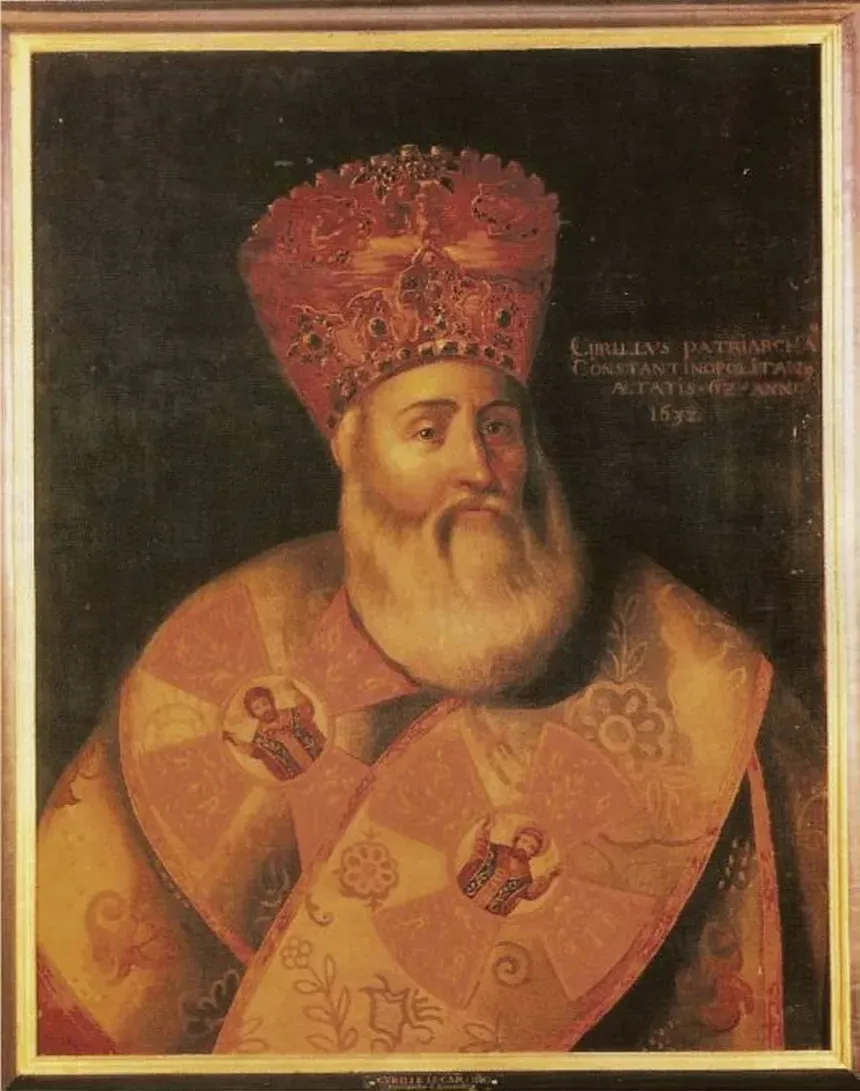
Lucar spent some time in Geneva with two of the great Christian reformers, John Calvin and Theodore Beza.
In 1602, Cyril Lucar was elected the Patriarch of Alexandria, Egypt. The Alexandrinus manuscript had been kept there for years, and Lucar was undoubtedly quite familiar with it.
Cyril Lucar was in constant communication with monarchs throughout Europe and Protestant Christian leaders, Calvin, Beza, and others, all over Europe, including England. The very learned scholars of the Authorized Version were thus aware of the availability of that manuscript. And if they had wanted it, they surely could have had access to it.
Now, without wanting to get too far ahead of myself, when we continue we shall discuss the same question as it applies to Aleph and B, that is, to Codex Sinaiticus and Codex Vaticanus.
(To be continued.) | Updated April 21, 2026
~END~