Which Bible? Which Version?
Or we could entitle this section: Did God leave His church with only corrupted manuscripts for 18 centuries?!
Constantin Tischendorf was a man of immense ego, and he lashed out viciously with his pen at anyone who threatened his primacy in the world of textual scholarship.
Samuel Tregelles, who was also an anti-Textus Receptus man, was one such victim of Tischendorf’s pen. (More on Tregelles in a “sidebar” at the end of this essay.)
It happened that when Tischendorf allowed Tregelles to see the Sinai Codex, Tregelles came to some conclusions about the Sinai Codex which differed from Tischendorf. Consequently, Tischendorf wrote some nasty articles about Tregelles.
Another example of Tischendorf’s pride and egotism centers around how we have come to call Tischendorf’s stolen Codex by the designator Codex Aleph.
By the time Tischendorf had brought this manuscript back from the sands of Egypt, the Codex Alexandrinus had already been designated by the scholars as Codex A.
The Vaticanus had already been designated as Codex B, the Codex Ephraim in Paris was Codex C, the Bizet manuscript at Cambridge, England was Codex D, and so on.
That lack of preeminence did not sit well with Constantine Tischendorf—that his great discovery would simply be tagged as Codex Q or Codex R or whatever the next available alphabet letter was. No, he wanted primacy and recognition in everything.
Therefore, he took it upon himself to take the first letter of the Hebrew alphabet, Aleph, and to call his Codex, Codex Aleph. Despite early attempts by the scholars of that day to designate it in line where it should have been, the name Aleph has stuck. So that’s why today we have Codex A, Codex B, C, D, and then Codex Aleph, because of Tischendorf’s immense ego.
I give you all this information about how this manuscript was obtained and what kind of character Tischendorf was, because I want you to think about this. Does it make common sense? Further, does it make biblical sense?
Does it make common sense to you that God would give His people His Word by the hands of his prophets in the Old Testament and by the apostles and disciples in the New Testament, and then for God to make sure that His people did not have it for centuries.
That therefore, all they had to go on for many centuries was a “horribly corrupted” Byzantine text, all the while His true Word lay in the sands of Egypt until 1859 and 1869, until a man of the character of Constantin Tischendorf was to find it, and then to present that manuscript, the “true Word of God, to His church once again? Would God do that?
Well, He might. But does it make sense that He would use a man of the character of Tischendorf to lie, steal, cheat, and cleverly deceive his fellow Christians in order to purify God’s Bible with the Codex Sinaiticus? You decide.
Now let us discuss the manuscript itself. Codex Aleph is what is called an uncial manuscript. We went over this in previous chapter. To refresh our memory, briefly, that simply means the entire manuscript is all capital letters, Greek capital letters, with no spaces between the words and virtually no punctuation.
So there is plenty of work for the textual critics—lower criticism. But as he studied the Codex, Tischendorf actually counted 14,800 alterations in that manuscript made by what he detected were nine separate correctors over a period of time.
Now also, we need to understand that when someone says, for example, that Aleph is a complete manuscript of the Bible, that is a very relative term, because in actuality, Codex Sinaiticus is missing much of the Old Testament. It is not complete at all!
The Codex must have originally contained about 790 leaves (pages), but only 242 of the sheets stolen by Tischendorf contained parts of the Old Testament.
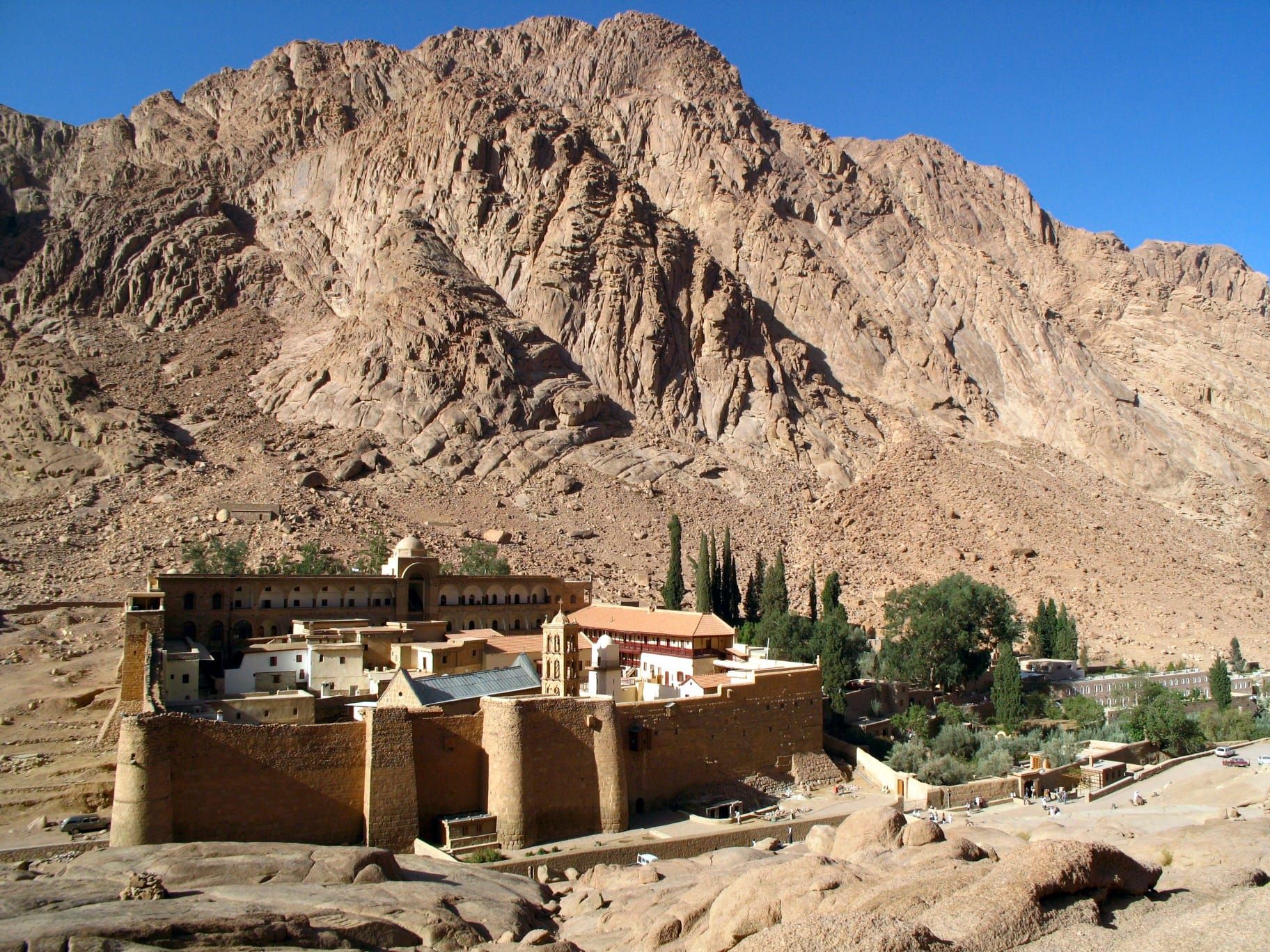
One must wonder, where did Codex Sinaiticus originate? It was found there in the monastery, but where did it come from before that? Well, in the Codex itself, at the end of the book of Esther, one scribe left a message which gives us the origin of the Codex Sinaiticus.
In part, it stated, “copied and corrected from the Hexapla of Origen, corrected by himself.”
James Bentley summarizes in Secrets of Mount Sinai. QUOTE: This pedigree is long. The Hexapla of Origen had taken that scholar and theologian 20 years to compile. In six columns, he had assembled material from the Greek version of the Old Testament [i.e., the Septuagint]. One column contained the Hebrew text, but transliterated into Greek letters.
Another contained what Origen himself considered to be the perfect text. This volume became the greatest treasure of the library of Christian books at Caesarea.
Origen finished his Hexapla in the year A.D. 245. Later, Antonius the Confessor worked on it. Then Pamphilus, who was the teacher of Eusebius and an outstanding scholar, corrected Antonius’ work during his imprisonment in the years of persecution. Finally, an unknown scribe used Pamphilus’ work to add corrections to the codex from Mount Sinai. END QUOTE
Once again, I have to reassure you, I am trying to present all this material in a systematic fashion, and I realize that as we proceed, we are running across various terms like Hexapla (literally, six columns) and persons like Origen that tempt us to want to take a sidetrack or a detour.
But I can assure you, Origen is a very major player in our story, so we are going to have to defer discussing him until later on. At this point, I want to move into the theological implications of the Codex Sinaiticus.
To introduce this section, let me read one paragraph from Mr. Bentley’s introduction. Emphases are mine and comments in [brackets] are mine.
QUOTE: Codex Sinaiticus is supreme [in Bentley’s opinion] among Biblical manuscripts: the oldest surviving Bible in the world containing the complete New Testament [except for the parts it leaves out before and after Tischendorf’s “tinkering” with it] and an unparalleled witness to the text of the Old Testament.
The differences between the text of Codex Sinaiticus and the New Testament, as perceived by Christians even today, are nearly shocking, and it is fair to say that although scholars have worked on the manuscript, few Christians even know of these differences, and that fewer still have come to terms with them. END QUOTE
What does Bentley mean by that? Well, he is saying, you Christians don’t know it, but there’s a lot of shocking stuff in this manuscript. It differs frequently and greatly from what you think the Bible says. And few Christians… have come to terms with it. I read that as meaning, few Christians have accepted what Sinaiticus says.
Continuing to QUOTE:
Finally, and above all, the discoveries at St. Catherine’s dramatically force us to reconsider one crucial element in Christianity, the resurrection of Jesus Christ Himself.
What do you think he means when he says, the discoveries will force us to reconsider the resurrection? Well, if you believe in the resurrection, and you reconsider it, what else is left? Answer: To disbelieve it.
Indeed, the resurrection of Christ is a key doctrine of Christianity, is it not? As the apostle Paul said,
KJV 1 Corinthians 15:16 For if the dead rise not, then is not Christ raised:
17 And if Christ be not raised, your faith is vain [futile, worthless]; ye are yet in your sins.
18 Then they also which are fallen asleep in Christ are perished.
19 If in this life only we have hope in Christ, we are of all men most miserable [to be pitied].
In other words, if Christ did not actually resurrect from the grave, there is no hope for us of anything after the grave. Of equal importance with the doctrine of the resurrection is the doctrine of the deity of Christ.
For new readers, I have long ago presented an eight lecture series on The Divinity of Christ, which turned into a 21-part series of blogs. Here is part 1. Or use the Search tool and enter "Divinity of Christ" which will bring up all 21 blogs.
I use the word “divinity” as synonymous with “deity.” I am very confident that the proofs we have assembled therein are wholly persuasive.
Again, if Christ were not God, then we have no hope. Why? Well, simply this. If He were only a man, then He was a sinner, like all the rest of us.
Romans 6.23, For all have sinned and come short of the glory of God.
And thus, if Jesus, was a sinner, then His sacrifice on the cross could not even have saved Himself, let alone been an atonement to save anybody else or to redeem Israel.
Thus, we see the absolute importance of the doctrine of the deity of Christ. (And that is just skimming the surface.) Keep that fact in mind now as we proceed.
(To be continued.)
Sidebar: Samuel Prideaux Tregelles (1813–1875).
AI Summary, edited and modified by James Bruggeman.
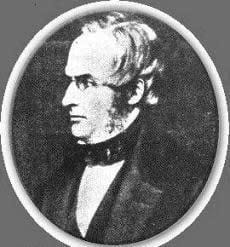
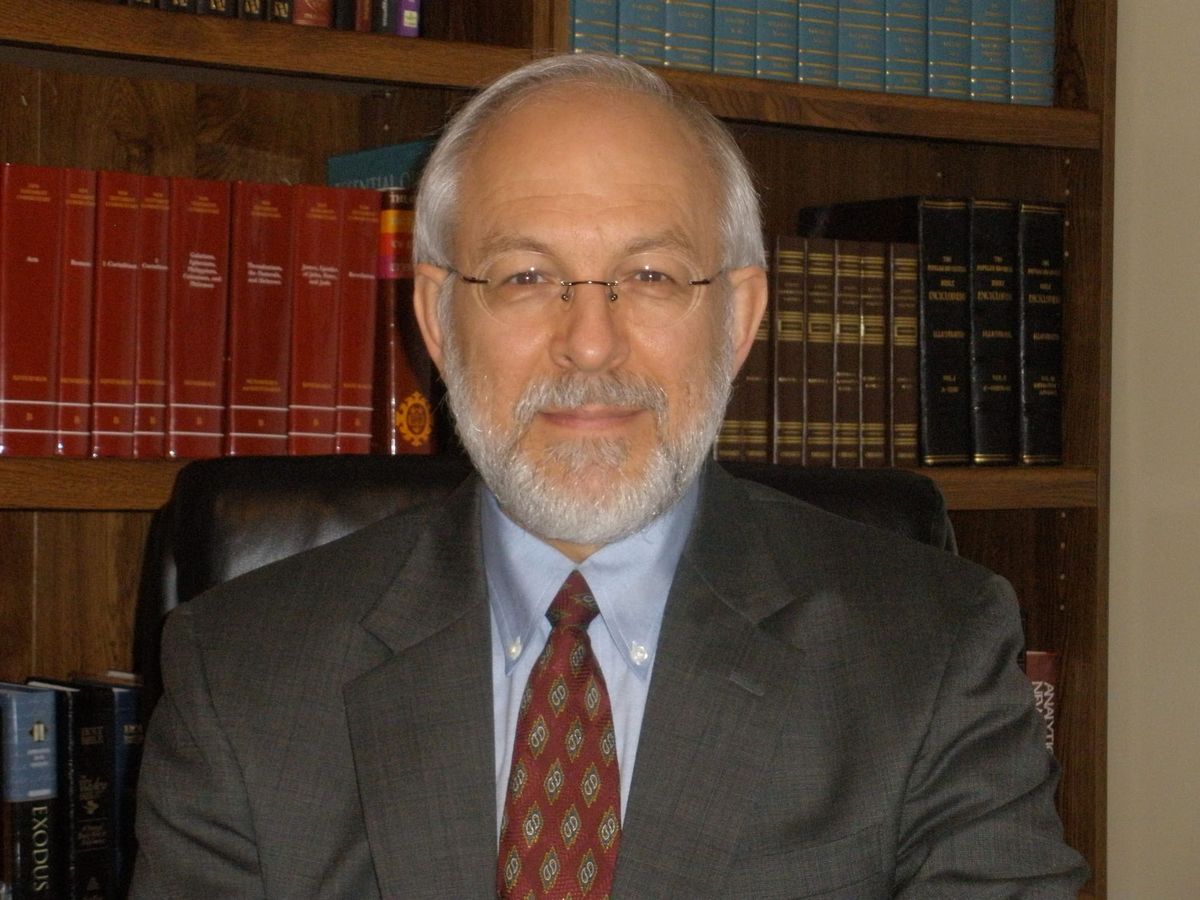
Samuel Tregelles (photo above) was a prominent English biblical scholar, textual critic, and linguist who dedicated his life to producing the most accurate critical text of the Greek New Testament (according to the opinions of those who oppose the Textus Receptus, aka Byzantine Text, Majority Text).
Unfortunately, Tregelles broke from the Received Text and sought the “true” Word of God elsewhere, namely, in Rome’s Codex Vaticanus among others.
He developed independent critical principles parallel to those of Karl Lachmann, traveling extensively across Europe to collate ancient manuscripts, including the Vatican Codex and Codex Sinaiticus.
Born into a Quaker family in Falmouth, Cornwall, Tregelles was largely self-taught in languages, learning Greek, Hebrew, Aramaic, and Welsh while working at the Neath Abbey iron works.
His major contributions include An Account of the Printed Text of the Greek New Testament (1854) and began his monumental work, The Greek New Testament Edited from Ancient Authorities, with the first parts appearing in 1857.
Although paralyzed in 1861 and 1870, he continued his work until his death in Plymouth. The final volumes and prolegomena were completed posthumously in 1879 by colleagues like F.J.A. Hort. (That is Fenton John Anthony Hort, whose very significant {in a bad way} career we shall soon take up in separate chapters in this series.
Tregelles initially aligned with the Plymouth Brethren, influenced by John Nelson Darby, a key founder of the movement. Although he later left the Plymouth Brethren for the Church of England, Tregelles retained many of their doctrines, indicating the lasting impact of his early experiences.
Tregelles was a pivotal figure in the early history of the Plymouth Brethren. His contributions as a biblical scholar and editor significantly influenced the Plymouth Brethren’s theological development and practices.
This is important to remember because the Plymouth Brethren played a very prominent role in the development, if not origin, of dispensational theology (THE Antichrist, 7-year tribulation, rapture of the church, Christian Zionism, et al.) which dominates and saturates much of so-called Christianity in the 20th and 21st centuries.
~END~