
Which Bible, Which Version?
At this stage, we are detailing the doctrinal beliefs of Westcott and Hort. As always, all emphases and comments within [brackets] are mine, unless otherwise noted.
In 1871, Fenton John Anthony Hort was invited to become the examining chaplain to the Bishop of Ely, Dr. Harold Browne.
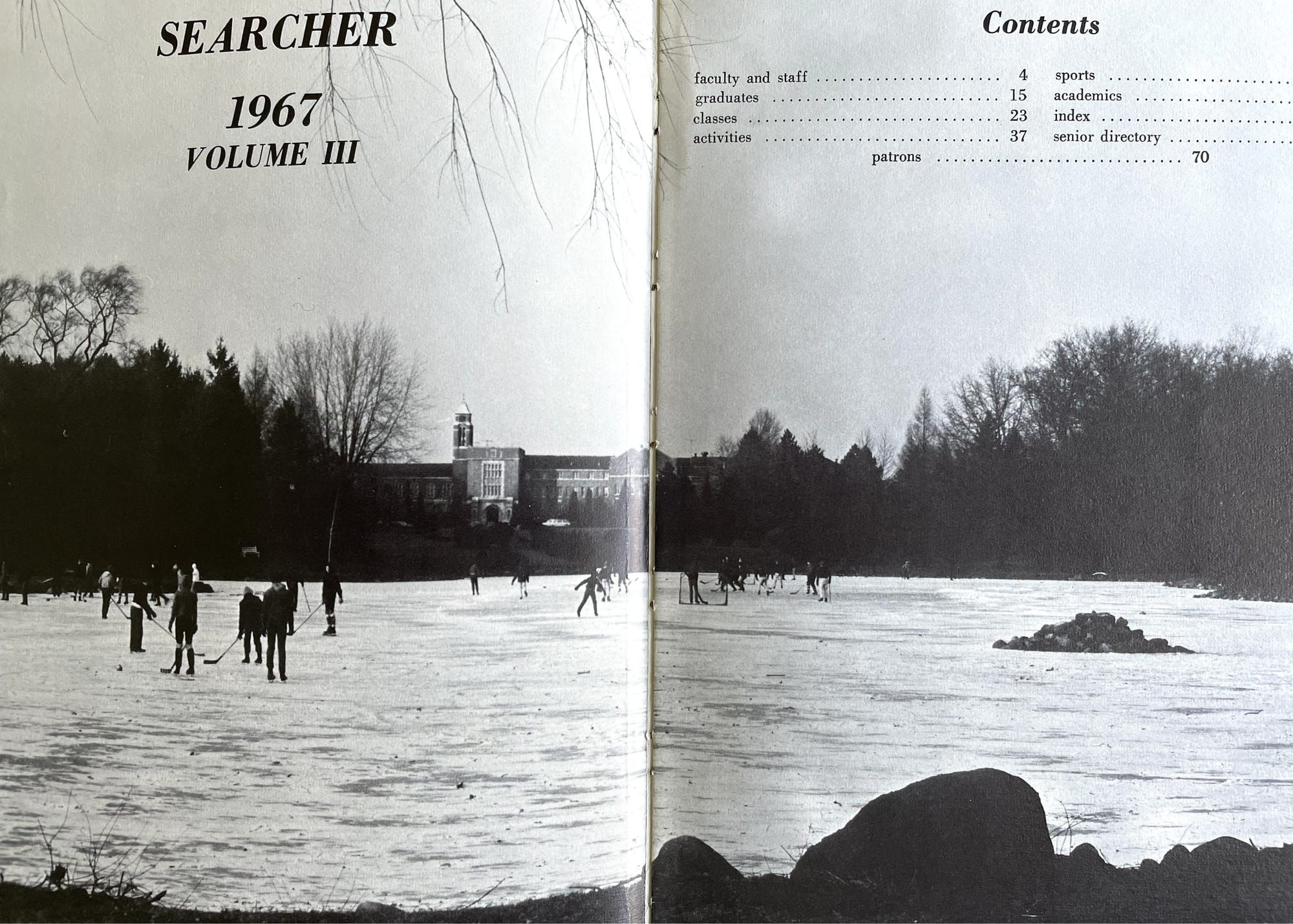
(As an aside, for decades I had thought that I had lost my two yearbooks from my years in the high school, boarding school called Brunnerdale Seminary. I was utterly delighted a couple weeks ago to find them both stashed in old box of VHS tapes dating back to the late 1990s.
But I did not need my yearbooks to remember many people and incidents that occurred in my years at Brunnerdale. We had nicknames for almost all the faculty and staff at the seminary. Coincidentally, there was a priest there named Fr. Harold Brown—a quite common name, no doubt, and no known connection to the Bishop of Ely in England.
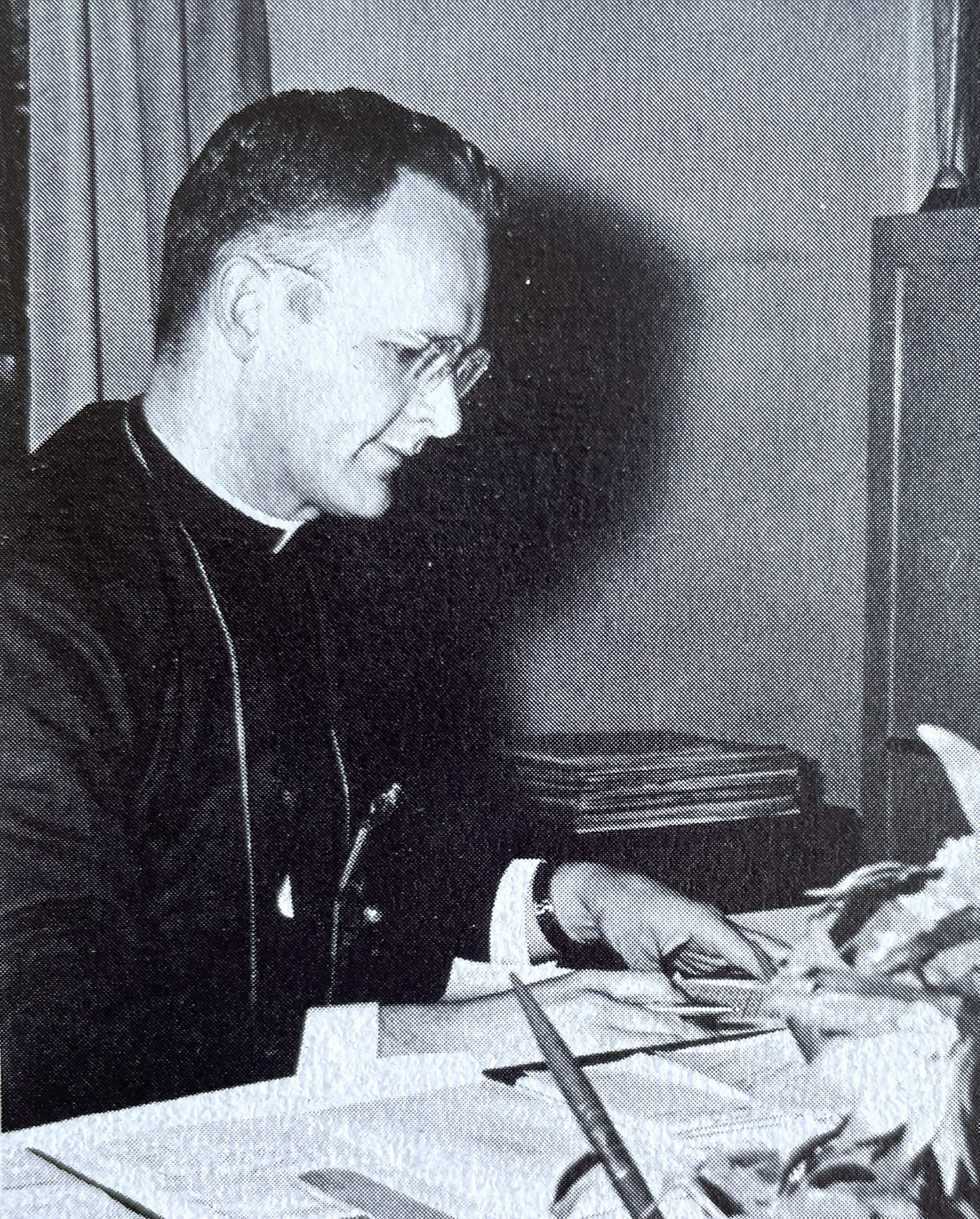
Our nickname for Fr. Harold Brown was “Charlie Brown,” after the comic strip character, of course. There were quite a few of the priests teaching at the seminary who were quite effeminate—just saying—and Charlie Brown was especially so.
Is it not clear to any thinking individual that a celibate (allegedly) priesthood would attract males who were not attracted to females? And that’s all I shall say about that.)
This was quite an important position to which Hort was appointed. Hort’s son tells us the following in The Life of Hort, Vol. 2, page 57,
QUOTE: In 1871, he, [F.J.A. Hort], himself became examining chaplain to the bishop of Ely, Dr. Harold Brown, whom he continued to serve after his translation to Winchester. Before accepting the post, he candidly explained to the bishop that objection might be taken to his views, especially on the doctrine of the atonement. But to his great relief, the bishop was perfectly satisfied to take him as he found him. END QUOTE.
So, either the Bishop of Ely, Harold Browne, did not bother to check out what Hort really believed, in which case he was grossly negligent, or if he did discover Hort’s views on the atonement and then hired him anyhow, then Harold Browne was just as much an apostate as was the eminent Dr. Hort.
Let me give you one more example of Hort’s beliefs on the doctrine of the atonement. This comes from The Life of Hort, vol. 2, p. 158. This is in a letter to the Bishop of Ely.
QUOTE: So also the uniqueness of the great Sacrifice [referring to Christ] seems to me not to consist in its being a substitute which makes all other sacrifices useless and unmeaning, but in its giving them power and meaning which of themselves they could not have…
I have thought it best to speak for myself without reference to the views of any other. But you will, I am sure, forgive me for expressing a belief that Mr. Maurice would assent entirely to what I have said.
He may have dwelt too exclusively on the idea of sacrifice, which is suggested by Hebrews chapter 10: 5-10, and he may have failed to make clear that Sacrifice [i.e., Christ] is not the only way of conceiving atonement. END QUOTE.
So we notice that the Unitarian-Anglican Reverend Maurice’s thinking still has a great sway on Dr. Hort. That letter was written in November, 1871. In fact, Dr. Hort states his own view in the above by clarifying what he thinks that Maurice meant, but which Maurice did not state explicitly. However, Hort does; namely, that Christ’s sacrifice is not the only way of conceiving of atonement.
But what do the Scriptures say about the way or the method of making atonement? Many readers have heard me expound on this passage a number of times in various lengthy studies.
Leviticus 17: 11 For the life of the flesh is in the blood: and I have given it to you upon the altar to make an atonement for your souls: for it is the blood that maketh an atonement for the soul.
Unfortunately, it appears that the Bishop of Ely, Dr. Harold Browne, knew what he was doing. He wrote back to Hort on November 18, 1871.
QUOTE: I believe from what you kindly write that there is no fundamental difference between us on the doctrine of the atonement, and I am disposed to flatter myself that there may be great sympathy between us on many points. END QUOTE.
Let’s move on now to Hort’s views in some other areas. In my research I have read that Hort denied the virgin birth, and that would appear to be correct since the Revised Standard Version of the Bible, which sprang from Westcott and Hort, translates Isaiah 7: 14 as, “a young woman” shall conceive, instead of, a virgin shall conceive… referring to the birth of Jesus the Christ, of course.
However, I have not found in The Life of Hort or in The Life of Westcott where they directly and unequivocally express a denial of the virgin birth. They may have stated it elsewhere, so I will leave it at that.
I do want to demonstrate, though, that these men (Westcott and Hort) had a special affinity for the Roman Catholic Church. At this point in this series, I do not believe I have mentioned the Oxford movement, but we must now give some space to it.
The Oxford Movement was a reaction by some scholars and clergy to what they perceived as the liberalism of the Anglican Church in the mid-1800s. The center of this movement was at Oxford University, hence its name.
Men like John Henry Newman, Richard Froude and Edward Pusey were among its leaders.
It’s very interesting to realize that, despite their being against the liberalization of the Anglican Church, guess where the Oxford Movement was heading? It was trying to move England back to Rome! To Roman Catholicism.
In fact, several prominent English Protestant clergymen and scholars crossed over to Roman Catholicism. Robert and Henry Wilberforce were two. Their brother, Samuel Wilberforce, never did (openly) convert to Roman Catholicism.
Well, I should probably qualify that. Because Samuel Wilberforce was described as, “that most versatile and picturesque personality in the English church, the silver-tongued Bishop of Oxford.”
So, let me leap ahead of our story here to make this connection to Wilberforce. You see, when there began to be some calls by various men for a Bible revision, some leaders such as Bishop Ellicott started calling for a Bible revision.
As it turns out, Ellicott was later made chairman of the Revision Committee. There were others who joined the chorus calling for the same. Men such as Dr. J. B. Lightfoot. Does that name ring a bell? And Dr. William Moulton.
Lightfoot might ring a bell if you are at all familiar with some of the “standard” Bible reference works. Some of Lightfoot’s work is considered a classic now and is found on the library shelves of many ministers and scholars. Yes, including myself. As it happens, Lightfoot was a close friend and associate of Westcott and Hort. He was a cohort, if I may say it, pun intended.
Anyhow, these men attempted to get Queen Victoria to appoint a royal commission for Bible revision, much like King James had done a couple centuries earlier.
These wily weasels knew that if they could get Queen Victoria to appoint a royal Bible Revision Committee, then that would give their work great credibility, respectability and authority. However, the good Queen Vicki refused on several occasions.
Still, they needed someone with a high enough name, position, rank, title, etc. to assure the public that the dangers in such a project would be closely guarded against. If the reader is at all familiar with the way politics works—and I know most of you in this audience are—this kind of thing happens all the time.
Getting someone who has a big name or title to lend authority to whatever project one is promoting is PR 101. (Public Relations)
One example we might point to would be the recent Congressional hearings on the Waco tragedy. You find a man with a relatively conservative reputation to head up the Congressional hearings. That was a guy from Florida, Rep. Bill McCollum. (He served in the U. S. House of Representatives from 1981-2001.)
I always thought he was a pretty good conservative, at least years ago I did. But I have not kept up with him. So that was, I thought, his reputation.
His appointment to lead the Waco hearings helps to satisfy at least some patriotic conservatives who are thinking, “Well, the truth is going to come out now because so-and-so is heading up the investigating committee.” Ha! It’s all window dressing, isn’t it?
The public is fooled again. It happens all the time, whether it’s in Washington, D.C. in 1995 under Congressional hearings into the Waco slaughter, or whether it’s at Oxford in 1870.
And so it was that the “silver-tongued” Bishop of Oxford, Samuel Wilberforce, was persuaded to take the lead position in getting this Bible revision project off the ground.
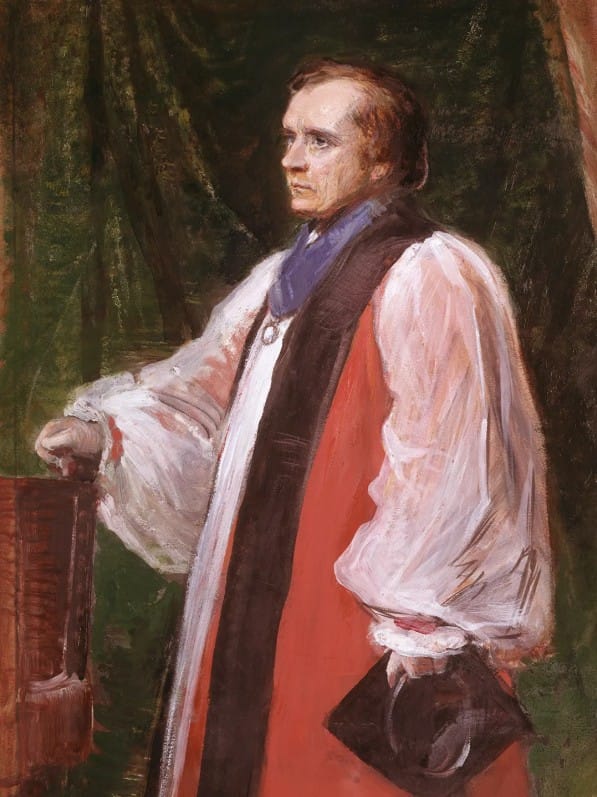
I find that very interesting. Here is a key man at Oxford, the very center of the “Romeward” Bound movement, and a man whose own brothers had “jumped the fence” over to Roman Catholicism.
Yet here the Bishop of Oxford, Samuel Wilberforce, and his Oxford University becomes the focal point for calling for a Bible revision, a revision which turned out not to be a revision at all, although they called it that, but it was an entirely new Bible, based primarily on manuscripts, the Vaticanus and Sinaiticus, which were also Romeward bound. How neatly it all fits together! Hindsight is 20-20, isn’t it?
But there were men who recognized what was going on at the time, men like Prebendary Scrivener and Dean John William Burgon, but their voices were drowned out by the majority of “erudite” scholars who were swept along by the airhead theories of Westcott and Hort.
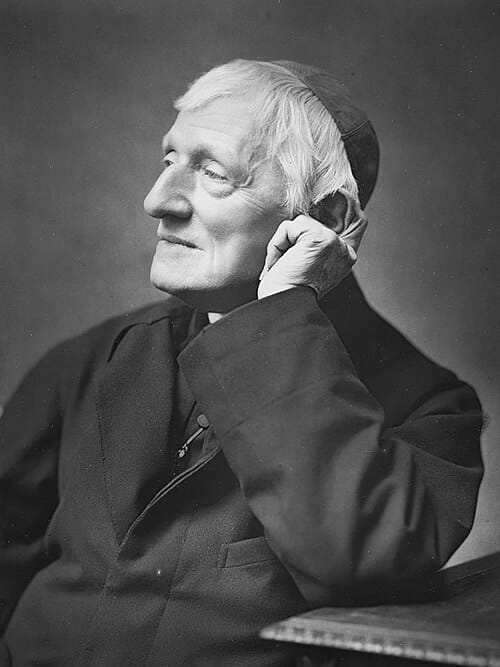
One other very prominent Protestant clergyman in the Oxford movement was John Henry Newman. But in 1845 he converted (defected) over to Romanism. There he was subsequently highly rewarded by the Roman Catholic Church by being named a cardinal without “going through the ranks” of priest, bishop, archbishop, and then into the highest rank in Catholicism except for the pontiff himself. He went from Protestant scholar directly to becoming Cardinal John Henry Newman.
I remember back in my teens when I was a student at the Catholic (high school-level boarding school) seminary near Canton, Ohio, that one of my religion teachers (Notice, I did not say Bible teachers, because we had none per se.) was Father James E. Froelich. (Pronounced Fray-lick).
I now realize that a young man’s indoctrination into the Roman Catholic interpretations of the Bible were pushed far off into the 13-year educational path to ordination into the Roman Catholic priesthood. I praise God that I was led to leave the seminary and what Catholics call “holy mother Church” when I was 18 years old!
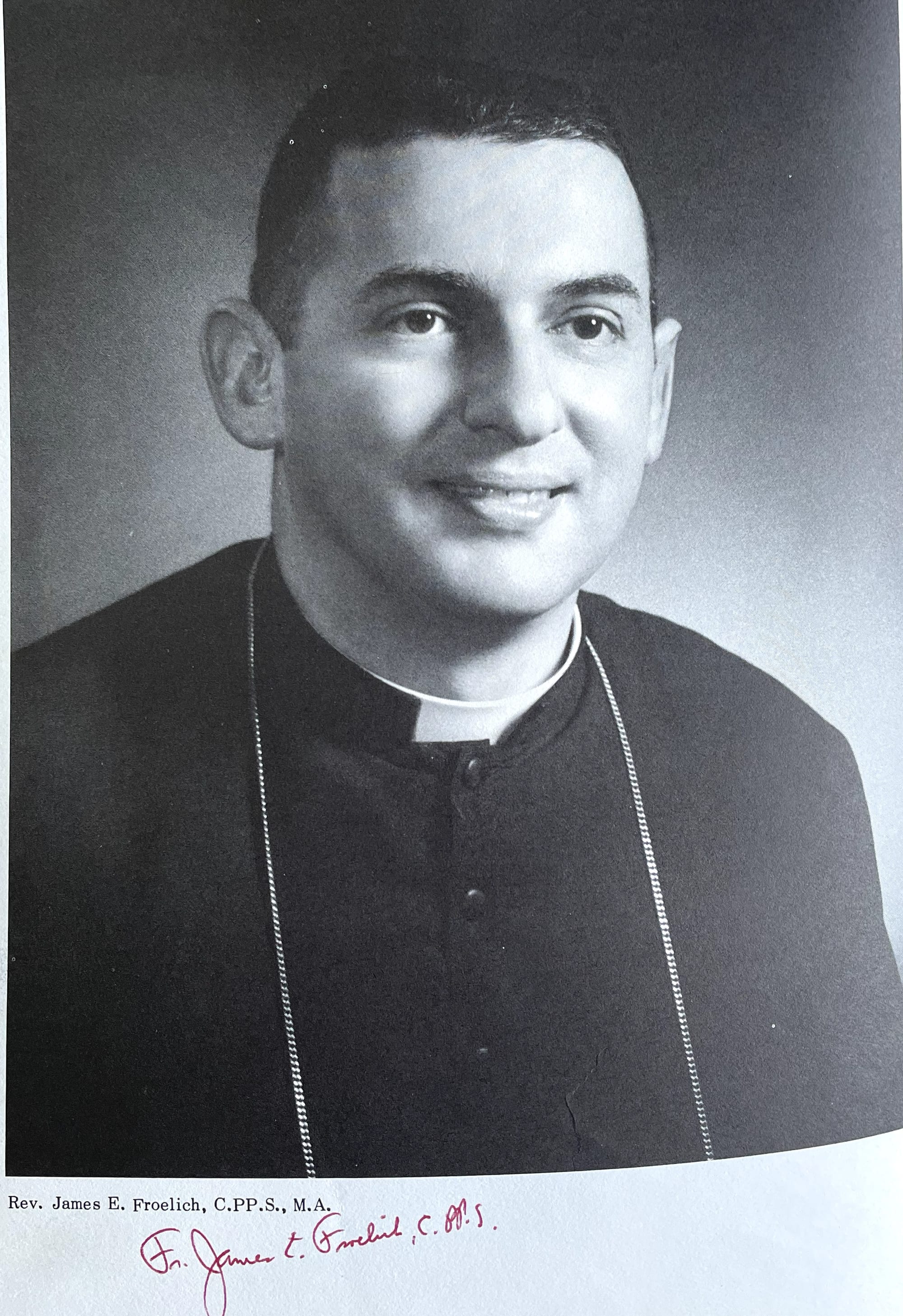
Froelich was very popular among all the students. He was also the Principal of Brunnerdale Seminary at that time. I remember very clearly how he used to wax eloquently about the “great Cardinal John Henry Newman.” Being in my mid-teens at the time, I didn’t absorb much about Newman at the time, but I certainly now see John Henry Newman in quite a different light.
Froelich is buried in Carthagena, Ohio, by the way.
All of this essay is given as background to show readers how Westcott and Hort’s affinity for Rome also fits neatly into the picture of what they accomplished later.
(To be continued.)
Supplemental information about leaders of the Oxford Movement. (AI-generated response): John Henry Newman, Richard Hurrell Froude, and Edward Bouverie Pusey were central leaders of the Oxford Movement (also known as Tractarianism), a 19th-century theological revival [I would say theological sabotage] within the Church of England.
Alongside John Keble, these Oxford fellows sought to restore [??] Catholic traditions, liturgy, and apostolic succession to Anglicanism, arguing against both Evangelical Protestantism and state control of the church.
The movement began in 1833 with Keble’s “National Apostasy” sermon and the subsequent publication of the Tracts for the Times, which Newman edited and largely authored.
While Keble and Pusey remained in the Anglican Church to lead the movement’s legacy (which evolved into Anglo-Catholicism), Newman’s theological developments led to his controversial conversion to Roman Catholicism in 1845, a shift that profoundly altered the movement’s trajectory and his personal standing.
~END~