Chapter 5, Section 1: My Higher Critic Latin Mentor
Because of the vital importance in this subject of Bible versions, we are still presenting some basic information and historical details about the various streams and families of Bible manuscripts.
We left off in the previous installment explaining the differences between the lower critics of the Bible and those who engage in so-called “higher criticism.”
In short, lower criticism is a valid study of the holy Scriptures. Higher criticism is not. Why not? Because the higher critics start out with a premise of unbelief in the Bible. They want to see if the Bible matches up to the latest findings of science and history. Therefore, their standards for determining truth are science and history.
And if whatever portion of the Bible doesn’t agree with history or science, well, then these higher critics conclude that the Bible must be wrong. And conversely, it follows that man and his theories are right.
This is the process of how they have come up with a host of theories, all of which tend to cast doubt on the Bible. Perhaps you have heard of some of these theories. They are more likely to be found in some “study Bibles” that would originate from the left hand (corrupted) stream of Bible manuscripts on our chart. See previous installments.
For example, there’s the J-E-D-P theory. J stands for Jehovah / Yahweh. The E for Elohim. And D for Deuteronomistic. And P for Priestly. This J-E-D-P theory contends that there were four alleged authors or strings of authors of the Pentateuch.
In other words, they refuse to believe that Moses wrote the Pentateuch, as the Bible itself says. (Of course, a later writer—possibly Ezra—had to have completed it since it records the death of Moses.)
Simply because these higher critics can supposedly detect differences in writing styles within the Pentateuch, they reject the idea that Moses could be the author. They find a different writing style, and presto, they conclude that Moses could not have written it.
If that were a valid tool, then the higher critics would find that Dr. James Bruggeman only wrote a much smaller portion of what he claims to have written.
But my writing style varies considerably throughout the month and year. My lectures are in a lighter “folksy” style because they are designed to be delivered orally to a local SK Fellowship where the atmosphere is quite informal.
The Feed My Sheep monthly monograph, on the other hand, is a bit more towards the formal side because it is designed to be read, not heard. And I could easily write in a very formal style if I so chose.
This J-E-D-P contrivance is one of the higher critics’ theories of man in his own arrogant and unenlightened by Holy Spirit (mis-) understanding of the Scriptures.
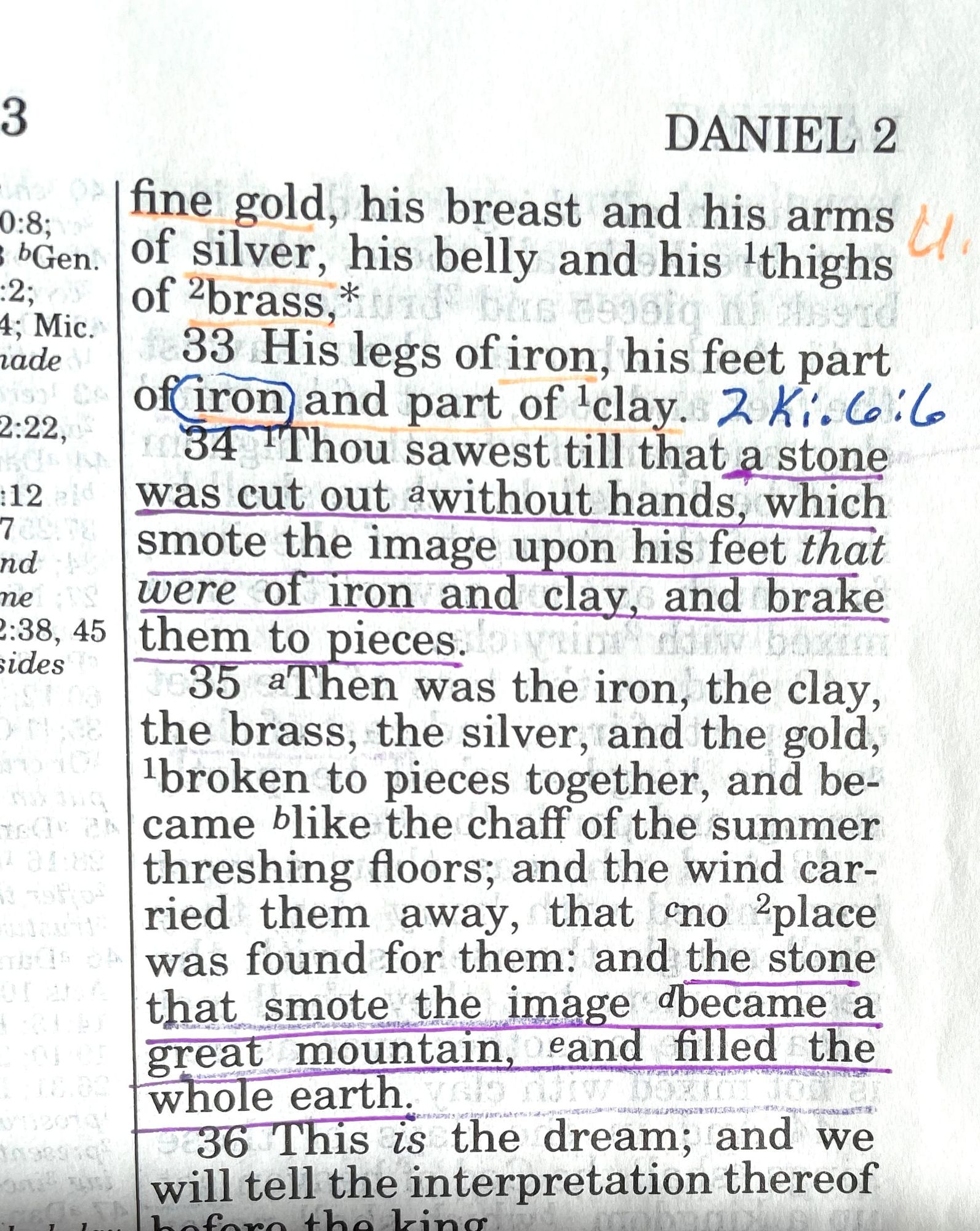
Another example is the higher critics’ theory that the book of Daniel was not written by Daniel back at the time of the Babylonian captivity, roughly 550 B.C. Instead, they say it was written by somebody else in the second century B.C. and they just slapped Daniel’s name on it.
Now, this view, of course, makes Daniel’s prophecies about the various beast empires not prophecy at all. It makes them simply history, recorded after the fact. Once again, notice how it detracts from the supernaturality of the Word of God.
I don’t know if I have told this story before, but it happened about 1987-88. I don’t recall exactly. I traveled with Bruce McCarthy up to northwestern Ohio for a speaking engagement. I had just written my book called Television, VCRs, and Christians (long out of print), and so I was going to be speaking about that subject.
Bruce was invited to speak about Freemasonry and Christianity. Now, northwestern Ohio is where both sides of my family originate. So this actually occurred not far from Carthagena, Ohio, a town which I often use as a figure of speech. (See Glossary.)
The area at that time was—and still is, to the best of my knowledge—about 95% Roman Catholic.
When we arrived in the tiny town there where the venue was located, we found out from friends there that a man named Father Joseph Pax, Catholic priest, was the parish priest who lived in the rectory just down the road from where the venue was.
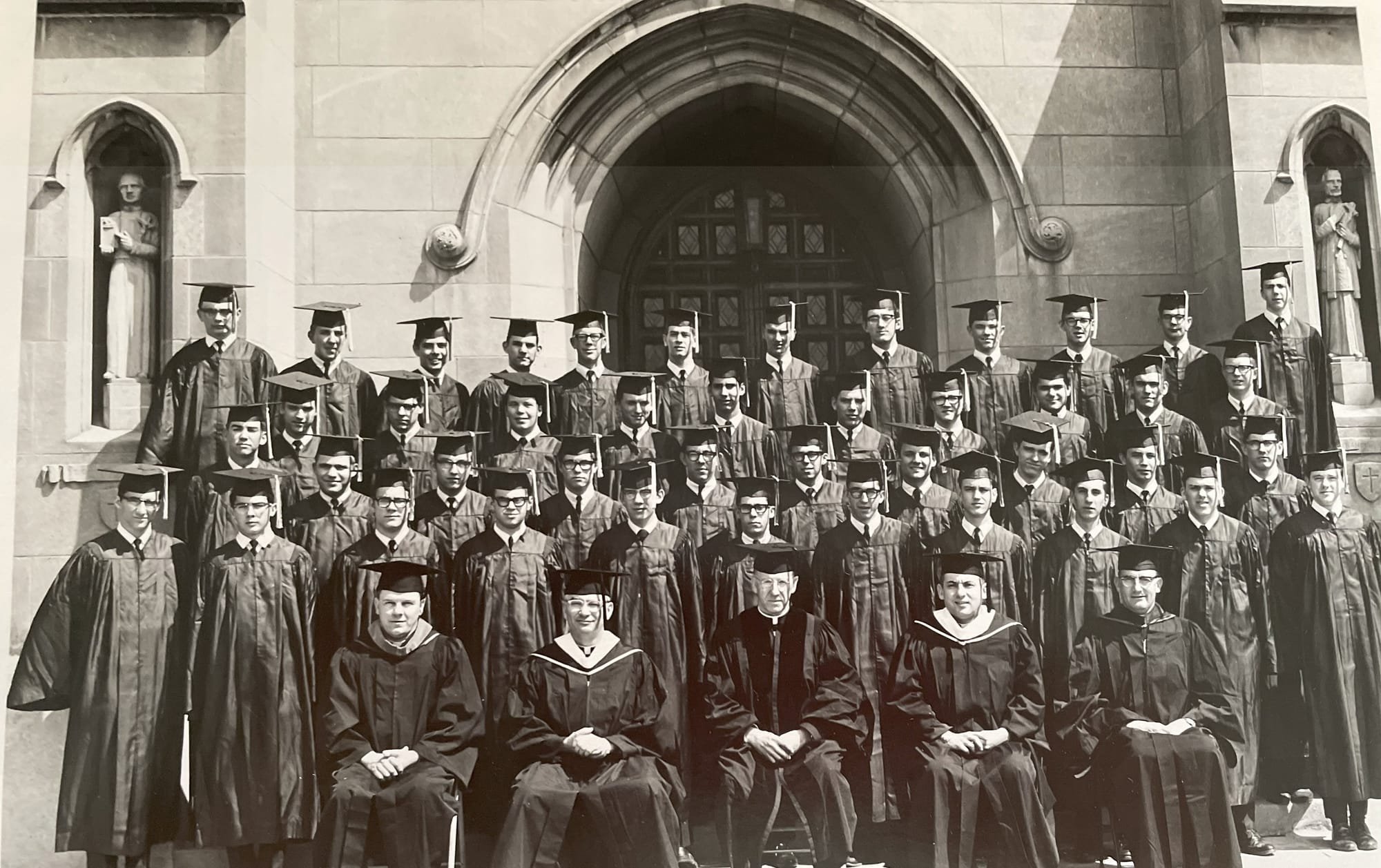
I was pleasantly surprised because Fr. Pax had been my Latin instructor back in the Catholic seminary for my three years in the boarding school seminary located near Canton, Ohio.
And so I said to Bruce, “Well, I’m going to go over and see him. You want to come along?”
“Sure, why not?” he answered.
It had been 20-some years at that time that I hadn’t seen Father Pax, and here he was, a parish priest now.
Now, to give you a little more background, I’m not trying to be boastful, but I think I was his favorite student. I say that because I won the Latin award and my name was inscribed on a plaque in the hall for my junior and senior year.
Of course, he was the one who decided who got the award. The award did not exist prior to my junior year. And so I think that it is fair to say that I was his best, and probably his favorite student.
A few minutes later we knocked on the door, and when I introduced myself, Father Pax just beamed with joy at seeing me. I introduced Bruce and he led us into the formal dining room where we sat around the large table.
It was really wonderful… for the first five minutes. It was “old home week,” how have you been, etc. A few minutes reminiscing about some of my old classmates (who also were his students), and what I’ve been doing for the past 20-some years.
“Well, I am married now and have four children,” and it eventually got around to him wondering what I was doing in this area.
Well, I’m here on a speaking engagement, and then he finds out I’m not a Catholic anymore and hadn’t been a Catholic since I left the seminary in 1967. His joyful face turned sour quite suddenly, and it went downhill from there pretty fast.
“So what do you believe now?”, he was in an unfriendly interrogation mode by then.
I began explaining a little bit about the Christian Israel identity belief, and, of course, he responded arrogantly, “Well, that’s just nonsense.
“The (Catholic) church is Israel.” And then he continued, “How do you know that you’re Israel?”
I started talking about prophecies in the book of Daniel, and he retorted, “Well, that’s absolute nonsense. The book of Daniel wasn’t even written until the second century B.C.”
Uh-huh. There you go. Father Pax had fallen for it. He probably had been taught that falsity in his higher education towards the priesthood. He fell for it, believed what the higher critics say. It wasn’t prophecy, it was just recorded historical fact.
So we were there probably a total of 20 minutes. Things went from bad to worse. He became very enraged—his chubby face turned deep red, veins or arteries bulging on his neck. He then shouted, “Get out of my house!”
We were physically shoved out the front door, and he slammed that door so violently that I was scared the glass was going to shatter, and it was very thick glass.
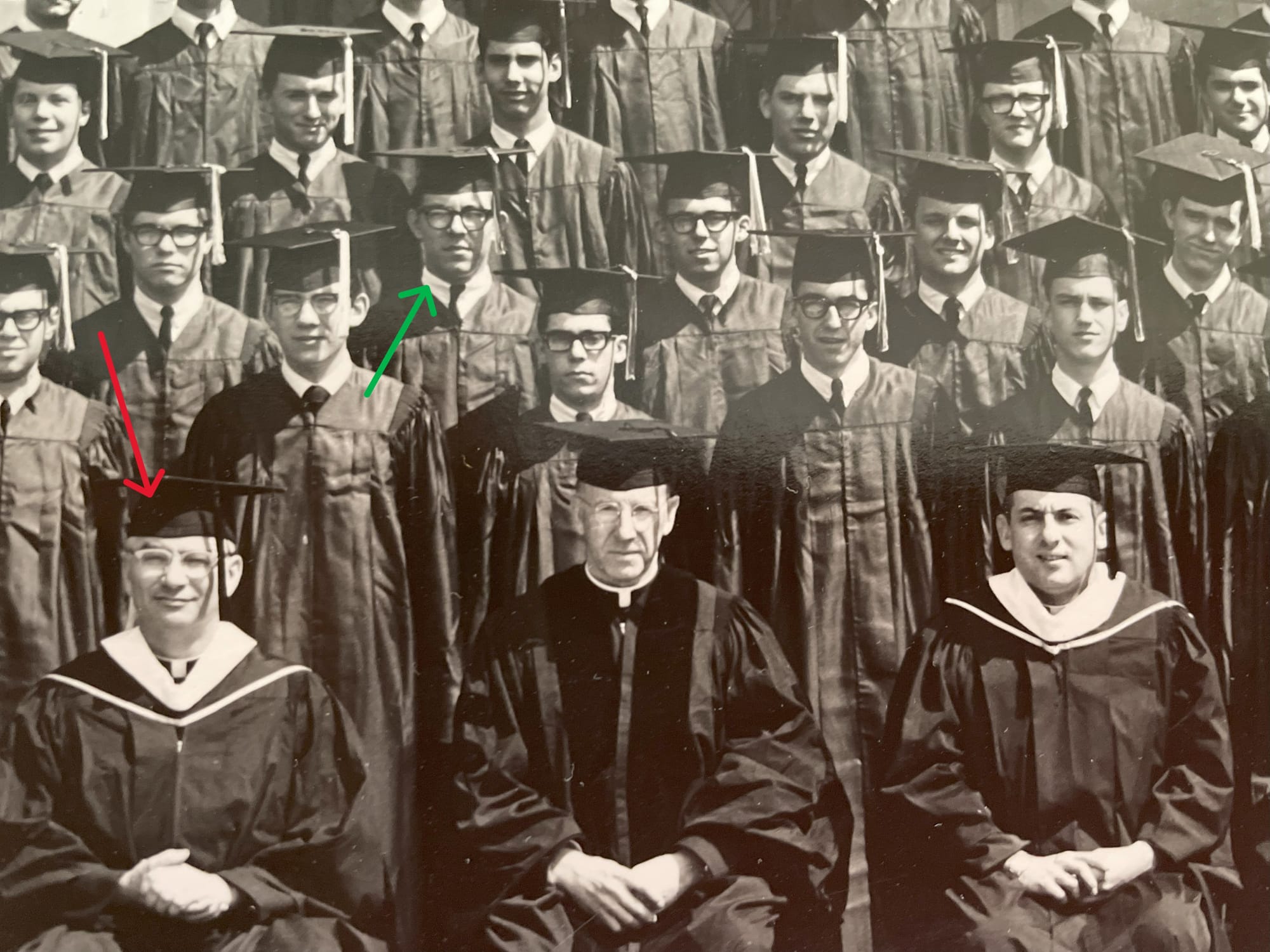
Well, anyhow, the higher critics are aptly, very accurately described by God in his Word in 2 Timothy chapter 3.
They might claim to be Christians, but in reality, they have only a shadow of religion, a form of godliness.
KJV 2 Timothy 3:1 This know also, that in the last days perilous times shall come.
2 For men shall be lovers of their own selves, covetous, boasters, proud, blasphemers, disobedient to parents, unthankful, unholy,
3 Without natural affection, trucebreakers, false accusers, incontinent, fierce, despisers of those that are good,
4 Traitors, heady, high-minded, lovers of pleasures more than lovers of God;
5 Having a form of godliness, but denying the power thereof: from such turn away.
In verse 4, notice is says “Heady,” How about intellectual and high-minded. How about higher criticism?
Verse 5: Having a form of godliness. Oh, these higher critics, that’s the great doctor so-and-so from Harvard Divinity School, or from Union Theological Cemetery, pun intended. Oh, they have the great trappings of godliness and religiosity, don’t they?
But, the Bible goes on, … “denying the power thereof”. In other words, by their so-called scholarly, higher criticism theories, they attempt to deny the power of the Word of God.
And the verse continues, “from such, turn away.” Didn’t have to at Fr. Pax’s house; he turned me away with severity and anger!
Verse 7 describes these higher critics to a tee. They are:
2 Timothy 3: 7 Ever learning, and never able to come to the knowledge of the truth.
As a postscript to my story of my “reunion” with my Latin mentor, Bruce and I immediately called our local sponsor (this was in the days before mobile phones.) It was late afternoon and we were scheduled to begin the weekend seminar on that Friday evening at 7:30 p.m., if memory serves.
Our local contact was in a panic because he had just been informed by his contact from Fr. Pax’s parish that the Knights of Columbus hall had just been refused to us on the orders of guess who.
After a lot of urgent phone calls, we taped white paper signs on the doors of the K of C hall, where attendees were told that the venue was cancelled at the last minute, but that if they drove down the highway another ca. three miles we would be meeting in the upper room of a bar!
So that’s the story of my old Latin mentor who was deceived all his life by his unbelief in the Bible. Reminds of another incident about the Bible while I was in Catholic seminary… but we’ll leave that for another time.
(To be continued)
~END~